
If you are really concerned about the well-being of sea turtles, you might want to watch out for unethical activities and scams with regard to seeing or interacting with them.
Nicaragua is a perfect country to show you both sides of it, as we have
- on one hand some well-marketed tourist traps that are sadly perceived as “conservation” by ignorant tourists
- on the other hand professional initiatives that attract fewer visitors but those who are well aware of what wildlife conservation means
But my list of Red Flags in sea turtle tourism is of course valid for the whole world. So if you plan to visit a country that is famous for its sea turtle populations, make sure to study this article first so you won’t support the “wrong” projects.
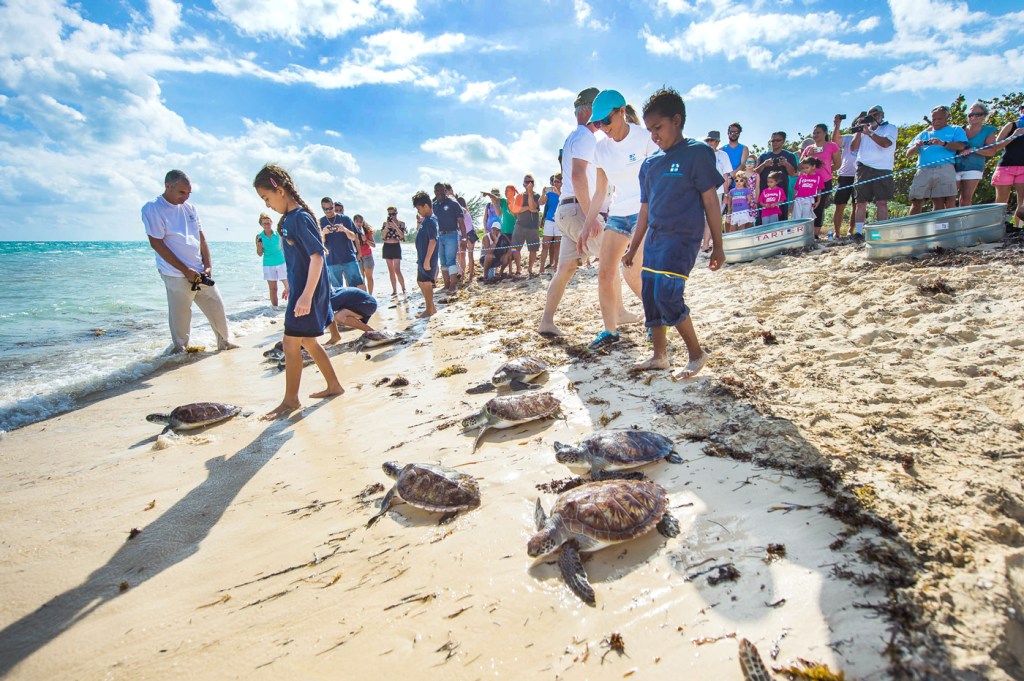
Red Flags: 15 Warning Signs of Wildlife Exploitation
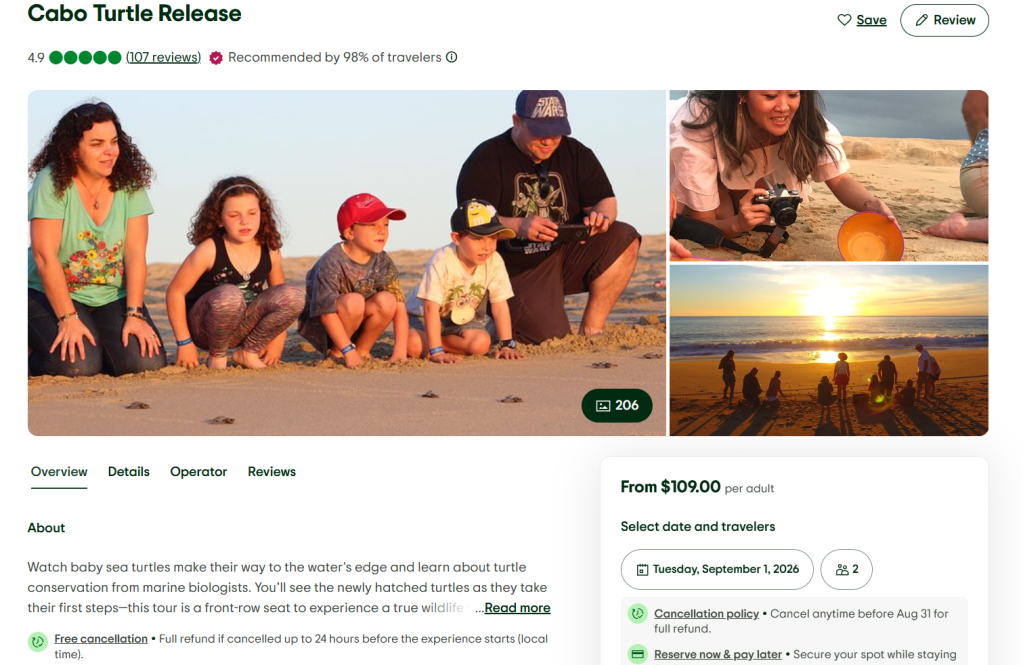
1) Turtles are released year-round at any given day
When release events are promoted weeks in advance, you should become skeptical. Why? Because we NEVER know the exact day and time of our nests hatching!
That’s why at MEMANTA, our volunteers check the hatchery day and night to make sure to never miss a freshly emerged nest.
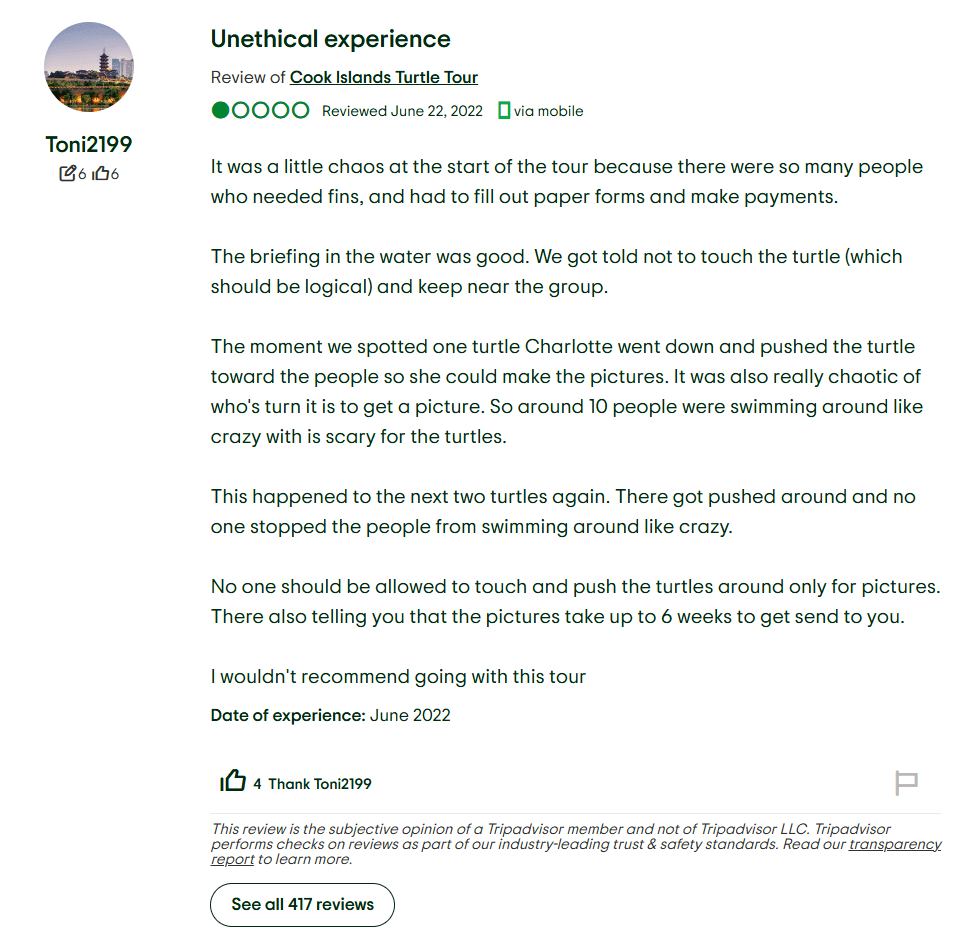
So if you are able to book a baby turtle release tour weeks in advance, it can only mean one thing:
- EITHER there are so many nests that it is very foreseeable that there will be hatchlings every day
(but still: hatching season does not last year-round) - OR the hatchlings are kept just for the tourists to release them on any given day!
→ this is very unethical
2) Turtles are released in the middle of the day
By now everybody should know that turtles usually hatch between the late afternoon and the early morning. This is because of predator control and heat control. I mean: Have you ever felt how hot the sand gets in the tropics? Hatchlings would burn their skin and dehydrate / weaken quickly.
So please don’t attend any release events that are done after 9 am or before 4 pm. Because in that case, the turtles’ well-being is compromised for the convenience to fit into the human schedule!
3) Turtles are released in small groups
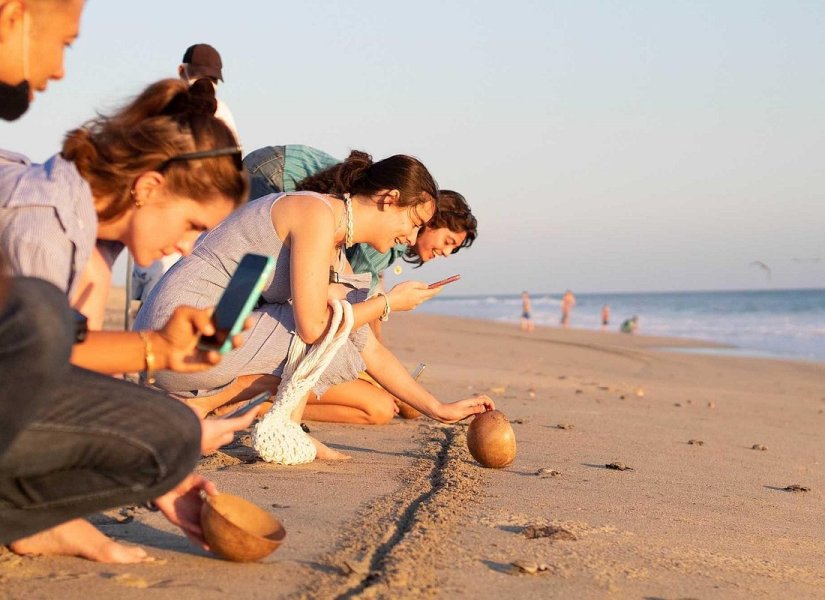
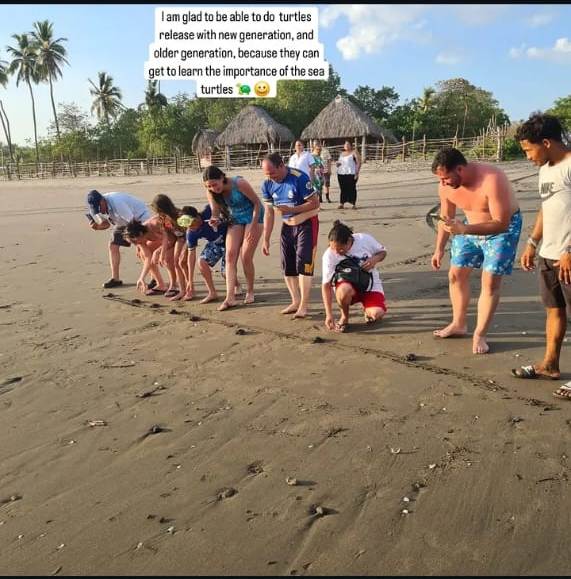
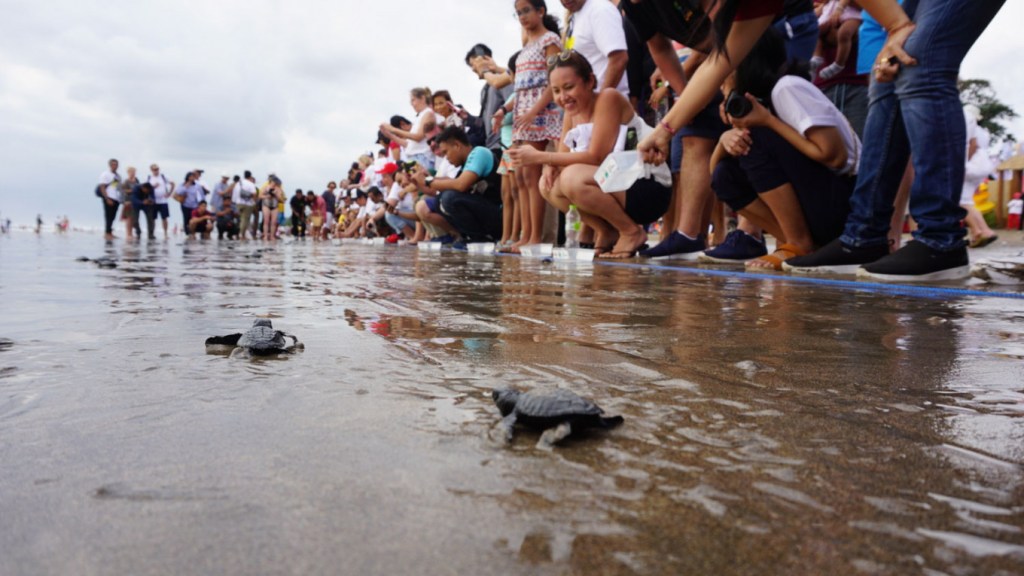
It’s a typical sight during release events: Tourists knee behind a drawn line on the beach and everyone holds a single turtle in their hands. This seems to make people feel truly special.
But you know what is really special? When you got a whole box of them! One full nest with 70 to 140 of those babies, or better still: Two or three nests at a time!
When turtles are kept for commercial purposes, each tourist gets one turtle – they basically pay for that one turtle they are allowed to hold. It would not be a smart move if the scammers gave everyone 5 turtles at once, right? Because “maximize your profits, baby!”
In the end, you will see groups of 10 tourists release exactly 10 turtles. A family of 5 release 5 turtles… Those small numbers are unnatural and have clear disadvantages for predator control. Just imagine: A fish sees 5 turtles swimming by versus 80 turtles swimming by. He can eat those 5 turtles in a minute, but with 80, there will be at least 75 that manage to pass by.
So if you ever attend a release event where it’s 1 turtle per person, ask: “Where is the rest of the nest?”
4) Turtles are only released in the presence of tourists
This one is hard to find out if you are a regular tourist and not living in the area, but you might get an idea on the social media pages of said turtle rescue program whether they ever release baby turtles with no tourists around, f.ex. in the middle of the night or in tourism low-season.
If turtles are only released when some paying, over-eager foreigners pop up, this is no conservation project but a tourist trap. It means they hold the turtles back from the ocean until they get some money out of them! It means they only produce hatchlings for economical reasons!
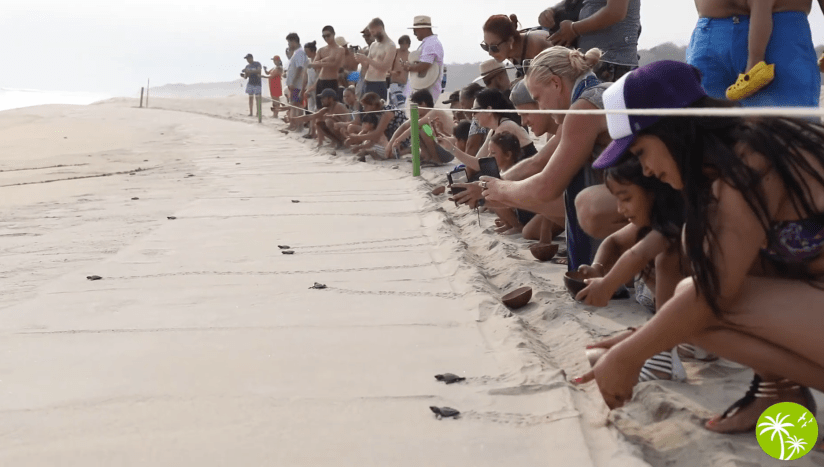
5) Turtles don’t have a clear runway
Okay, I will admit, I am also to blame in this regard, because it is something we can’t guarantee 100% of the time.
At MEMANTA, we usually stay in the back when releasing our baby turtles, but when newly-arrived, over-excited volunteers try to take the perfect video and forget all initial instructions and the whole world around them, they happen to get very close to the hatchlings. And I won’t be yelling at them “stay behind the line!” because they dedicate their time, talent and money to live through that perfect moment, and they deserve it.
Sometimes we need to pick up some very slow and weak hatchlings to get them closer to the water, sometimes there are poachers stomping through the runway, sometimes dogs come running and we need to run behind them… so it can be chaotic.
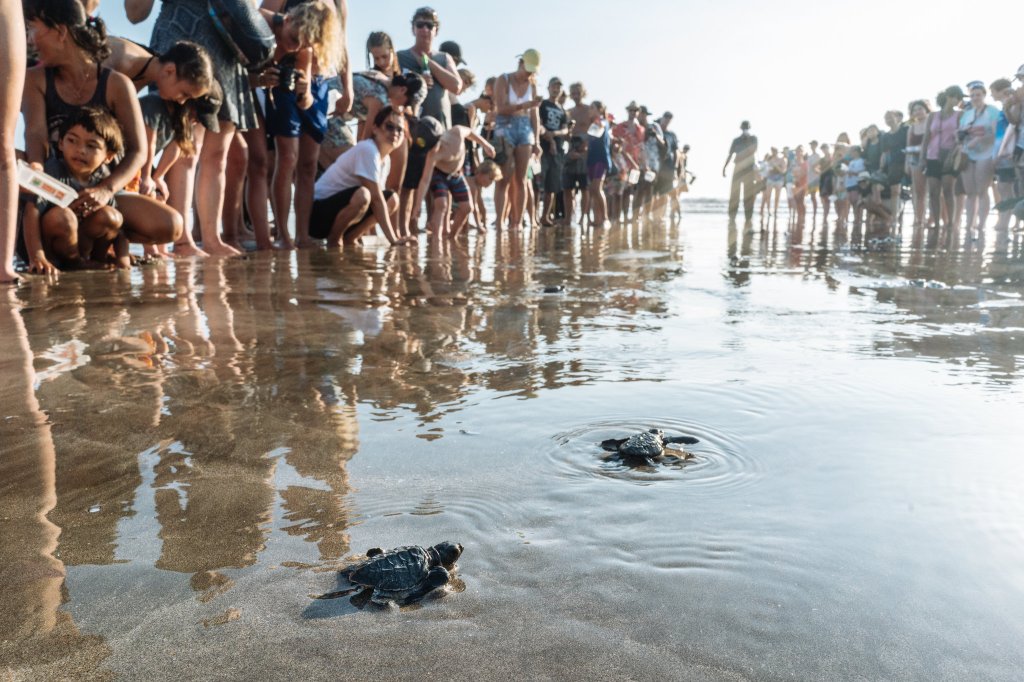
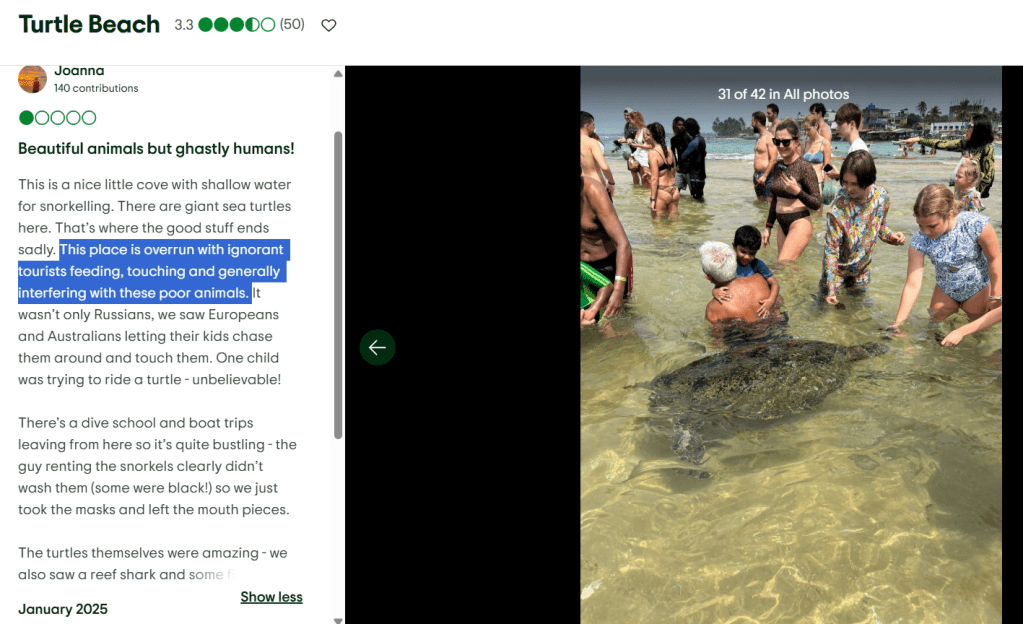
But at least our turtles NEVER view as many people around them as in these pictures below!
6) Turtles are kept for a few days or weeks
This one gets my blood boiling. If you don’t understand the life cycle of a sea turtle, you might think that keeping a baby for 3 or 4 days doesn’t do any harm. But it is actually one of the most harmful things you can do to a turtle!
See, when a turtle emerges from the nest, it is very energetic as it has just finished consuming all of its egg yolk. Turtles also hype themselves up in the group and they are in a real frenzy when waddling towards the ocean. Never again in their lives will they crawl or swim as fast as in their first hours venturing into the wild.
This is evolution at its best: The turtles’ goal is to leave the shore behind, swim far out and find those islands of sea weed where they can hide and feed. A turtle does not eat during the first 3 days of its life – until it has found some protection at sea and starts its migration along with the currents!
So what happens when you keep a turtle for 2, 3 or 4 days? It will not eat, it will not gain strength, it will not gain survival abilities, but it will lose energy and lose speed. When released, those turtles
- have really bad survival chances in terms of escaping from predators
- are already hungry, but cannot find food for another few days
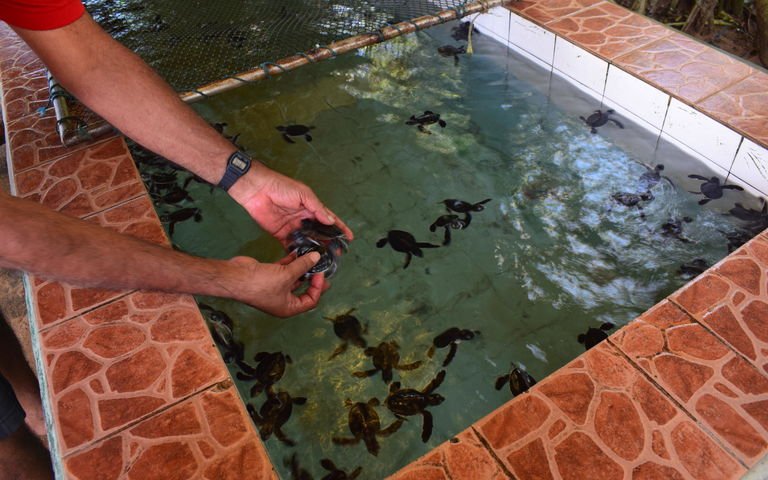
But even keeping turtles for a few weeks is pretty harmful in my opinion. Because a turtle in a tank will always have less survival skills than a free turtle: It doesn’t grow as many muscles, doesn’t train its lung to deep water, is used to being fed from a magical hand coming from above, and so on.
So when you release captive turtles, they will not be as fit. In that case, you should at least keep them long enough to reach a certain size. At that size, they won’t be faster or smarter, but at least too big for many predators. And this can give them a certain advantage.
| The benefits and risks of headstarting are highly disputed. If the living conditions of the turtles are okay, I am not against it. But after having experimented with it myself, I strongly advocate to only keep turtles that show low abilities of survival in the first place. Means: Turtles that, at the time of hatching, would have probably already died without human intervention. |
7) Turtles are kept in inhumane conditions
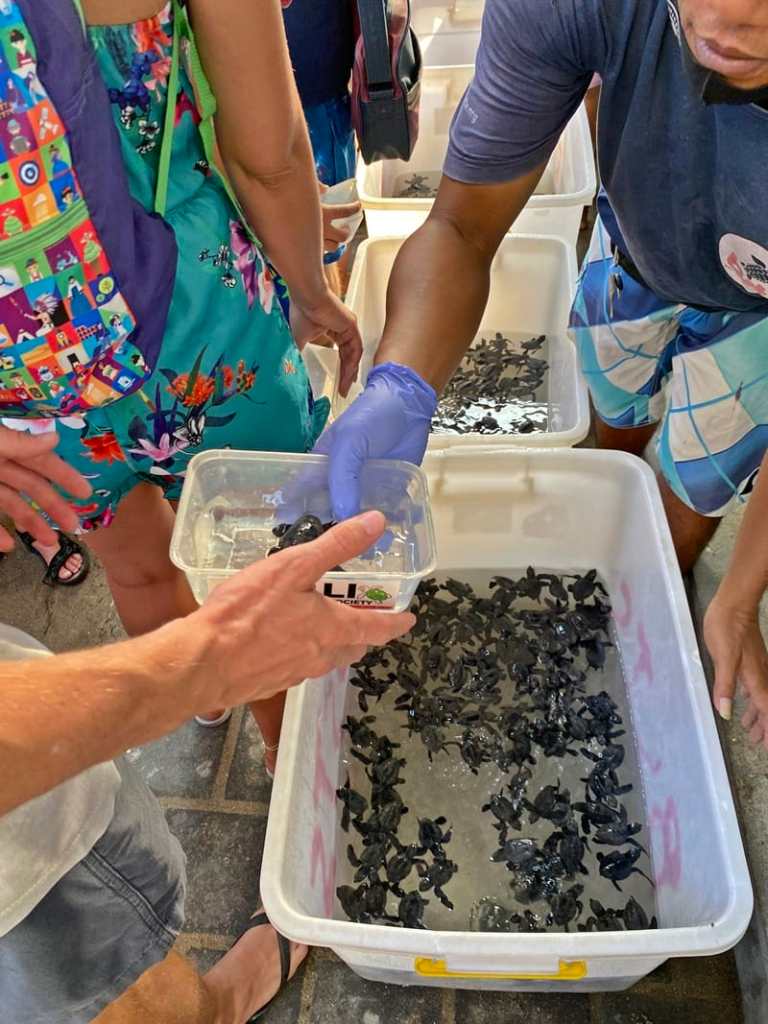
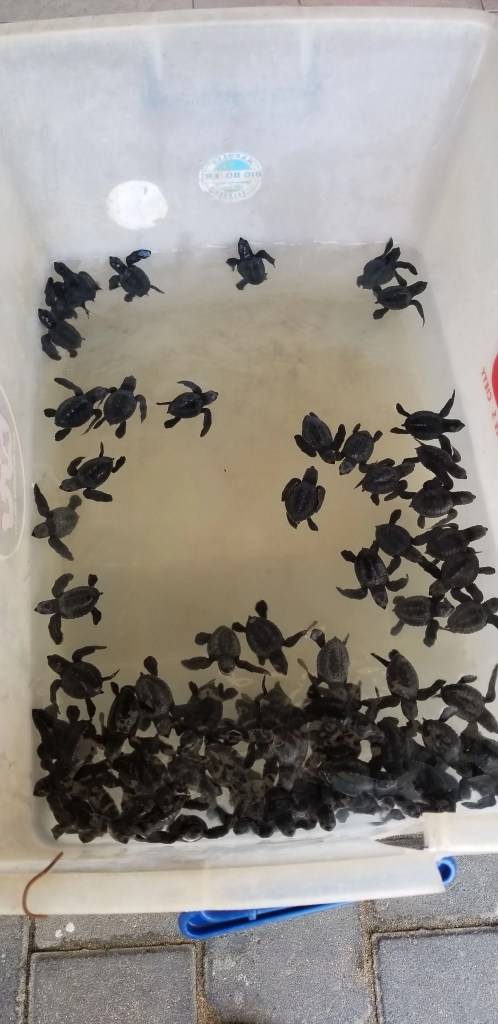
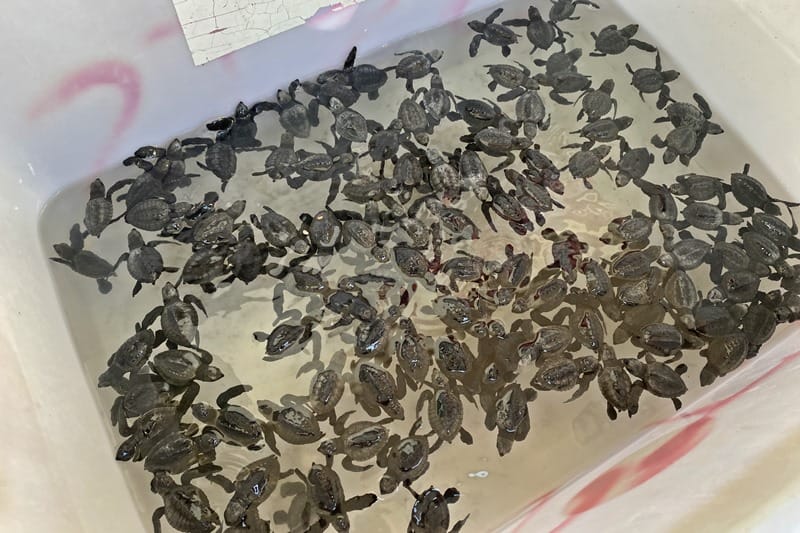
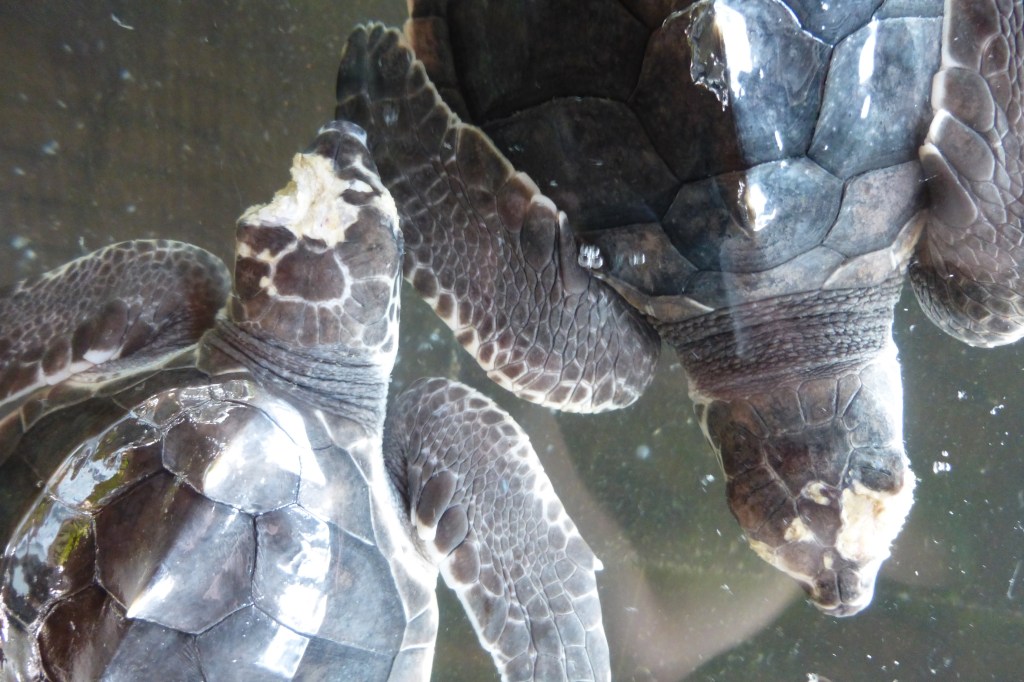
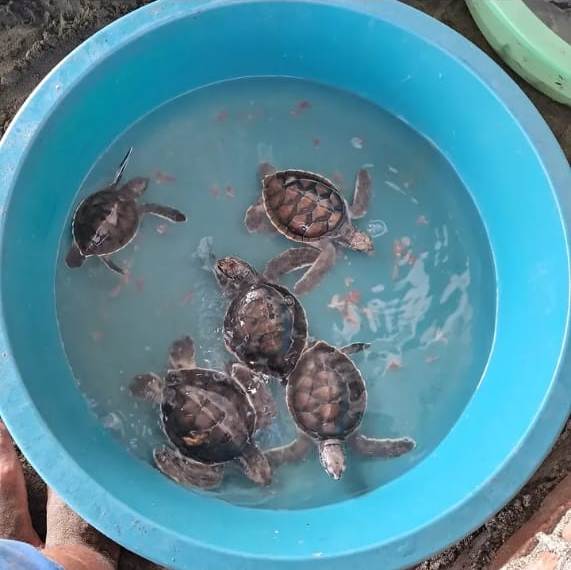
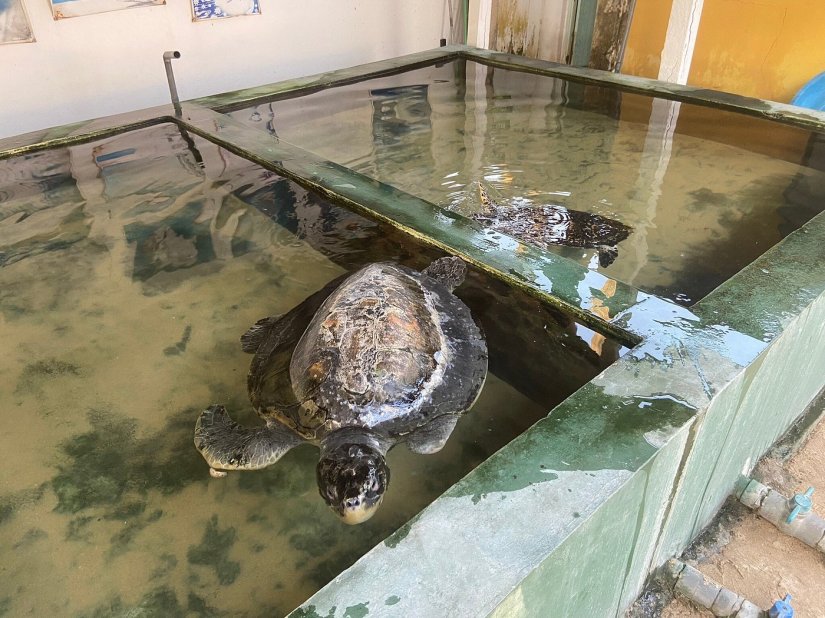
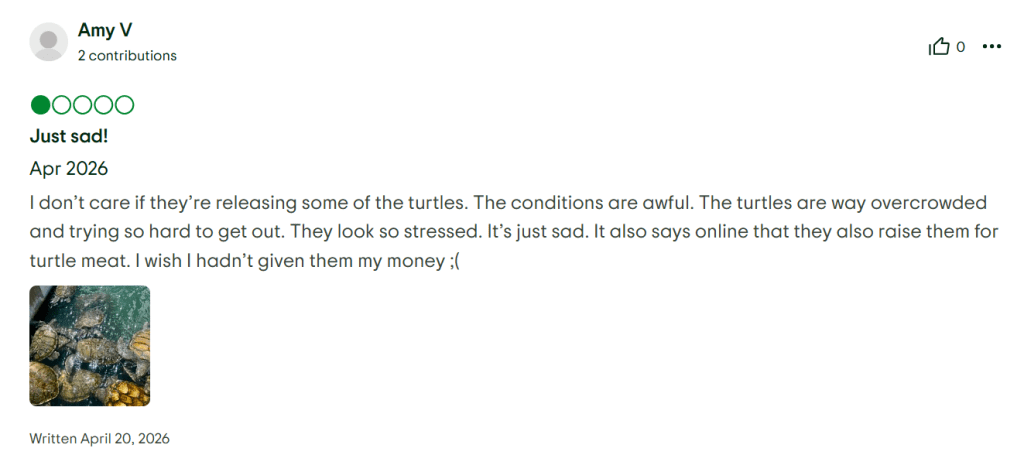
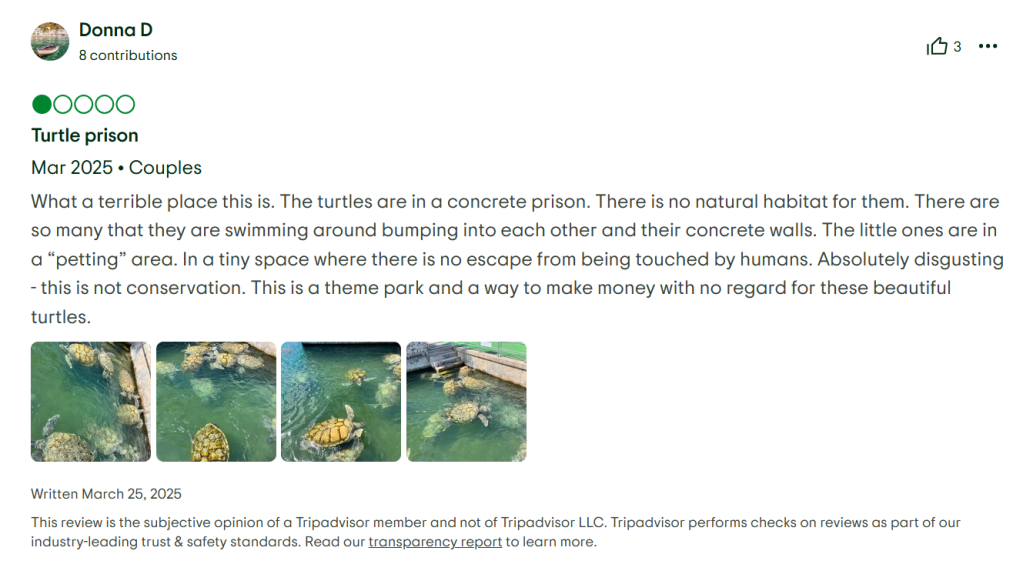
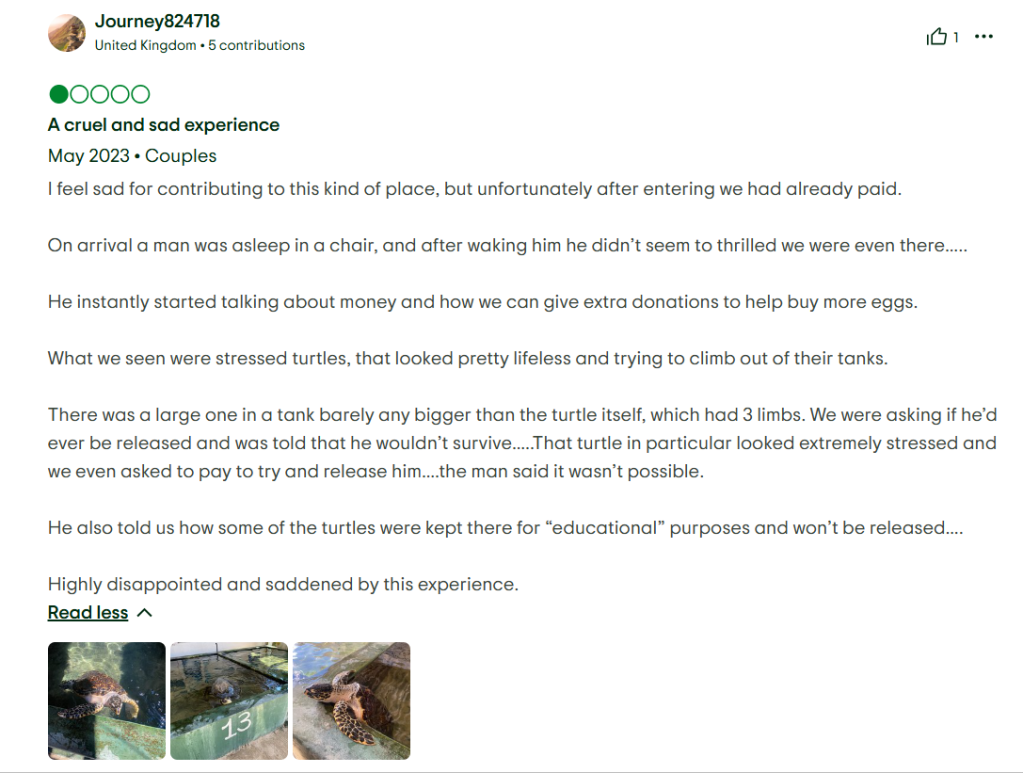
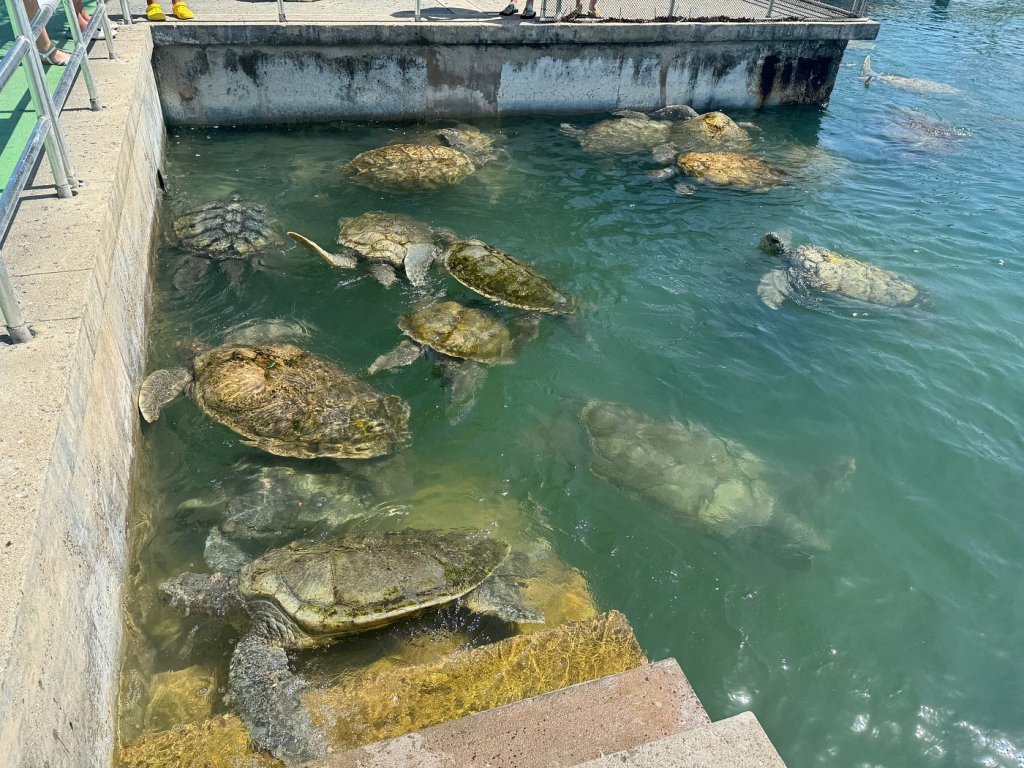
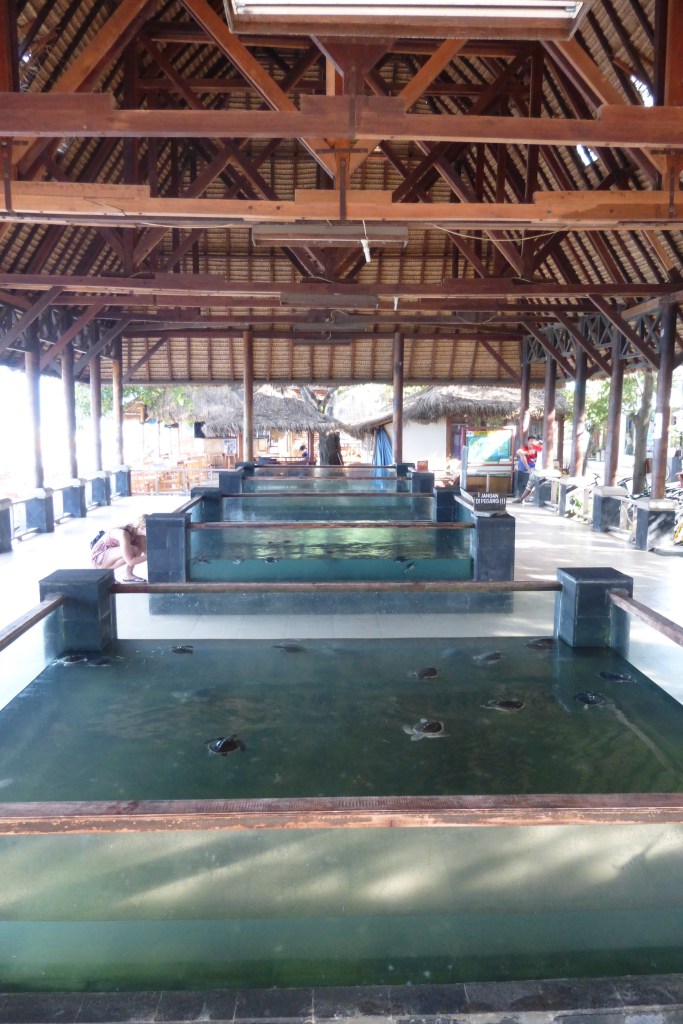
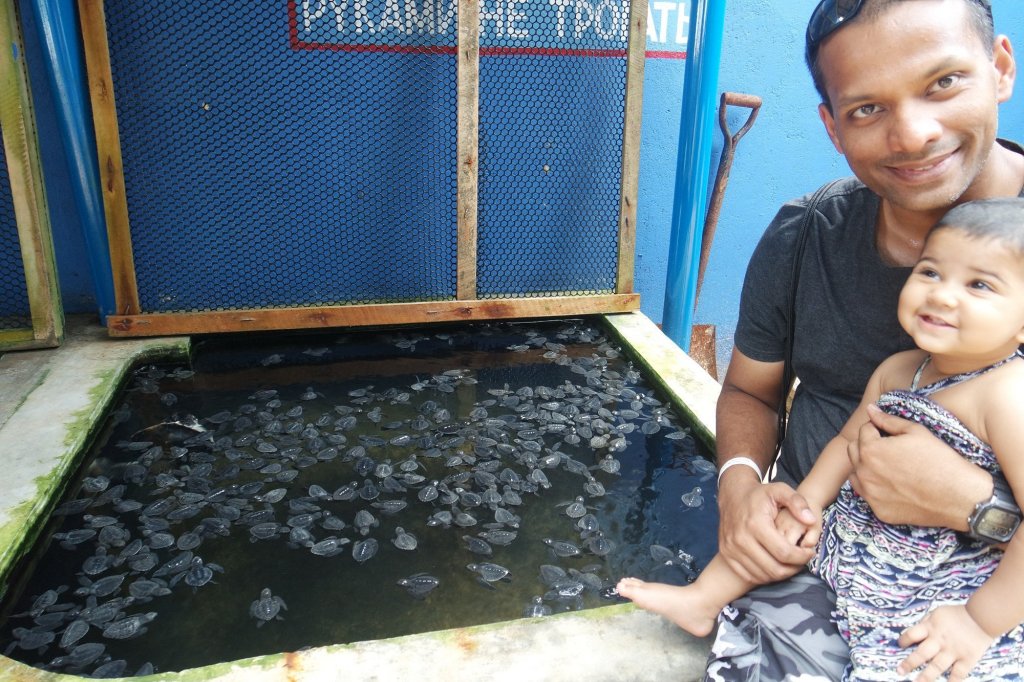
During my travels through Southeast Asia, but also here in Nicaragua, I have seen it all: Crowded tanks, dirty water or not enough water, visible illnesses and bite marks (turtles attack each other when they are hungry – or let’s say “hangry”!), turtles growing up in black containers where they never see the light of the day…
I understand the financial limitations of conservation projects very well, but if you already charge an entry fee so tourists can see your turtles in the tanks, you should at least keep them in good conditions. And if you can’t, maybe you should simply hold less turtles in the same space?
The sea turtle hospitals in the western world, especially in the US, are a role model with regards to animal welfare when keeping wild sea turtles (temporarily) confined in tanks and swimming pools.
There is a good article about keeping turtles as tourist attractions in Indonesia from Worldanimalprotection.org.
8) People shine white spotlights in turtles’ faces
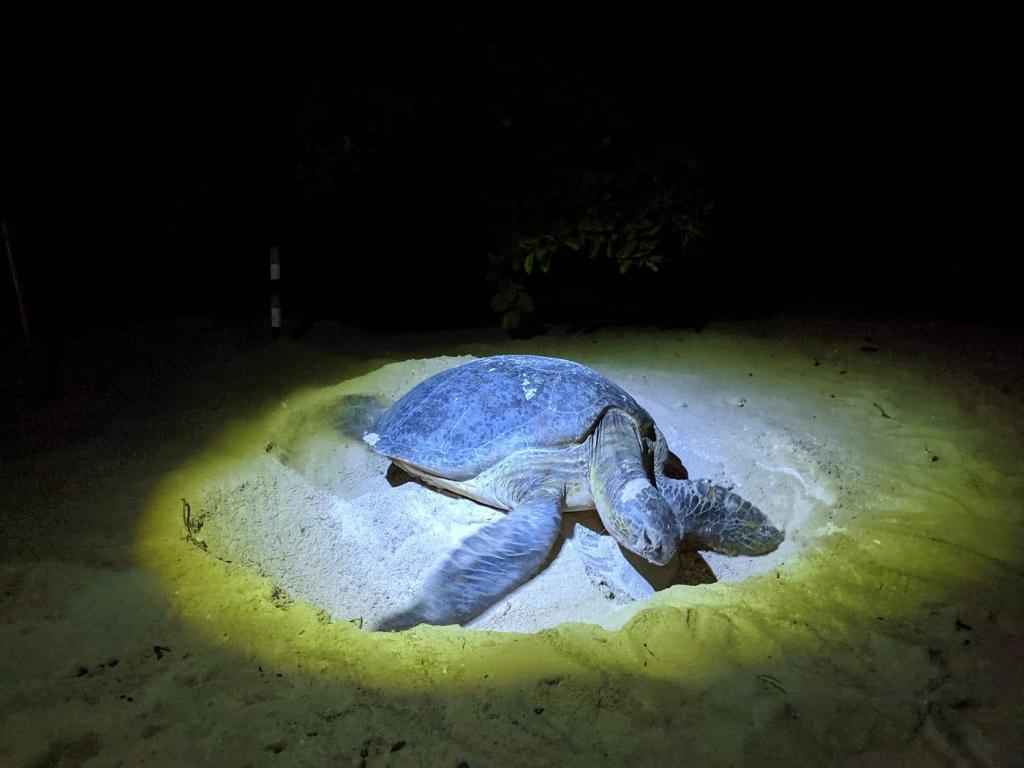
Now we have talked a lot about baby turtles, but let’s shift our focus to the big ones. Shining white light into a turtle’s eyes CAN accidentally happen, but should NEVER last several minutes for the benefit of tourists watching the egg-laying process.
The illumination would usually scare every turtle away, but during the oviposition turtles go into a trance and kind of don’t care any more what’s going on around them. This is the moment when I tell my volunteers “you can sit besides her now to have a look at her face also” (because up until this point we have stayed behind her) but we never shine white lights in their faces!
And if you happen to see a picture of a MEMANTA turtle with white light, it was a poacher illuminating her. Those guys don’t have torches with red light and even if they did, they wouldn’t care. And sadly I can’t instruct a grown-ass Nica macho man on how to behave with “his” turtles, because you might already guess that they don’t listen to white females and I will not risk a negative reaction in any way.
That’s a whole other matter but the fact is: Someone who claims to PROTECT turtles will never shine a flashlight into their eyes!
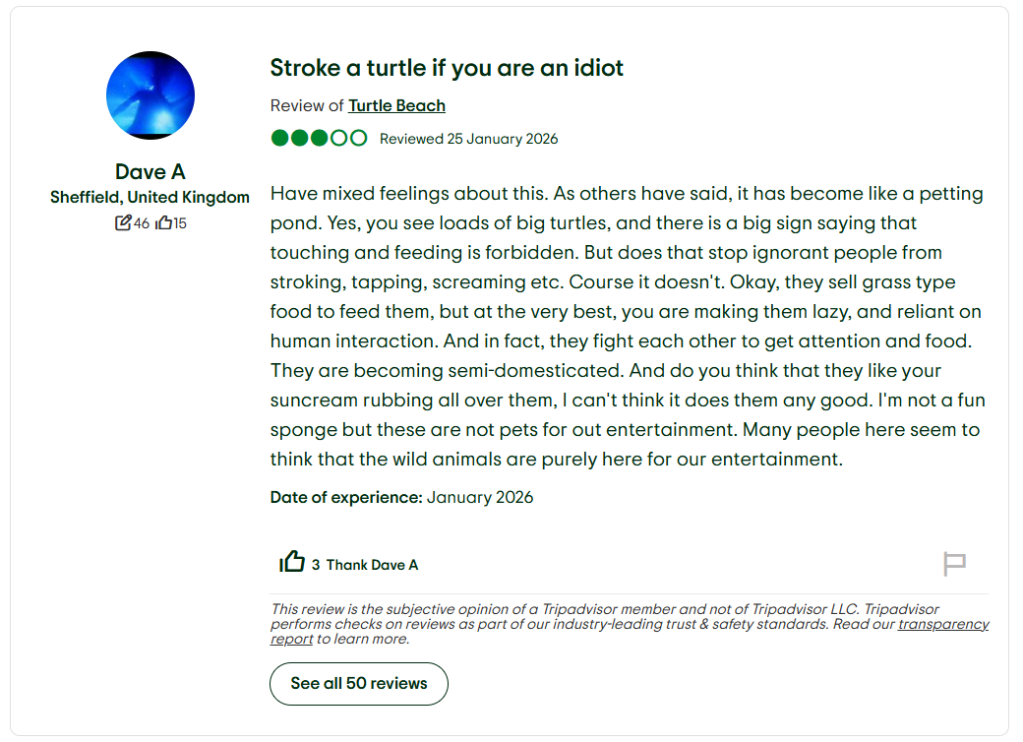
9) Turtles are constantly touched
Look, I don’t mind touching a turtle’s carapace if you get the chance, just to kill the curiosity of how it feels and to feel more connected with the animal.
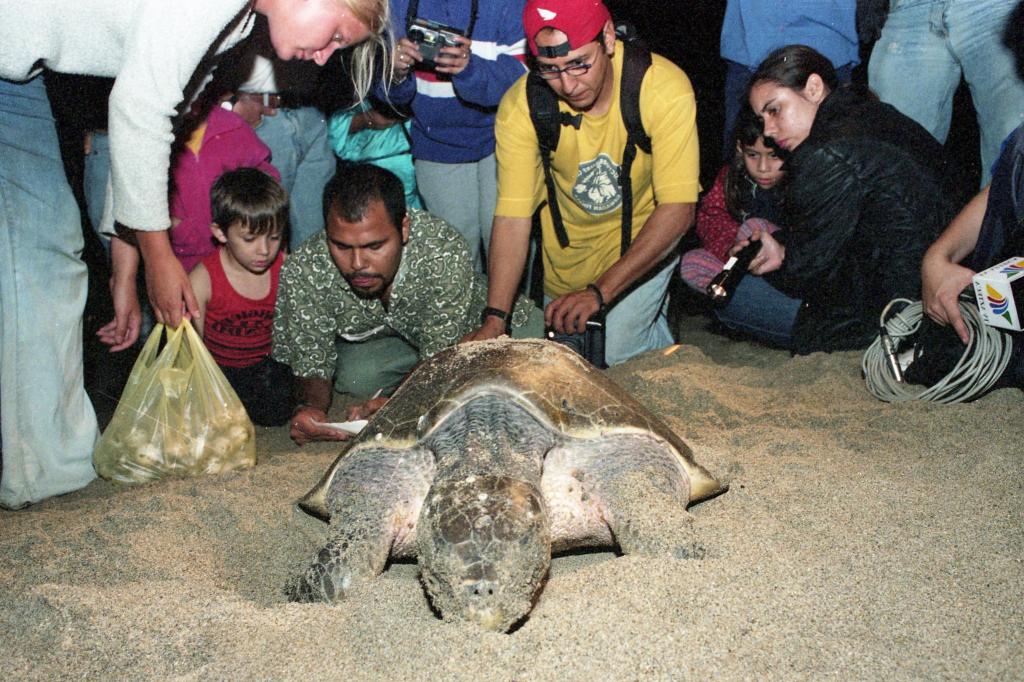
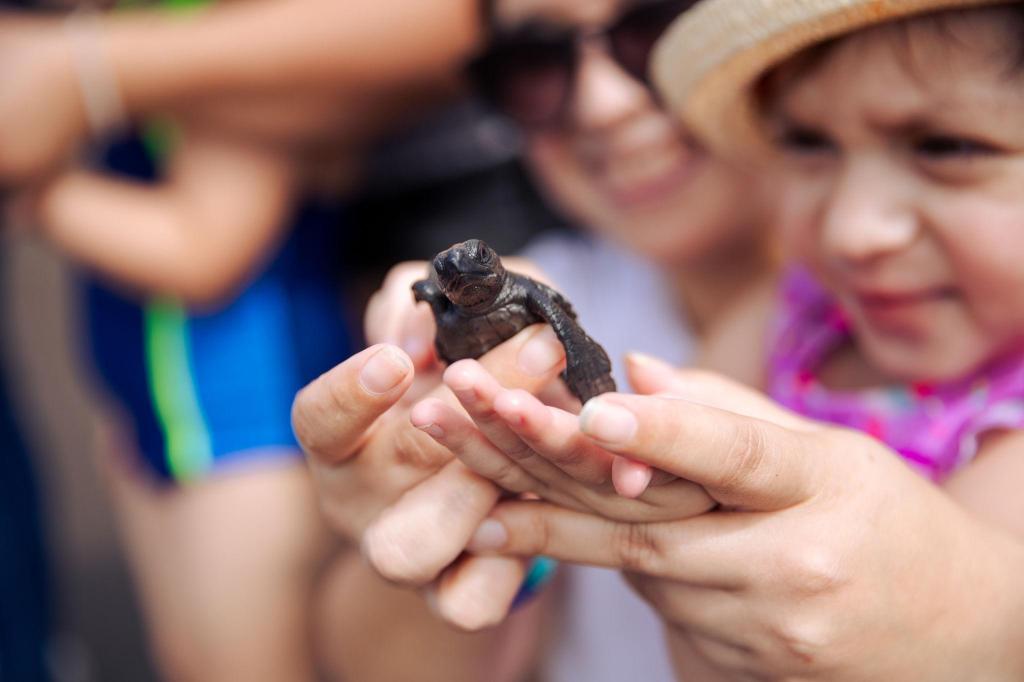
But when there’s 10 people around one turtle touching relentlessly her flippers, head and shell, it makes a big difference to me. Or maybe there’s a single baby turtle going through 20+ hands and some of them wear sunscreen, others wear mosquito repellent, others just touched something dirty…
There’s also a difference between me “allowing” my volunteers to touch a turtle once after they have asked for permission, and encouraging people from the first second to pet as many turtles as much as they want.
10) The turtle-people ratio is off
My very best memories from my early days as a sea turtle volunteer are from my Malaysia, where I had so many one-on-one encounters with the sea turtles – on the beach while they were nesting, in the sea while snorkeling, or in the hatchery while they were emerging.
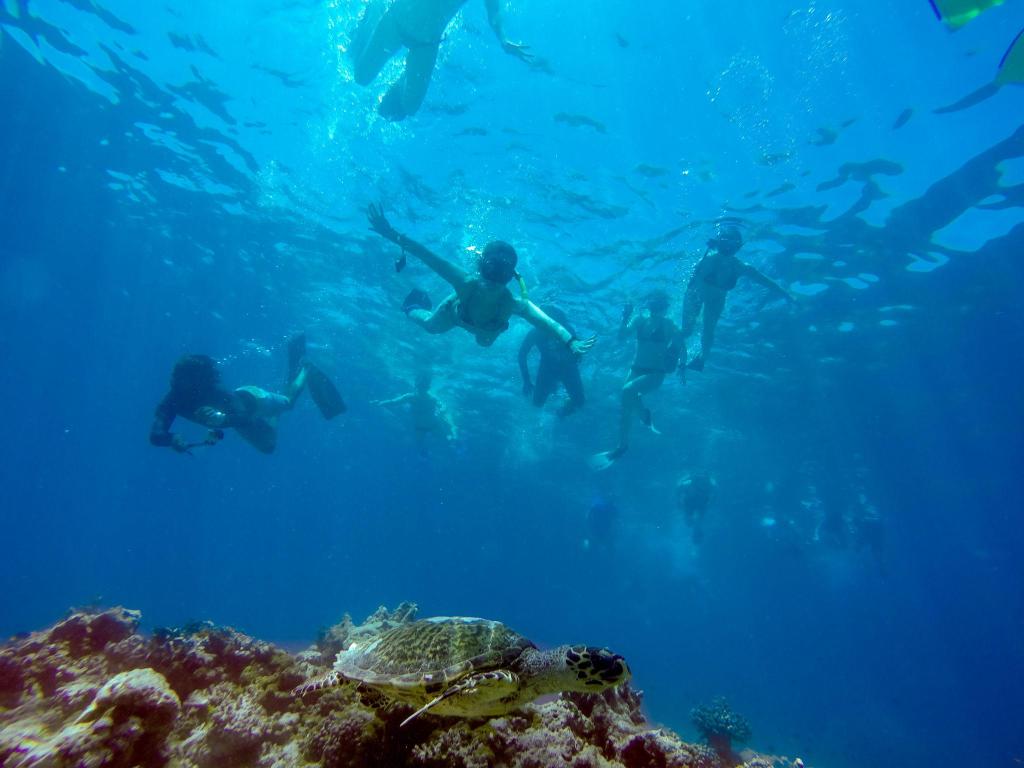
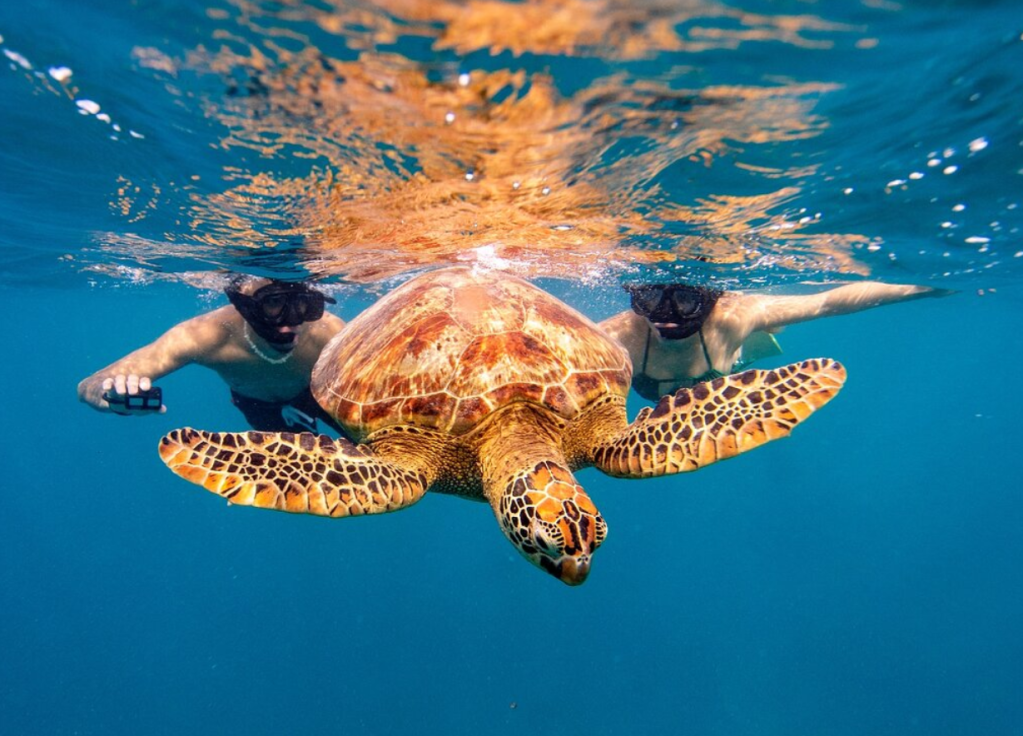
Too many people standing or swimming around a single turtle is never sustainable: It can be very stressful for the animal to the point that it encourages it to abandon its current activitiy or to avoid that specific place in the future, but it’s also not very nice for the spectators involved.
Unfortunately, the turtle-people ratio will most probably get worse each year as there are more tourists chasing human-animal interactions and less turtles to show off.
I mean, we have all seen those videos with swarms of tourists chasing turtles underwater, or big groups standing too close around a nesting female. But unfortunately this human crowding around sea turtles is not exclusive to snorkeling trips or turtle watching tours; it happens more and more often when volunteering in sea turtle projects.
Many conservation projects rely on tourism money, which also includes the volunteer fees, so they tend to accept more volunteers than they actually need. The results are:
- night patrols in groups of 5-10 people (you only need 1 or 2 people to go on patrol!)
- nest relocations where everyone gets to move exactly 10 eggs (you only need 1 person to move all of the eggs, it’s stupid to be taking turns)
- hatching events were again, everyone gets to count / touch exactly 10 hatchlings (you only need 1 person to handle all of the hatchlings)
So before you end up sharing 1 turtle with 8 other volunteers, you are better off researching turtle numbers and volunteer numbers before-hand – because there are projects out there that need every single helping hand, every pair of feet and every pair of eyes, they might just not be as well-known or popular due to limited marketing and branding.
Also read what happened at this famous turtle nesting beach in Costa Rica in 2015!
11) The project is run by people with no conservation background
So which project do you think does a better job of protecting turtles:
- Project A that is run by a biologist who spent 10 years travelling the world, working in different projects and researching the enimals’ behaviour before settling down to one, or
- Project B that is run by an american expat who opened a beachfront hotel and just saw his first sea turtle 2 years ago when it accidentally came up to nest right in front of this property?
I need to draw a line here, because it is totally legit if someone owns a property or a hotel at the beach, falls in love with turtles, develops a wish to contribute to their protection, educates himself and builds a conservation strategy around his business.
BUT any hotel owner who cares for turtles would:
- take care of garbage issues properly
- not contribute to light pollution but leave the beach a dark place
- leave the native beachfront vegetation in place that serves as nesting habitat
- educate his guests about proper behaviour around sea turtles
IN REALITY most hotel owners just promote baby sea turtles as an attraction to their tourists. They don’t take any measures to really protect them, but keep their eggs so they can tell people to come and see the turtles hatching. Turtles are simply a competitive advantage for them.
12) Turtles are “protected” although they’d be safe in the wild
Sea turtles are nowhere safe in Nicaragua – not in the wild and sometimes not even in the hands of so-called conservationists. Fishing, poaching and a culture that teaches no love towards animals contribute to a devastating reality.
While many benefit from dead sea turtles, some have learned how to benefit (financially) from live sea turtles. So even if the poaching issue could become resolved in the future, hatcheries would stay open for commercial purposes – to receive donations and earn money from selling turtle releases.
In other places of the world this is already happening: Some hatcheries in Asia have been criticized by woke observers that they promote the extraction of otherwise perfectly safe nests from the beach, as locals are paid to bring eggs to the hatchery even though poaching rates are low.
Here at MEMANTA, there is no such risk as the poaching rate is 99% and all nests that don’t go to us go directly to the black market. So the extraction of nests happens with or without us.
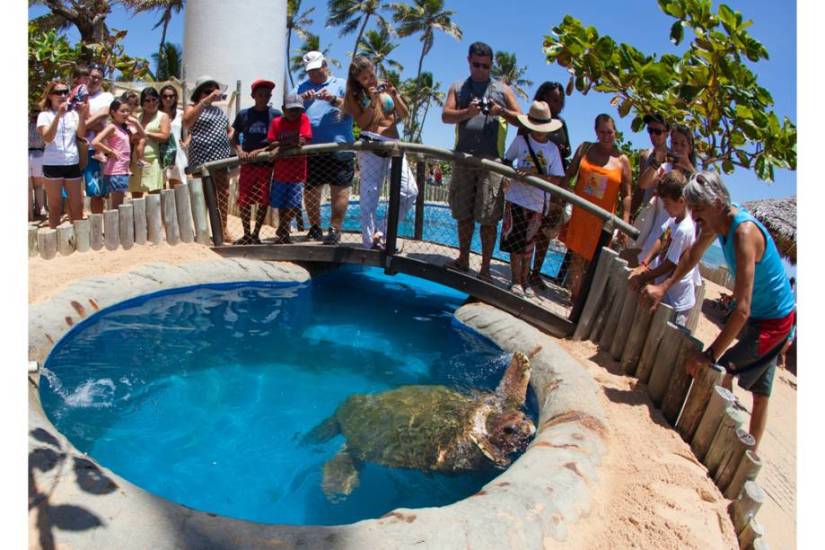
Also, sadly, in many “rescue centers” in developing countries there are perfectly healthy sea turtles kept for their whole lives for tourist entertainment. The staff claim they serve “educational purposes”, but even that doesn’t justify to hold them prisoners for decades.
13) Marketing language is over the top / false information is given
Many projects in Nicaragua talk about how they receive 4 out of 7 sea turtle species on their little stretch of sand. They make it sounds as if you can see all 4 of them on any given night. I say BULLSHIT! The Pacific Leatherbacks are basically extinct, Green Turtles are rare, and Hawksbills focus on two major nesting sites. So it’s rather 1 sea turtle species with a small chance of seeing 3.
Also, when someone refers to him/herself as a sea turtle warrior, sea turtle saviour or sea turtle hero and uses exagerrated promotional language that makes their work sound super romantic, it is FOR SURE a for-profit-initiative.
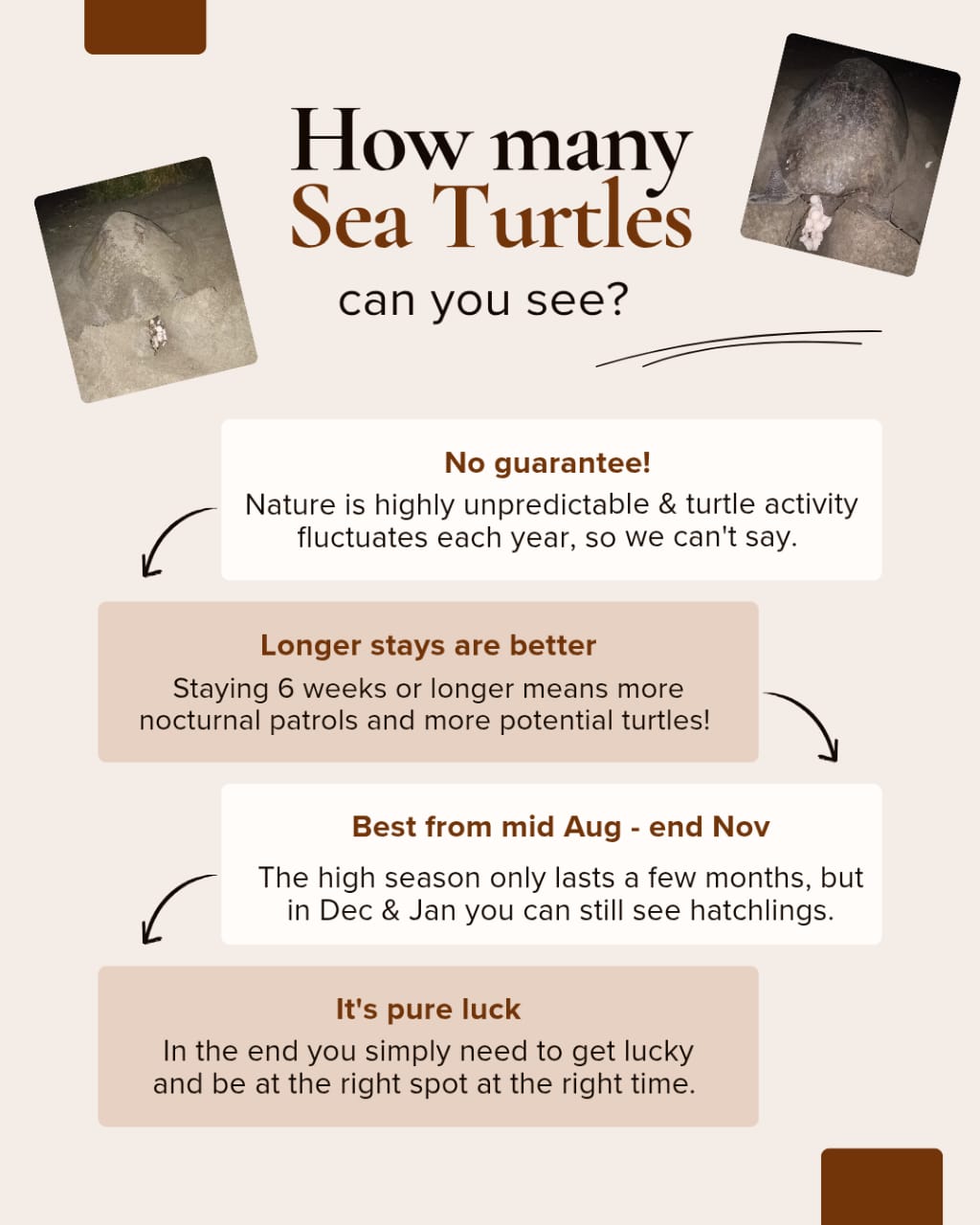
Because real conservationists do the real talk, they give you realistic expectations (like “no sea turtle sightings guaranteed” or “be prepared for long walks in the dark and bad weather”) and don’t paint this picturesque illusion of paradise where you, by holding a baby turtle in your hand and having a flower in your hair, will save the entire species.
Pro Tipp: Professional sea turtle projects share some of their end-season results or hatchery statistics with you. They don’t hide their hatching success and some even share insights from their financial situation (amount of donations received vs. money spent).
14) The price is outrageously high
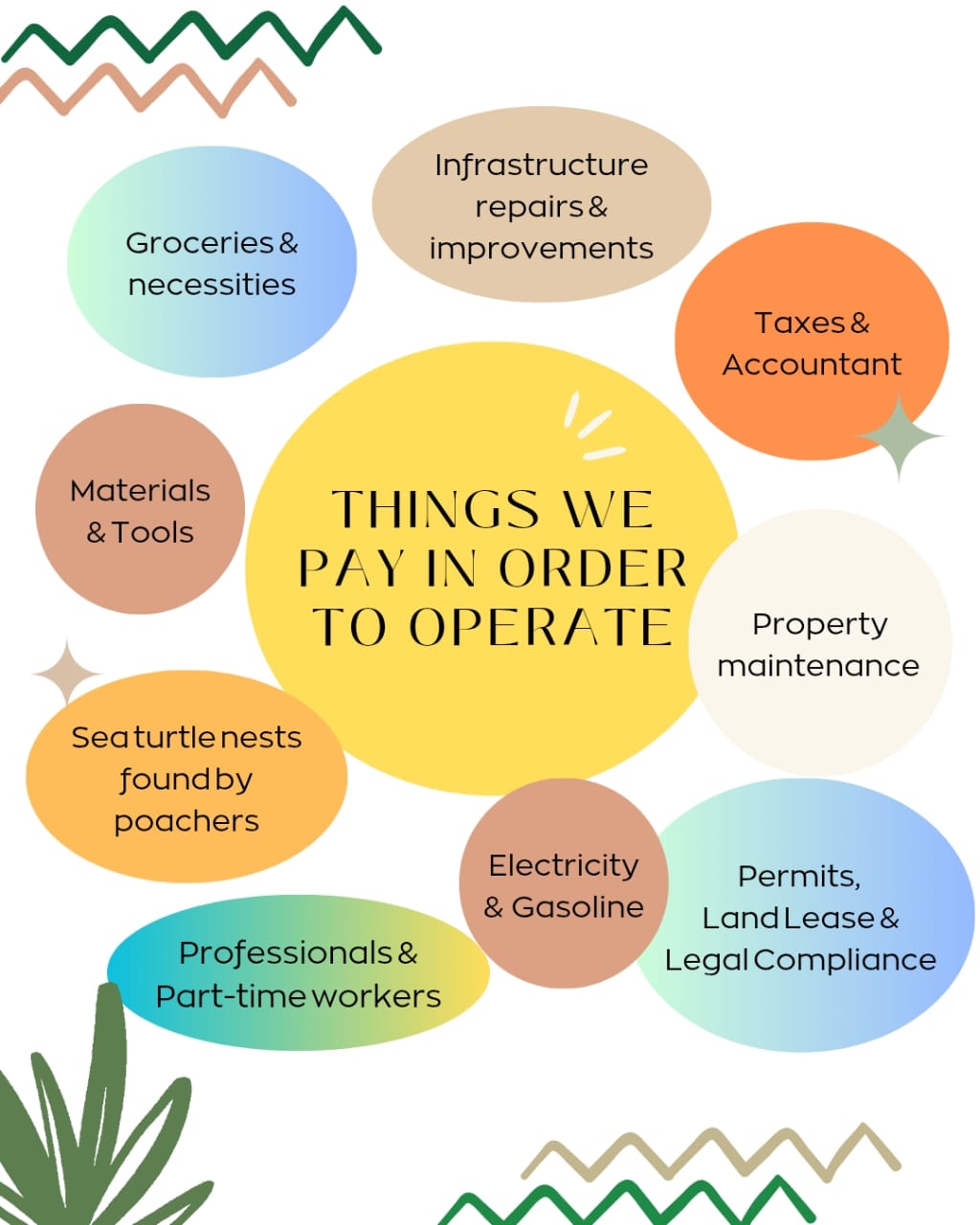
This is a tricky one. How much is too much when you seemingly support a conservation effort? I mean, if you voluntarily leave a huge donation, that’s fine. But if you are asked to pay a specific amount, then it should represent the quality of the experience and the involved costs in offering such experience.
If you are in a low-cost country like Nicaragua and pay 20 USD for releasing one single baby turtle, you are definitely being scammed. If you, however, pay 20 USD for adopting a whole nest which might produce 100 baby turtles, it is a fair contribution.
If you pay 30 USD for a sea turtle experience that lasts 30 minutes and only involves “looking and touching”, you are being scammed. If you, however, pay 30 USD for a whole day of volunteering which includes hands-on experiences, accommodation and 3 meals, it is a fair contribution.
15) The reviews are “too good” or very mixed
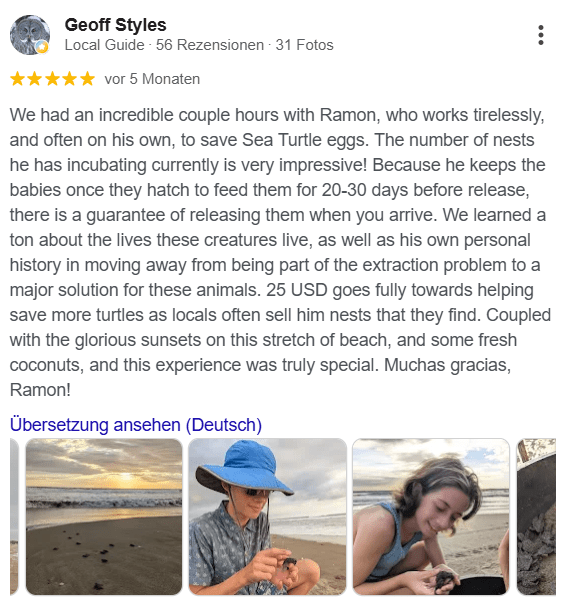
CAREFUL: Many of these tourist traps do have positive reviews from former visitors! A lot of those could be fake (remember that those projects rely on money flow so they do everything in their power to keep promoting their business), but sadly, a lot of those reviews are written by ignorant, unaware people who got blindsighted by the extensive branding efforts, perfectionized storytelling and the close interaction with the sea turtles – so they leave as very happy customers!
If your goal is to touch a sea turtle and make cool selfies with it, and that’s exactly what you achieve, you will of course leave a good review. Then you could even rate a real conservation project poorly, as there was “not much to see” and “not much to do”, aka it was not sold as an attraction and turtles were not kept for tourists.
So it can be really difficult to distinguish a good and a bad sea turtle project just by looking at the reviews.
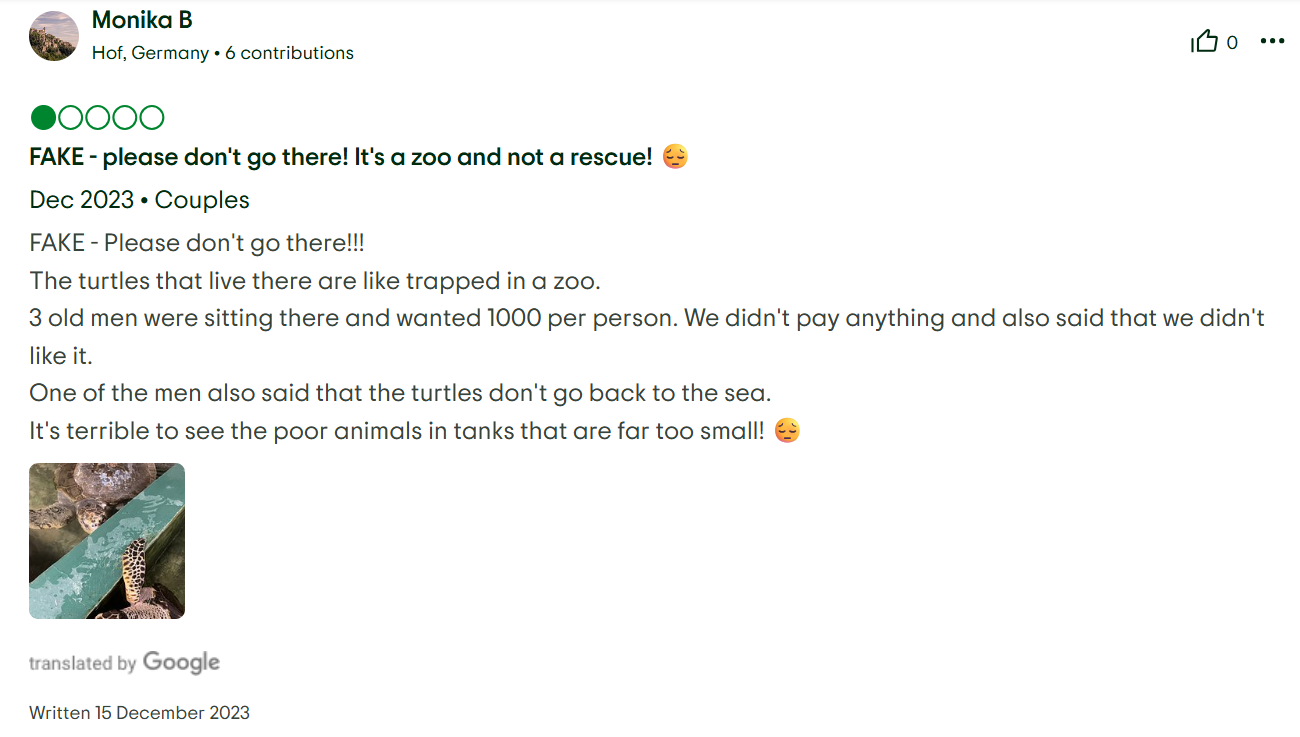
I will give you two examples: A bad review of a place in Brasil from a well-informed guest, and a good review of an experience in Nicaragua from an ignorant family.
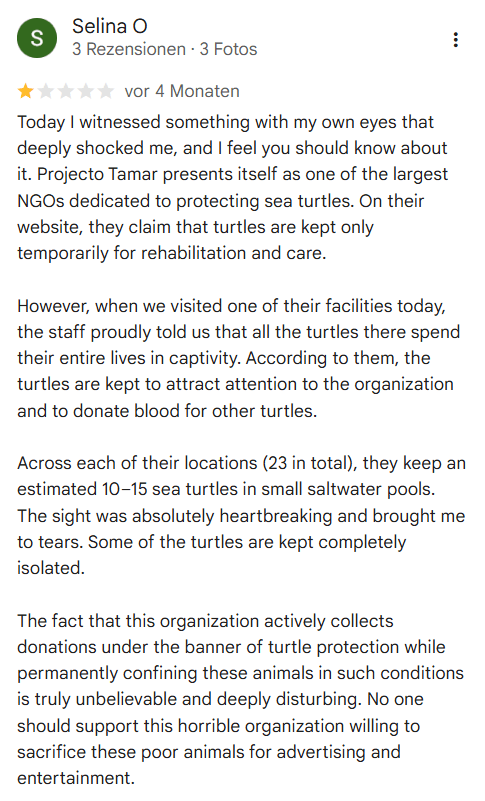
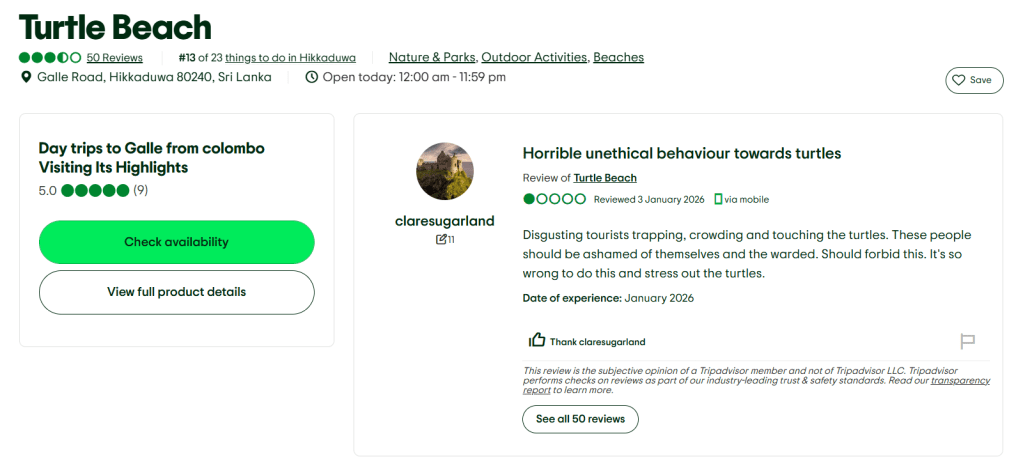
Here are some more negative reviews by people who detected unethical behaviour…
Verdict: Watch out for the little red flags
If you don’t want to support unethical / harmful sea turtle tourism, you need to be very well educated, aware, critical and sensitive.
I admit that it can be very difficult to distinguish between good and bad, just based off a tour description, some Google review, a TikTok video, or a website.
You need to realize that marketing rules also apply to sea turtle projects: Whoever has the best storytelling, creates the best illusions, and touches emotions; whoever has the biggest budget and the best marketing team, wins. Location is also a major factor: Those projects that are close to tourism hubs will be much more popular than those who are somewhere close to the end of the world.
So a sea turtle project is basically like a business, when it comes to attracting donations, media attention and volunteers: If you have a savy business person in charge, a good budget and a well-accessible location, then your project will be preceived as “the place to go”.
But the real changes, the real conservation, the real education, and the real experiences often happen a few hours away from the big tourist hubs. In places that are still off-the-beaten-path. So please keep your eyes open!
Green Flags: Signs of dedicated sea turtle conservation
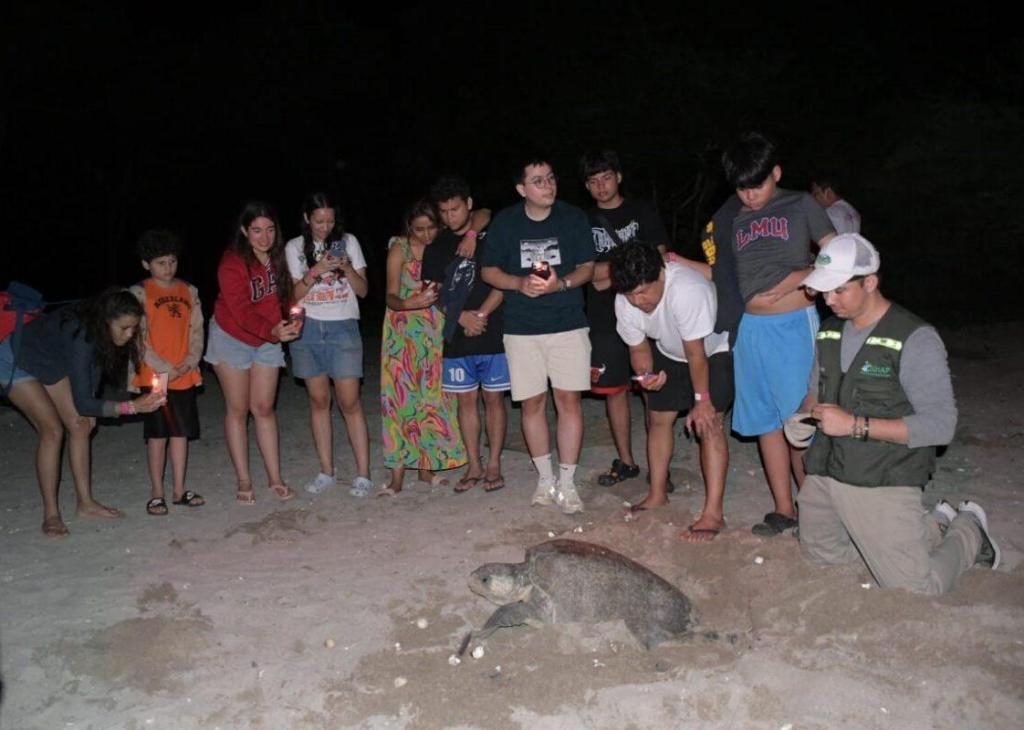
Basically you could say that any sea turtle hatchery, conservation project, tour provider or rescue centre that is clear of the above-mentioned red flags, is worth visiting and worth supporting. Because they KNOW how sea turtle conservation works, they are AWARE of the risks of human-wildlife-interactions, and they HAVE the turtles’ best interest in mind.
But anyway, here is a list of activities and behaviours that I would flag as “green”:
- Crucial data is documented and analyzed
- In hatcheries: Temperatures are measured, exhumations are done after hatching
- Costs are communicated transparently and you can see / follow-up where the money goes
- Volunteer teams are small, allowing for 1-on-1 time with turtles and making people feel needed and appreciated
- They give educational information and instructions (to tourists) / training (to volunteers)
- They cooperate with universities or research facilities, local communities or other environmental groups
- They show and explain the need as to why transfer the eggs (f.ex. poaching, depredation, erosion…) and why keep a few turtles (f.ex. scientific studies, veterinary care…)
- All or most hatchlings are released right away, at night (if light pollution is low) or at varying times during the darker and cooler hours of the day
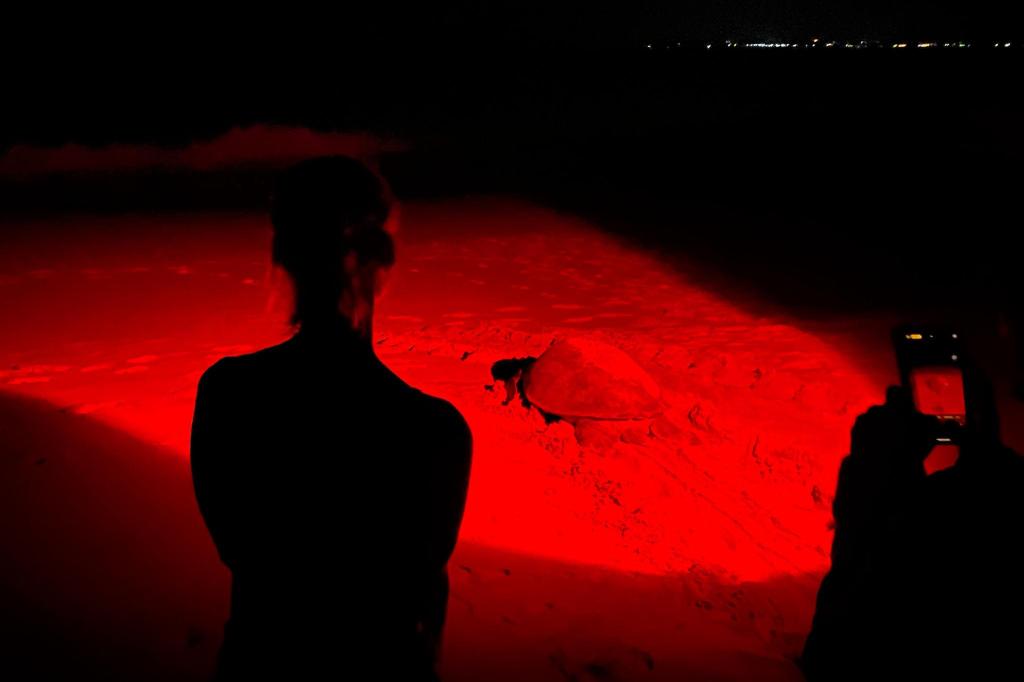
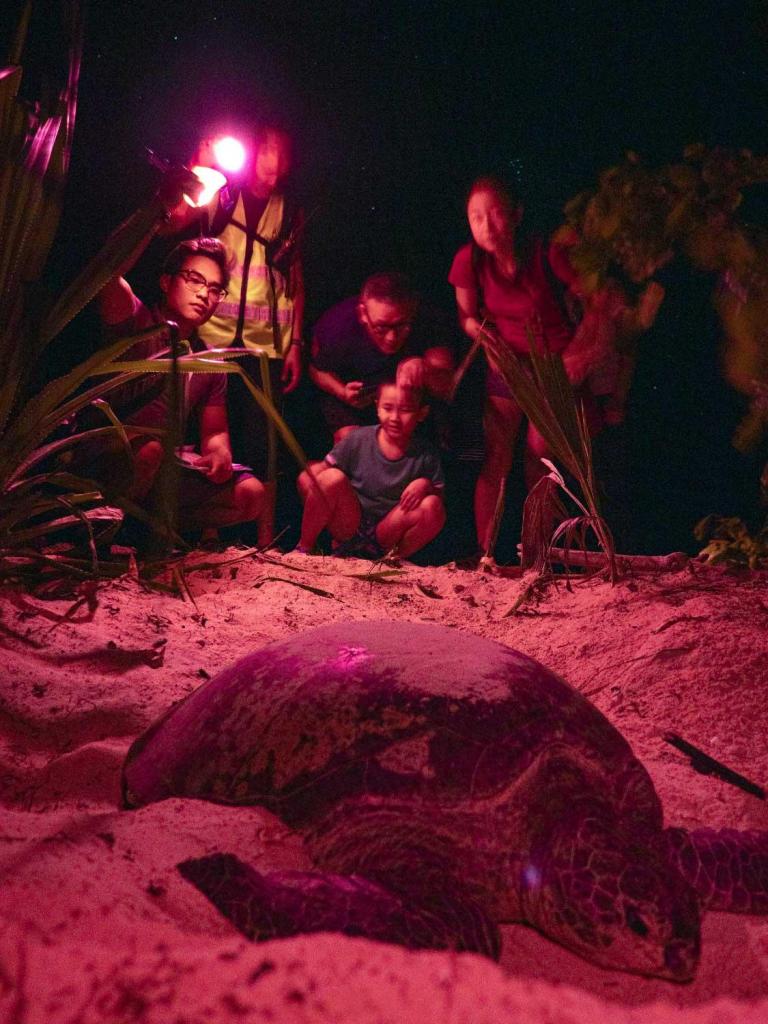
- Gloves and red light torches are used when interacting with the turtles
| Places to avoid to not support unethical turtle tourism (ongoing list) – Turtle Beach & Turtle Hatchery Hikkaduwa (Hikkaduwa, Sri Lanka) – Bali Sea Turtle Society (Kuta, Bali) – Cayman Sea Turtle Center (Cayman Islands) – Sea Turtle Rescue (Los Zorros, Nicaragua) |
Unfortunately for every woke person that detects unethical sea turtle tourism, there will be ten new tourists (mostly emerging from Asia, Russia, Central America…) who run towards those places, leave their money, take pictures, scream, touch, and leave wonderful reviews.
I also understand very well that in countries outside of Australia, Greece, USA etc. funds are very limited for conservation efforts, so it is a constant struggle for survival. I speak out of my own experience! Some people might have good intentions but cannot put them to reality due to lack of help, financially and physically. I know what I am talking about, believe me.
And I also believe that nobody really wants to harm turtles. There might be some that really don’t care because they have the infamous dollar signs in their eyes or they are simply a**holes, but a lot of it comes down to cultural differences, upbringing, and different perceptions of animal welfare.
Imagine that: Some people who run these conservation scams are not even AWARE that they are harming the turtles. They see their visitors leaving happy, so they are happy. They say “well, the turtles are alive… so how bad can it be…” and when 1 out of 100 people tells them that their actions are unethical, they will conclude that this person is just overly sensitive.
It is a very difficult topic and none that has an immediate solution.
I just hope that we at MEMANTA can serve as a role model to all our visitors and volunteers, and even though we do keep a few selected individuals after hatching, we only select hatchlings that are deformed, disabled, or extraordinarily weak, give them enough space and live prey, release them 3-4 months later, and – most importantly – choose to NOT promote them as tourist attractions!
Sea turtle conservation project or petting zoo?
It is pretty simple actually: If the “educational turtle tour”, the “romantic sunset turtle release” or your visit to the “turtle rescue center” feels commercial, unnatural and like a petting zoo, then it is probably something to avoid in the future and to warn others about.
Thanks to the power of social media and the good ol’ Google Reviews, we have the chance to educate others BEFORE they go there, enabling them to research the subject further and maybe find another project close-by which is actually doing best practices, so they can support them instead.
It makes my heart wrench to think that truly concerned conservationist are fighting for every dollar while working day and night, without secure payment, without holidays, without peace of mind, all for the well-being of a species, while 500 metres down on the beach there are greedy unbothered “business men” marketing their turtle rescue efforts to the world and receiving a lot of attention.
And don’t get fooled: Those business men make real money out of that and are financially well-off thanks to the turtles’ suffering, but in front of tourists they present themselves poor and needy and talk about their challenges and sick family members so they touch peoples’ hearts and receive even more donations.
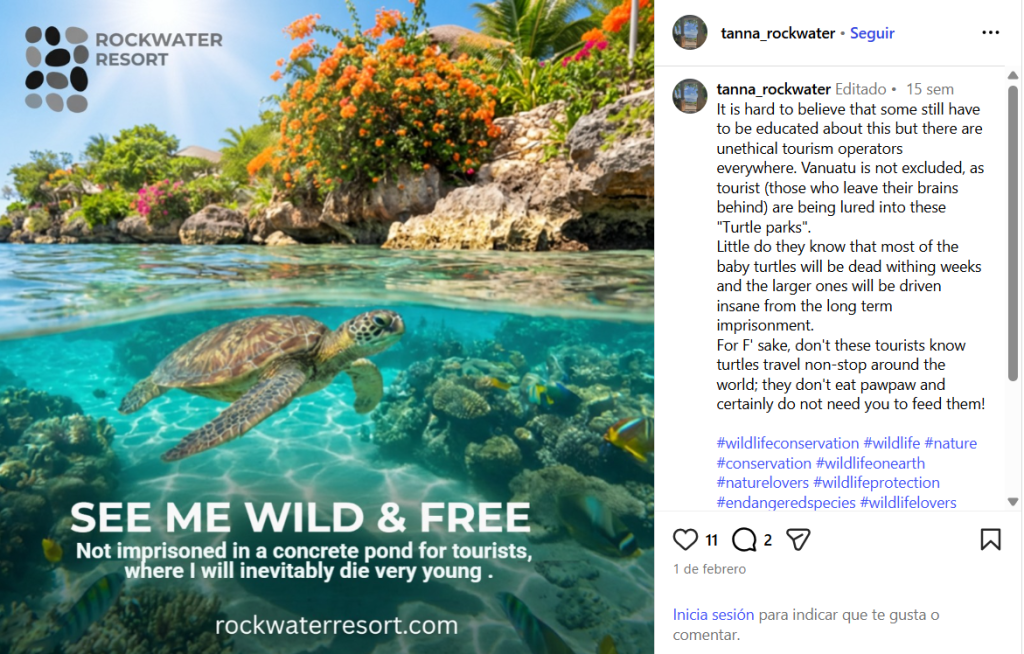
Unfortunately it might still take a while until people will drive a major change in the general perception of sea turtle tourism, just as it happened with Sea World’s killer whale shows and Elephant rides in Indonesia.
Because so far, in the sea turtle universe, there seem to be just singular people noticing that something is off, while the masses are still very much impressed and excited about the commercialized close encounters.
And even worse: I have the feeling that sea turtle tourism scams are becoming more numerous!
Funnily enough, volunteers who come to MEMANTA seem to be very well aware as they are always very concerned about animal welfare, morals, ethics, and best practice. I guess we just speak to a totally different target group.