
There is one country in the western hemisphere that seems to be the ultimate sea turtle haven, especially when it comes to concerned first-time travellers and first-time volunteers who want to make everything right.
Costa Rica.
Just the name has it all already – it’s sexy, it’s exotic, it’s tropical, and it talks about a rich coast
– a perfect environment for sea turtle volunteering!
I myself have a special bond with Costa Rica…
Because it was here, in 2008, when I first got in touch with sea turtles. On a 5-week volunteering trip with a german organization, I visited two projects for one week each and fell in love with the lifestyle!
Why do I say “I fell in love with the lifestyle?” Because in fact, I didn’t see any turtles in those two weeks. It was still the beginning of the nesting season (which noone explained to us then…) and the hatcheries were still kind of empty. BUT I lived in rustic camps, walked through swamps, went on night-time patrols, met people from all over the world, felt sweaty and sandy and super fulfilled.
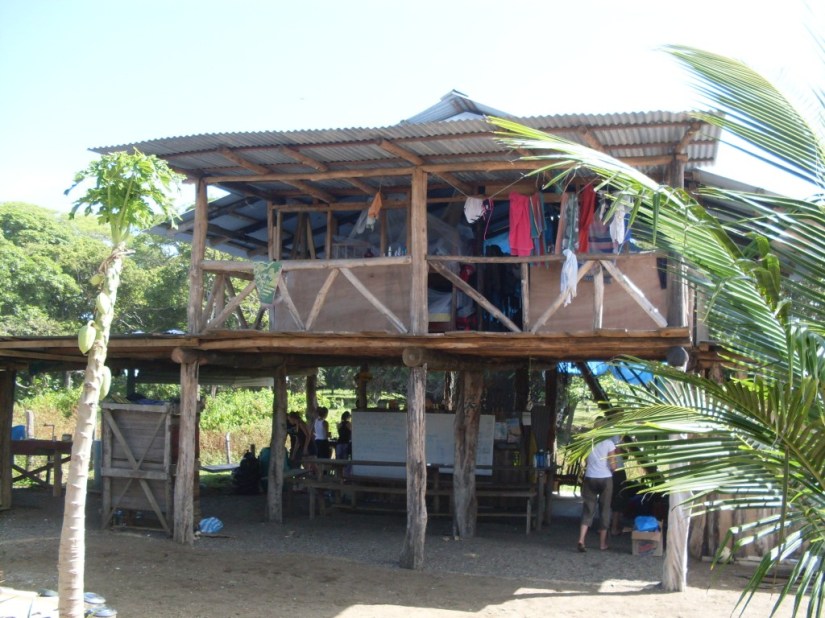
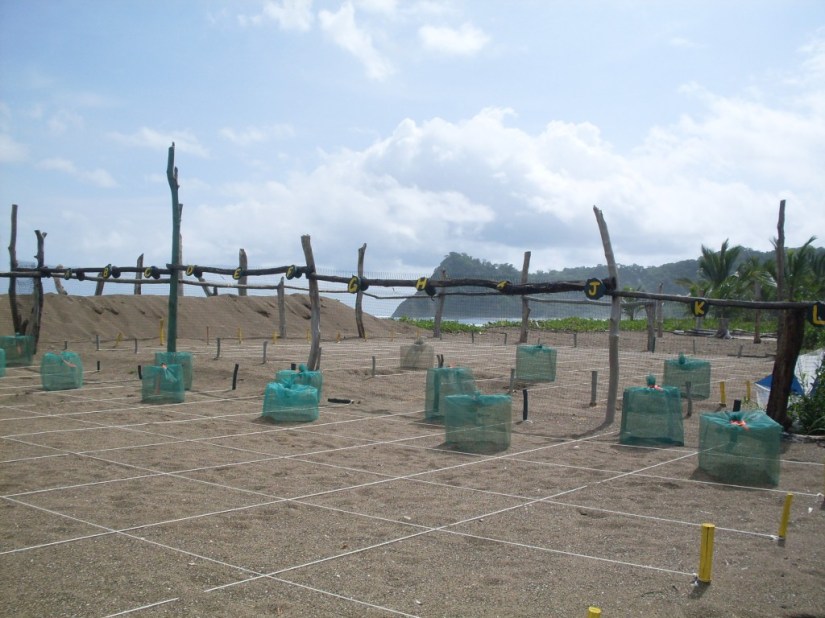
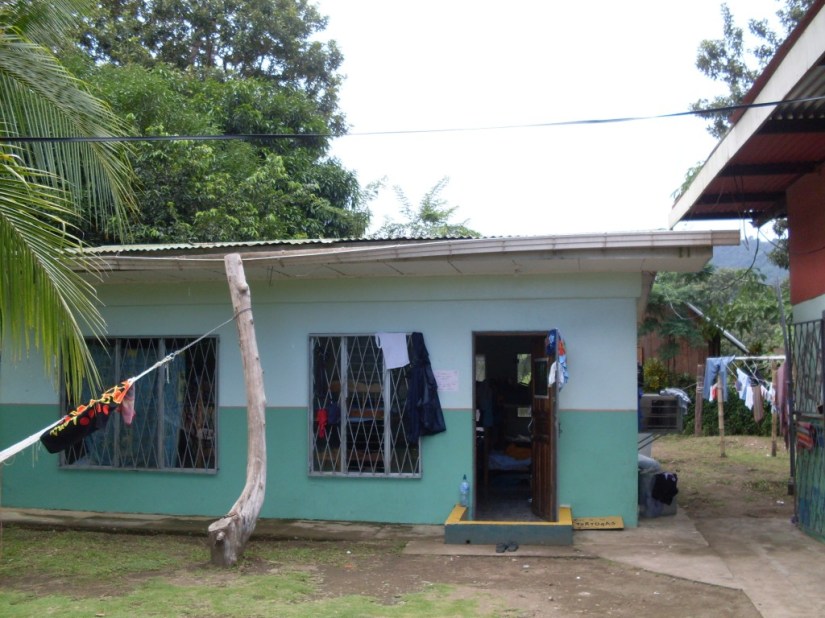
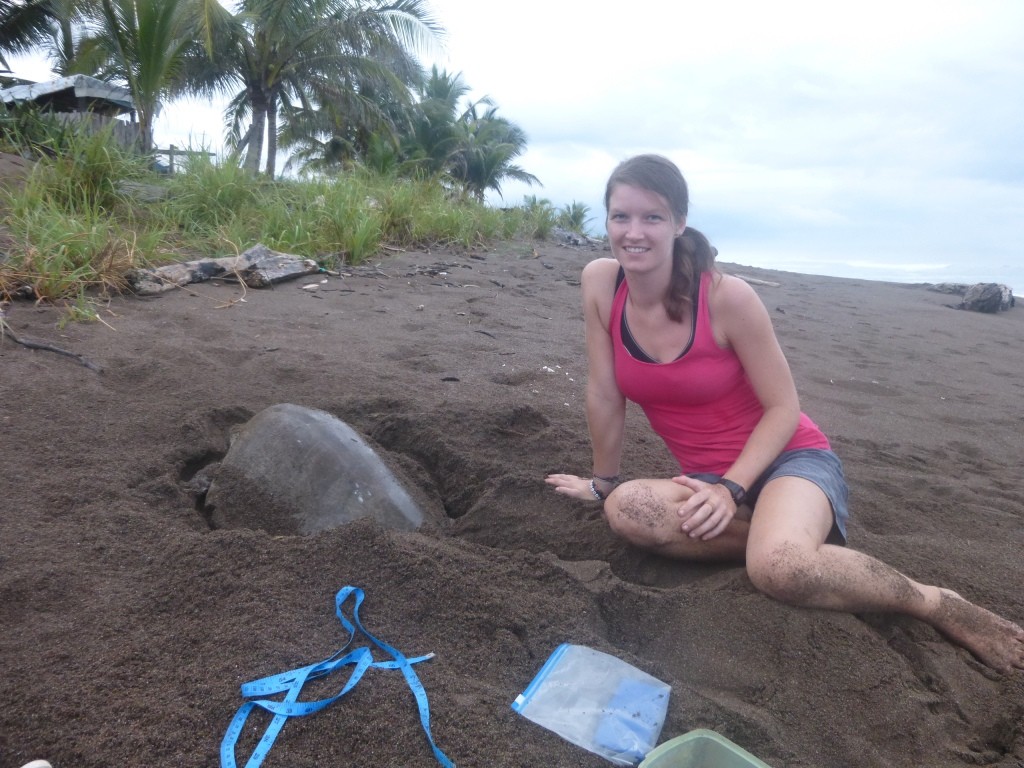
Here are some impressions of the living conditions on my first trip: (it was still the time without selfies and smartphones, so I don’t have a lot of pictures of myself…)
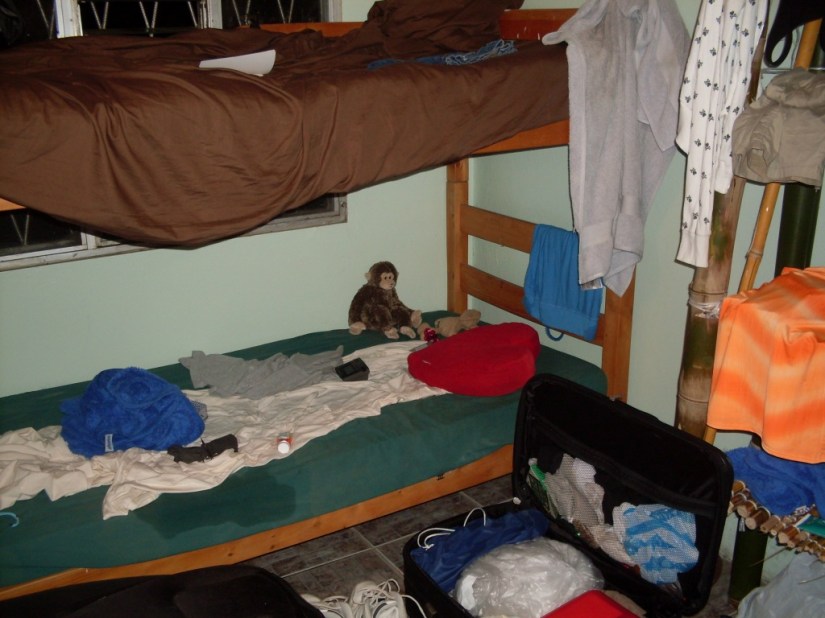
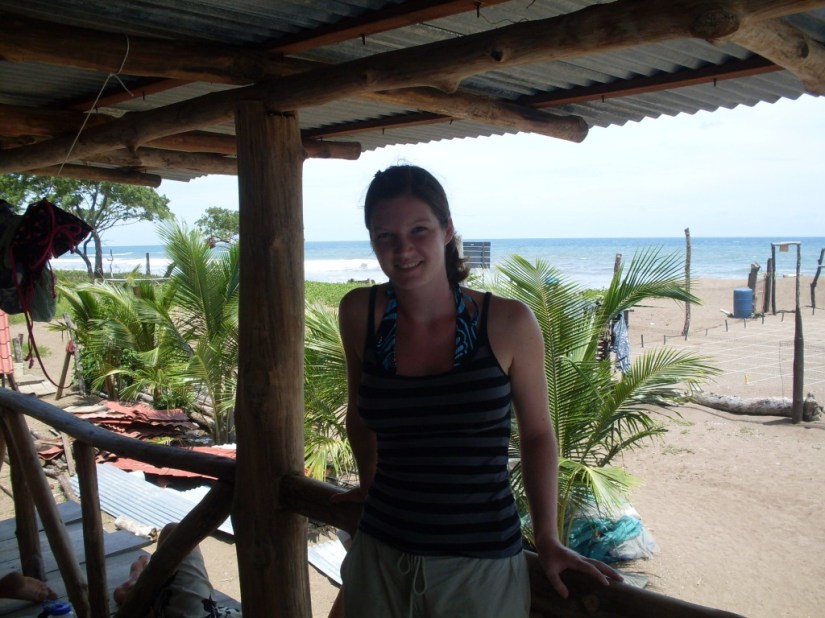
So I went to Malaysia the following year where I actually saw my first mama turtles and hatchlings… and the rest is history.
Well, thanks to Costa Rica I also ended up here in Playa Venecia in Nicaragua. Because it was in 2018 when I went back a second time to work as a coordinator at one very remote, non-inhabited beach called Playa Caletas. And in those 7 months I met my ex-partner who brought me to his home country Nicaragua, and together we ended up here in Venecia.
So long story short: I myself have my experiences with sea turtle volunteering in Costa Rica – even though they are outdated.
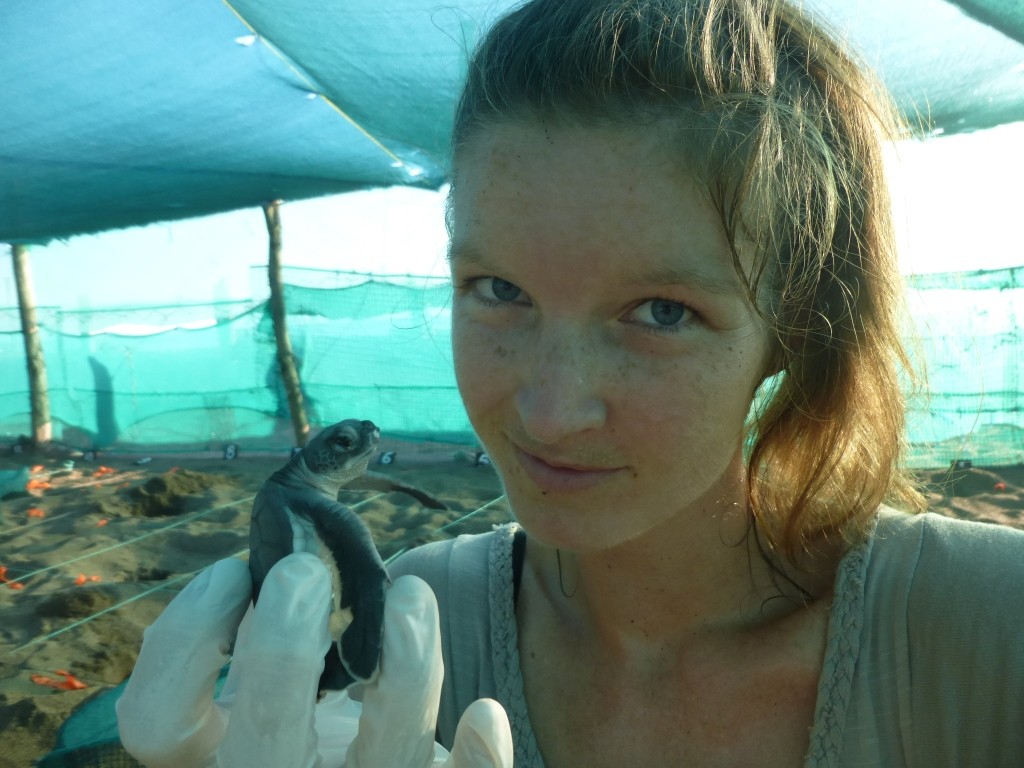
Just in case you are wondering, here are some impressions from the sea turtle camp in 2018:
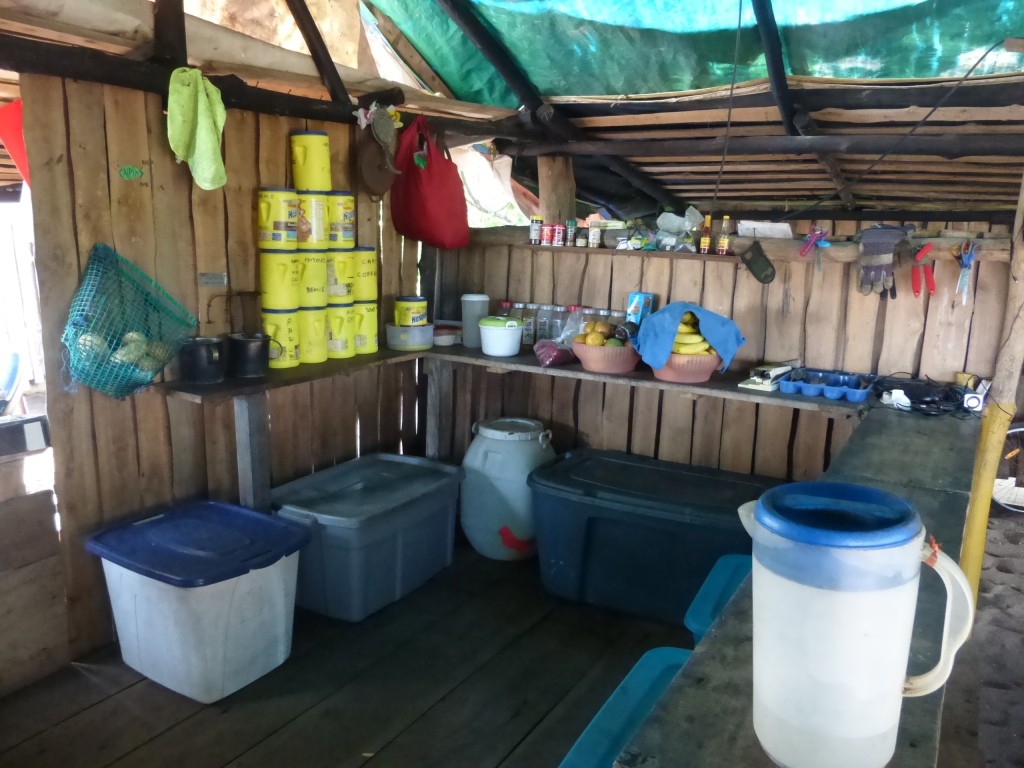
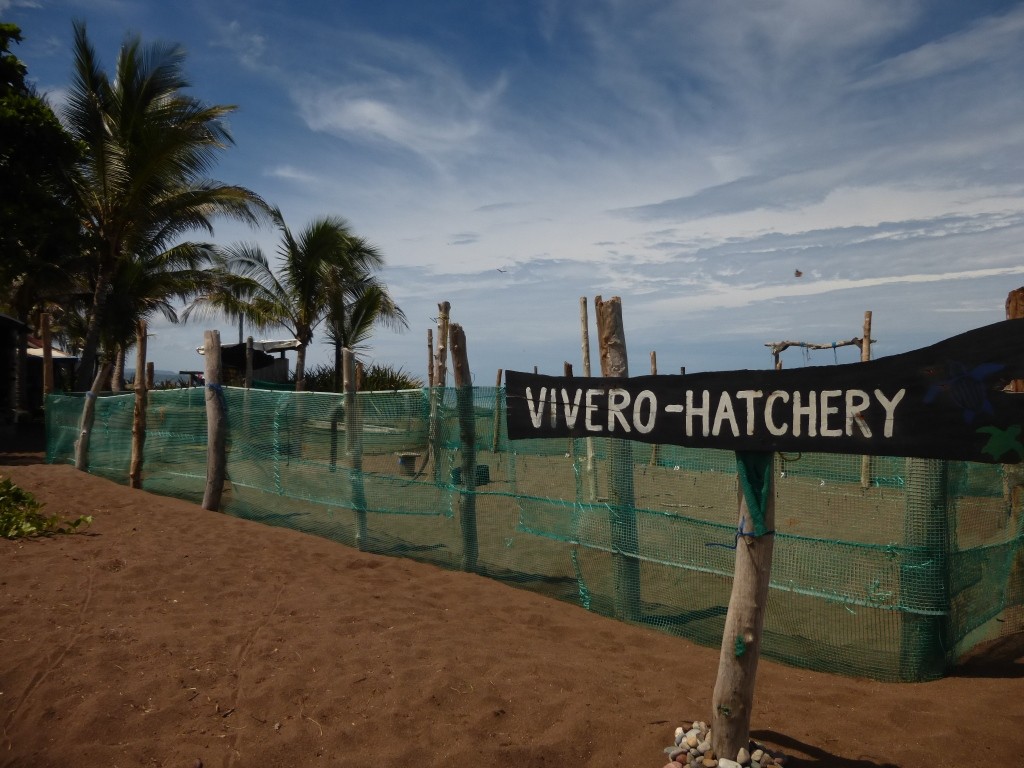
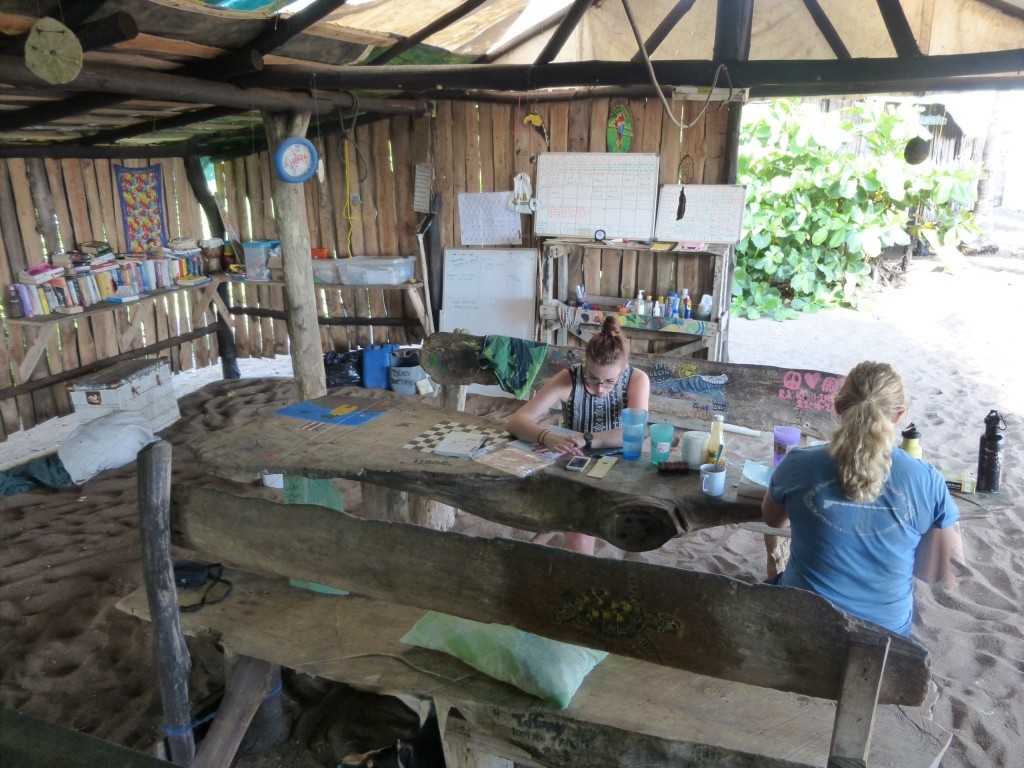
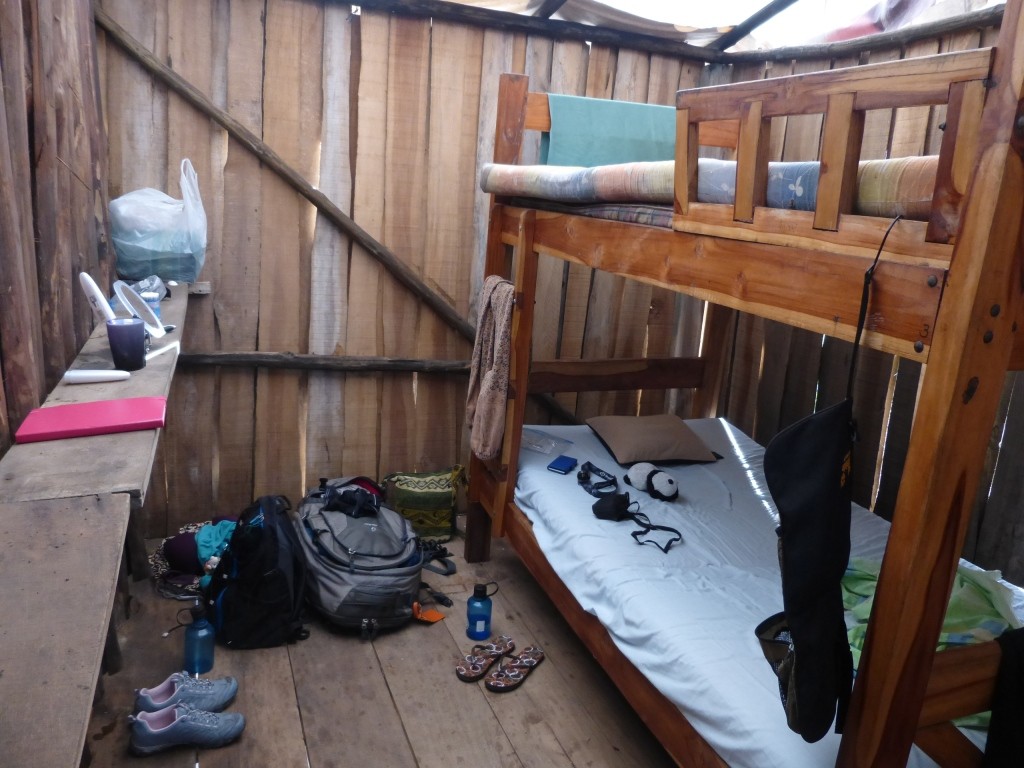
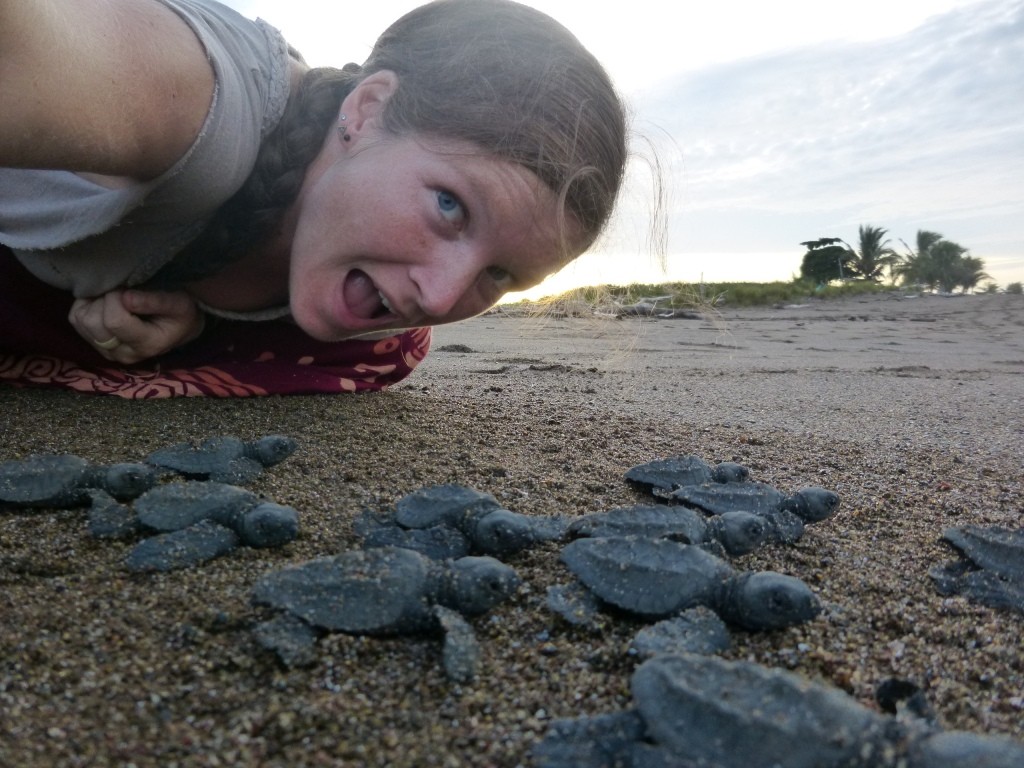
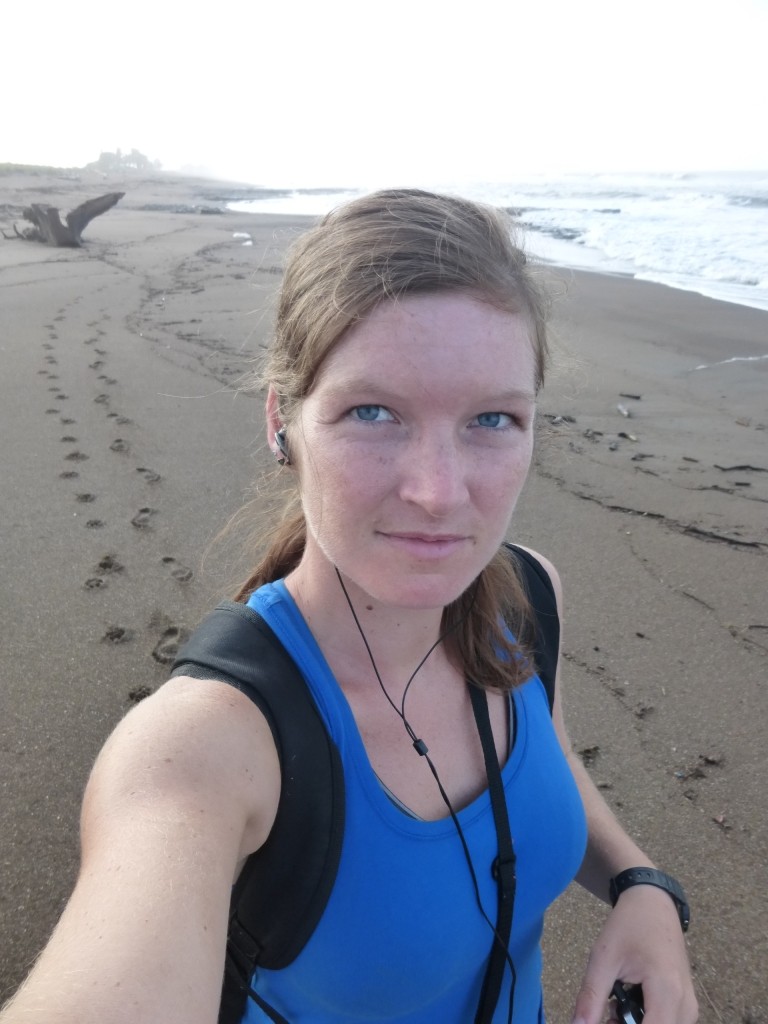
But now enough of me, let’s stark with the real talk:
It cannot be denied that Costa Rica is a hotspot for sea turtle conservation and sea turtle volunteering. Factually every single beach both on the Pacific and the Caribbean side has its own hatchery that receives international volunteers.
So why even bother to come to Nicaragua, the poorer, more chaotic and less established neighbour, with its very basic infrastructure and its poorly enforced protection laws, when you could live through the perfect-case-scenario in the garden of Eden, Costa Rica?
I will tell you why!
Easy, touristy, polished: Volunteering in Costa Rica
Costa Rica is more advanced in nearly every thinkable aspect and is heavily influenced by tourism and expat culture. Prices are going insane and have been doing so since I was there in 2008, as I clearly remember how people back then already complained about the ever-rising costs of living and travelling.
That’s why many traditional backpackers and long-term travellers have started skipping Costa Rica altogether – as they know, they couldn’t afford to stay long anyway.
Costa Rica is perceived as the “Switzerland of Central America”, as it is said to be very safe, very comfortable, very clean, and also very expensive when compared to the neighbouring countries.
Costa Rica is a forerunner for ecotourism and volunteer tourism. It has done many things right with regards to species protection and biodiversity conservation, with many world-famous national parks and among those are some renowned destinations for sea turtle lovers.
There are, in fact, various national parks and wildlife refuges that were specifically established to protect critical sea turtle nesting sites. These are:
- Tortuguero National Park
- Las Baulas National Marine Park
- Santa Rosa National Park
- Ostional Wildlife Refuge
- Gandoca-Manzanillo Wildlife Refuge
Costa Rica is home to many success stories in sea turtle conservation as some projects have been established for as long as 30 years, which means: You can already see the direct results of the work in the form of stabilized or even rising nesting populations.
BUT there are many downsides to the highly westernized, polished lifestyle in Costa Rica. It’s not only the costs, but the obvious commercialization of sea turtle volunteering. Volunteers are tourists, that’s clear, but some projects unfortunately have become tourist traps.
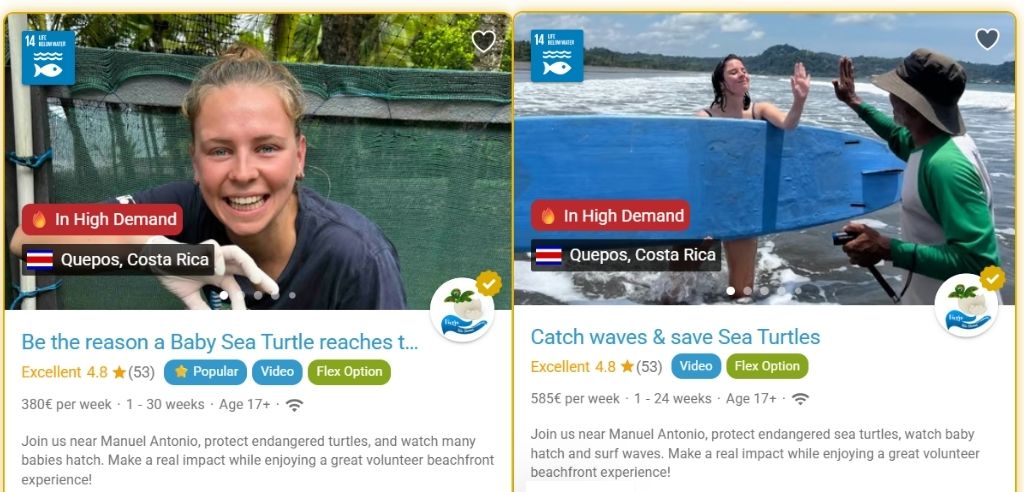
So what could happen when you end up in such a tourist trap?
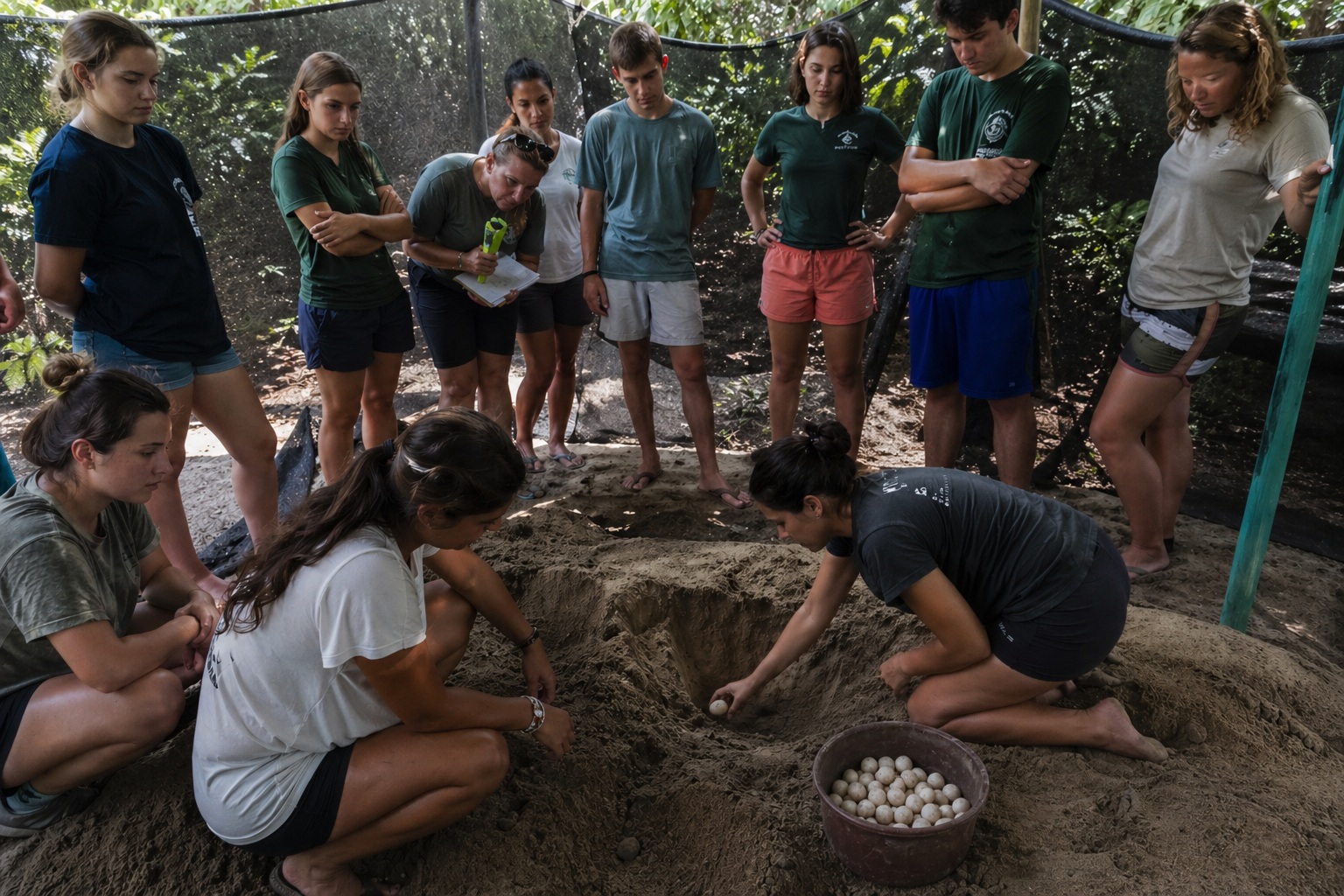
- Noone gives out information or teaches you about sea turtles – you simply follow orders
- Volunteer groups are as big as 30-40 people
- Patrols are done in teams of 5-10 people which is totally unnecessary
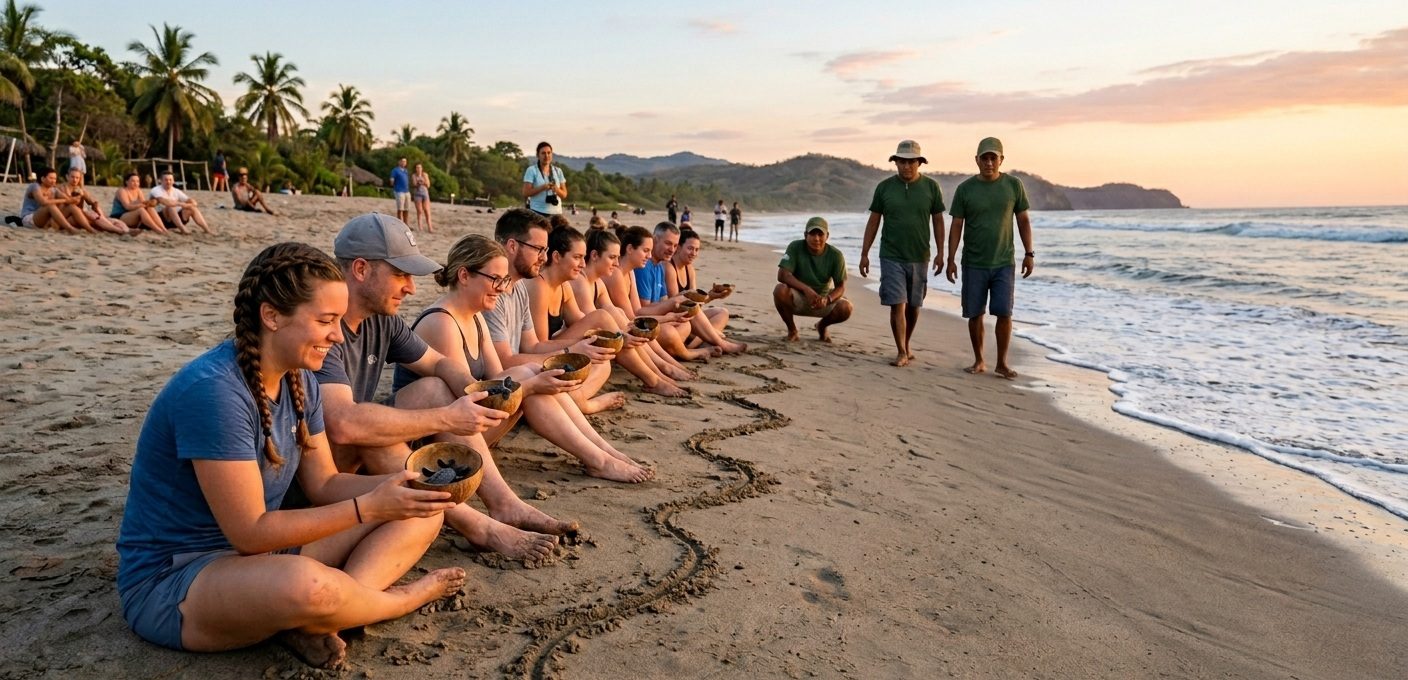
- Nest relocations and hatchling releases feel more like an attraction as everyone tries to get involved and many stand around to watch
- During the day you are given pointless tasks just to keep you occupied, but in fact you don’t make a difference at all
- It feels more like a social hostel than an NGO
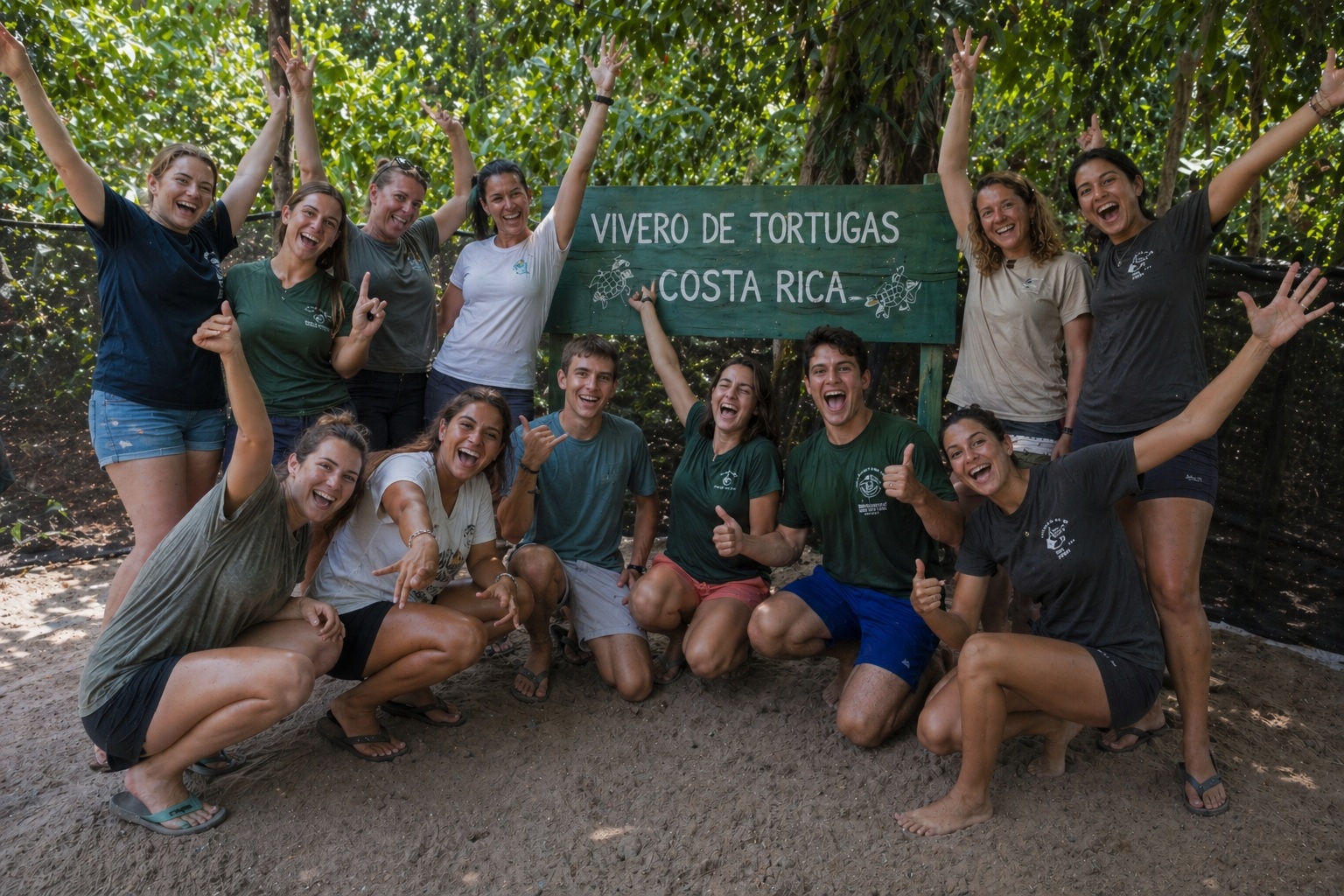
Many young people choose Costa Rica for their first travel experience abroad. Which is totally understandable, because I did the same back in the days. BUT remember that the world in 2008 was still very different. No smartphones, no social media giving out live travel information, no oversharing, no hyped-up instagram destinations, no overtourism….
In fact I remember how some travel buddies introduced me to facebook during this very first trip of mine. I hadn’t heard about social media before that… haha!
Raw, real, impactful: Volunteering in Nicaragua
It’s not that I want to convince you that Nicaragua is a better destination for sea turtle volunteering than Costa Rica. It just depends on who you are and what you want to achieve.
Nicaragua offers:
- Lower cost
- More authentic experience
- Deeper local impact
- Fewer tourists
Sea turtle conservation in Nicaragua is not as regulated as in Costa Rica. If you see a poacher on a Costa Rican beach, you can call the police on them and they know that, they usually run away from you, leaving the freshly stolen eggs behind… As the law is so well enforced, poachers are seen as criminals and luckily poaching rates are low.
In Nicaragua, sea turtle eggs are heavily commercialized. Their commercialization is an important factor for the ecomonic survival of vulnerable communities, and therefore tolerated. In fact there are many people involved who earn a share:
- First the poachers on the beach, usually people with no regular income and no education
- Second the vendors in the village, which are often women
- Third the people who transport the eggs to the cities, mostly bus drivers
- Fourth the vendors in the city who then resell them again
- Fifth the small business owners who sell the eggs at a market stand, in their restaurant, in their bar or simply on the street
So just imagine how many people profit from that! And because we need to play by the rules, all sea turtle hatcheries in Nicaragua BUY the majority of the nests from the poachers.
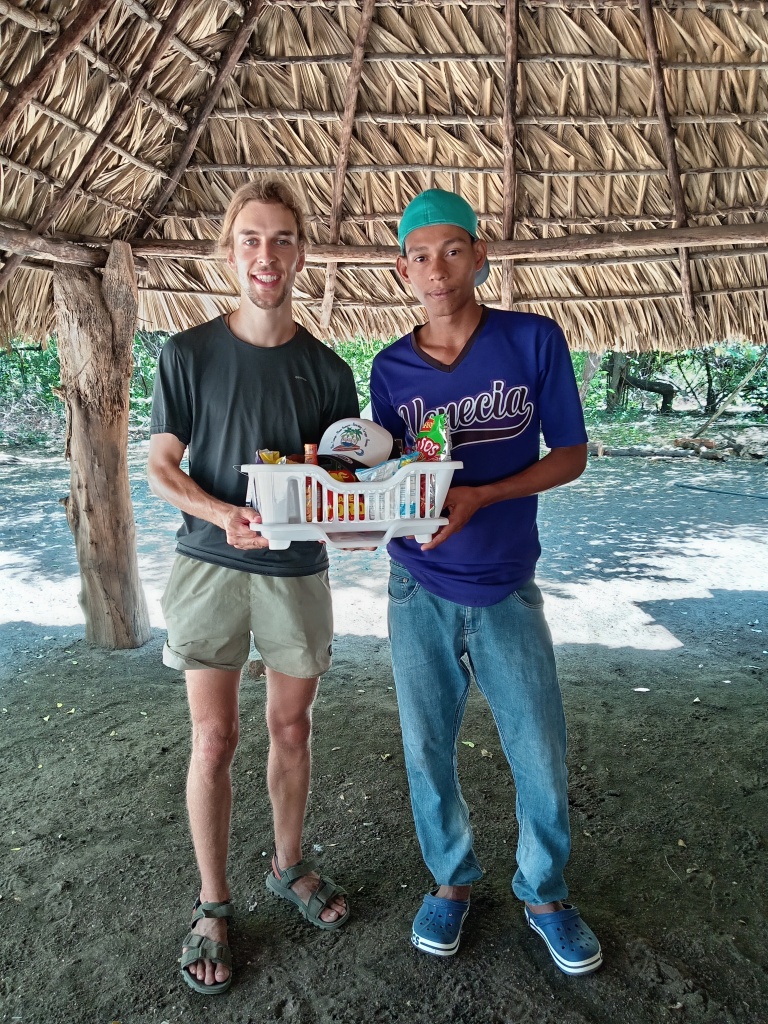
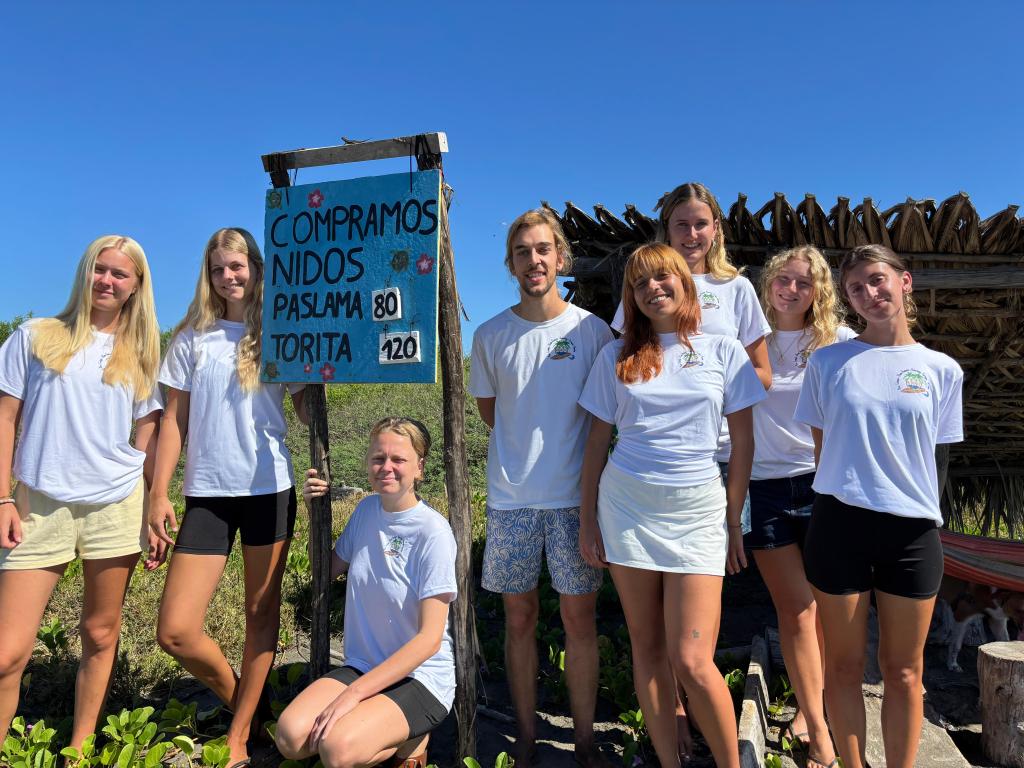
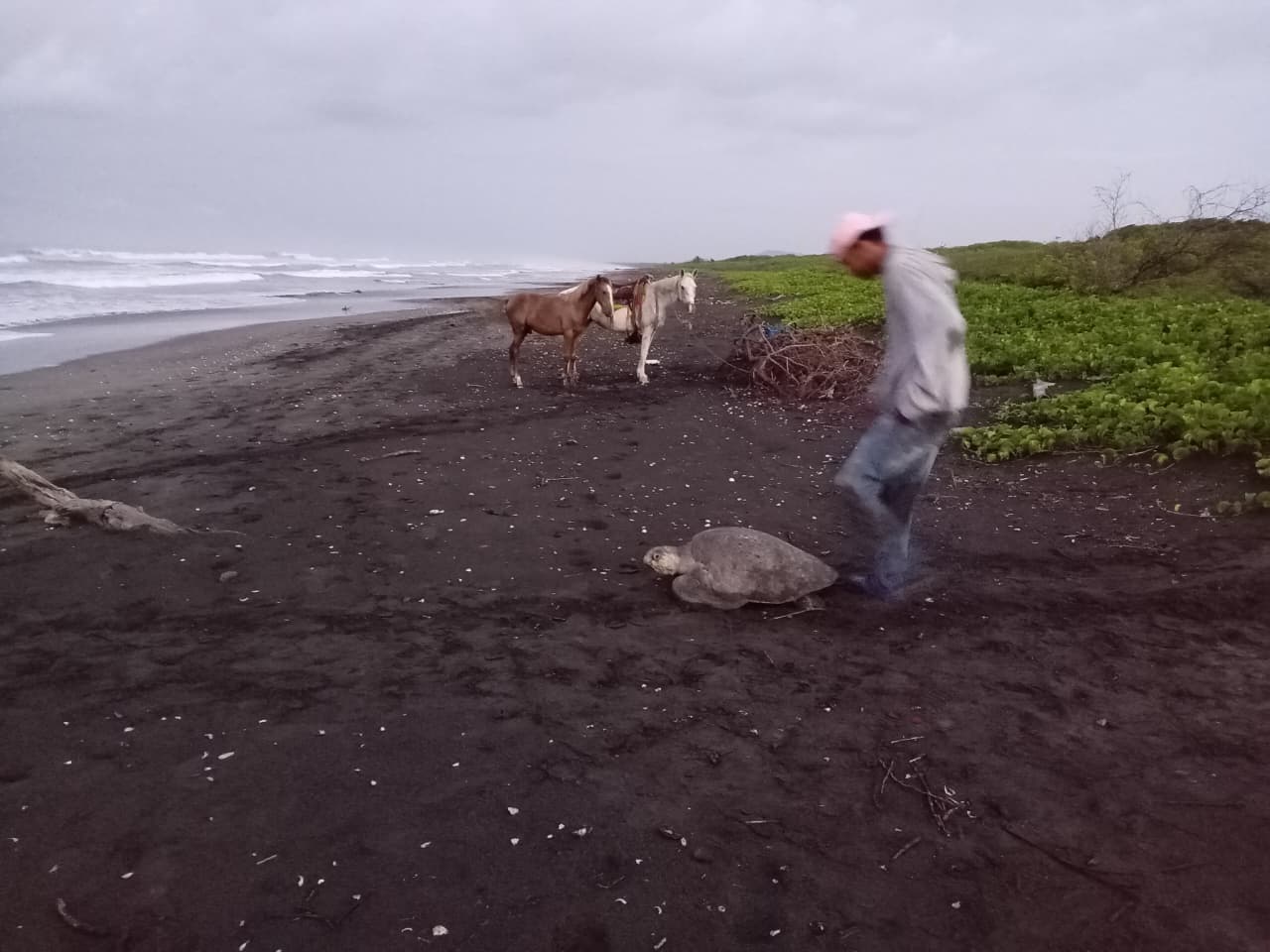
Buying nests instead of collecting them for free puts a huge financial strain on those projects, as you can imagine.
We at MEMANTA pay around 2.500 USD each year just for the eggs. Which means we are heavily dependant on some income. So you either receive tons of donations or you build a business model involving ecotourism and volunteering and use the profits to fund the operation.
So in simpler terms: Volunteers in Nicaragua are actually NEEDED. They are needed to help with all the work involved, but also to help with the financial burden. And because there is no such thing as overtourism here in Nicaragua, projects tend to have small volunteer groups.
This means that actually every extra hand and every extra head is making a difference. It’s not just “stand around and watch” like in Costa Rica, but “do it”!
Here at MEMANTA, this translates into:
- The more volunteers come, the more patrols we can do.
- Volunteers do their shifts alone or in pairs, but not in groups of 5+ people
- You get some quality lone time with eggs, hatchlings and mama turtles
- You feel appreciated and have an actual impact
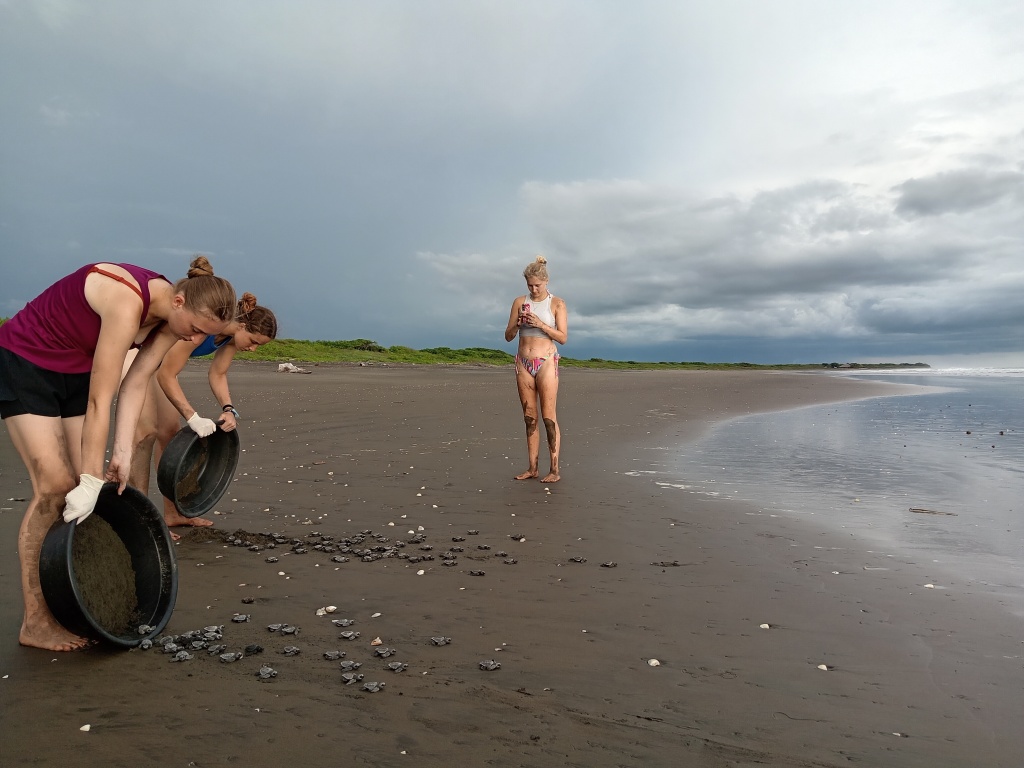
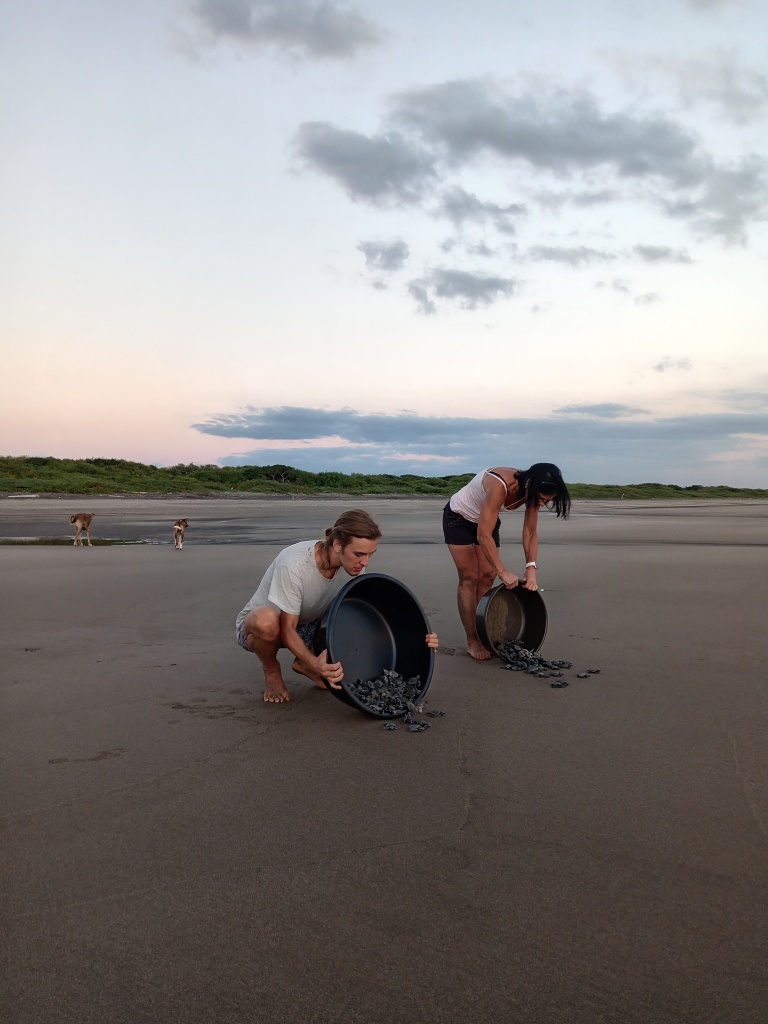
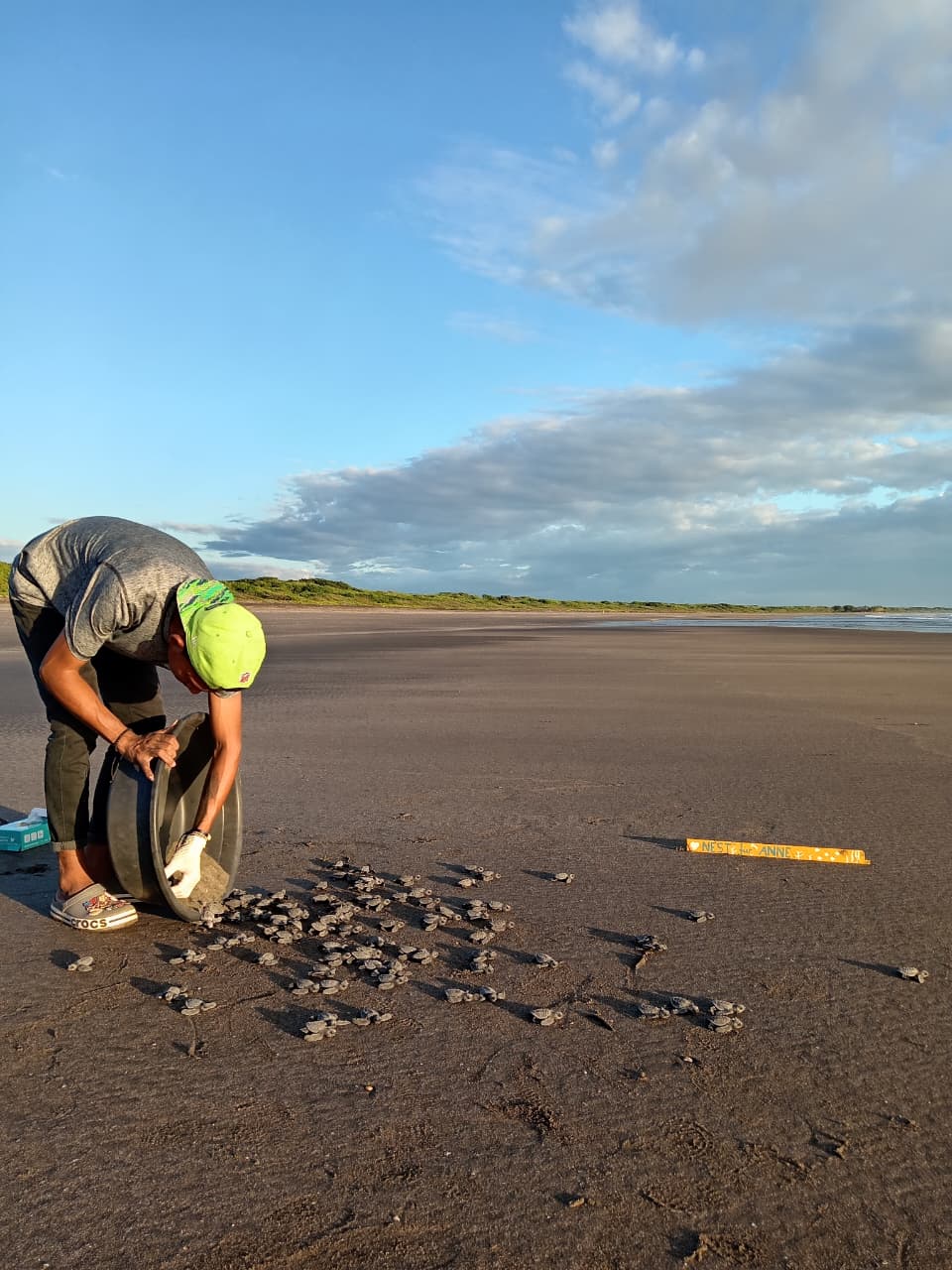
Also, here in Nicaragua, where we actively collaborate with the poachers instead of just criminalizing them and shouting “booo!”, you actually learn about human-nature interactions, the importance of community work, and that conservation cannot be done without considering human well-being.
You learn how to save turtles WITH the locals, not how to work AGAINST them.
Now let’s sum this up in a comparison table, shall we?
Volunteer with sea turtles: Costa Rica vs Nicaragua
| Costa Rica | Nicaragua | |
|---|---|---|
| Volunteering Cost | ⚠️ Varies a lot ($150–600/week) | ✅ Affordable ($150-250/week) |
| Travel Cost | ❌ Expensive ($50-80/day) | ✅ Cheap ($30-40/day) |
| Turtle Species | ✅ Caribbean: Leatherback, Green, Hawksbill turtles ✅ Pacific: Mainly Olive Ridley | ❌ Caribbean: No major nesting ✅ Pacific: Mainly Olive Ridley |
| Turtle Highlights | ✅ Leatherback and Green turtles nesting in high numbers ✅ Arribadas of Olive Ridleys on specific beaches | ✅ Rare Hawksbill turtles nesting in estuaries ✅ Arribadas of Olive Ridleys on specific beaches |
| Turtle Protection Status | ✅ Quite good: Laws are well enforced, fewer poachers | ❌ Bad: Meat and egg consumption are tolerated |
| Project Availability | ✅ Volunteer projects on most beaches → greater choice ✅ Some very renowned programs ❌ Many book commercialized programs through volunteer travel agencies | ❌ Only a couple of real volunteer projects ⚠️ Lesser-known grassroots initiatives ✅ Volunteers book directly with the organization |
| Work Focus | ⚠️ Work against the poachers (they are considered criminals) | ⚠️ Work with the poachers (they are usually very nice people from the village!) |
| Community Involvement | ⚠️ Mixed (some programs are quite commercial and detached from the local community) | ✅ Strong collaboration with locals, programs for kids etc. |
| Comfort Level | ⚠️ Accommodation varies: From rustic camps to luxurious suites ✅ Overall better infrastructure | ⚠️ Typically basic accommodation ❌ Less advanced infrastructure |
| Experience & Vibe | ❌ More “voluntourism” / international crowds → less impact ⚠️ Fun time in a large group | ✅ More authentic, more personal → more impact ✅ Real learnings and self-development |
| Group Size & Demographics | ❌ Large groups (can be 30-40 volunteers per project) ✅ All ages (many 18-25y but also above, up until 50+) | ✅ Small teams (max. 10 volunteers) ⚠️ Usually younger mature adults (20-35y) |
| Volunteer Work | ⚠️ Long patrols (3-6 hours) ⚠️ Partially useless daytime tasks ❌ More “bystanding and watching” due to larger groups | ⚠️ Patrols & buying nests from poachers ✅ High involvement in every aspect of the daily work ✅ More “doing” due to smaller groups |
| Languages | ✅ English is common | ❌ Locals speak only Spanish |
| Educational Value | ❌ Less training, volunteers follow orders and learn from others | ✅ Intense training directly from project leaders |
| Scientific Work | ✅ Projects receive more funding and have more resources ✅ Many extensive data sets available ✅ Turtles are usually tagged or tracked | ⚠️ More hands-on, less formal science ❌ Little research and incomplete data sets |
| Safety & Ease | ✅ Feels generally safer & easier for first-timers ✅ Positive representation by international media | ⚠️ Is safe but receives negative perception ⚠️ Requires more preparation, independence and resistance |
| Personal Support | ❌ More focus on the group and less on the individual person (due to high volunteer turnover) | ✅ Every volunteer is highly valued and receives customized support |
| Career Value | ❌ Careful: Many programs are promoted as internships but have no educational value | ✅ Higher educational value, more work practice |
| Intercultural Experience | ❌ Low due to westernization | ✅ Intense |
| Travel Options | ✅ Has world-renowned nature destinations ✅ Very easy to get around (perfect for young, unexperienced people) | ⚠️ Experienced travellers have it easier ✅ Uncrowded, lesser known places that feel more authentic |
Be aware: Scams happen in both countries!
Unfortunately there are disappointing volunteer projects both in Costa Rica and in Nicaragua. To some people with zero expectations and lacking awareness they might seem legit, however, other people who know what a state-of-the-art conservation project involves will notice that something is off.
I believe that you should be somewhat able to detect a scam before-hand when you do your due diligence. But it can happen to the best of us – because marketing budgets are high, websites and social media content is polished, and many of those unaware volunteers leave positive reviews, so it’s easy to get fooled.
Scams in Costa Rica typically look like this:
- They accept more volunteers than they have work
- Everything feels touristy
- They accept interns but it’s just volunteering in disguise to attract a new target group
- Volunteers are not properly trained
- Volunteers don’t have a real task and lots of free time
- You pay a lot of money even though nests are free (means: they make huge profits)
Scams in Nicaragua can look like this:
- Sea turtle conservation is somewhat unethical
- There is no clear structure or schedule and everything feels chaotic
- Nobody speaks proper english or has experience with foreign volunteers
- They just let you do whatever you want and have you play with baby turtles
So either way you need to be careful with your choice.
This is not only valid for sea turtle volunteering, but also for sea turtle releases. Many tourists are paying to release a baby turtle at a specific date and time. For that purpose, perfectly healthy hatchlings are held in black buckets for days and weeks with little water, so they are readily available anytime.
Fact is: When you pay several US-Dollars to hold ONE sea turtle hatchling in a line next to several other foreigners, which is conveniently available at the exact date that you booked weeks in advance, it is NEITHER sea turtle volunteering NOR ethical tourism!
Also you need to understand that those unethical projects are usually run by local people or by resort owners and expats with no scientific background in sea turtle conservation. In the case of Nicaragua, there are only a handful of good volunteering projects that I could recommend, including our own of course!
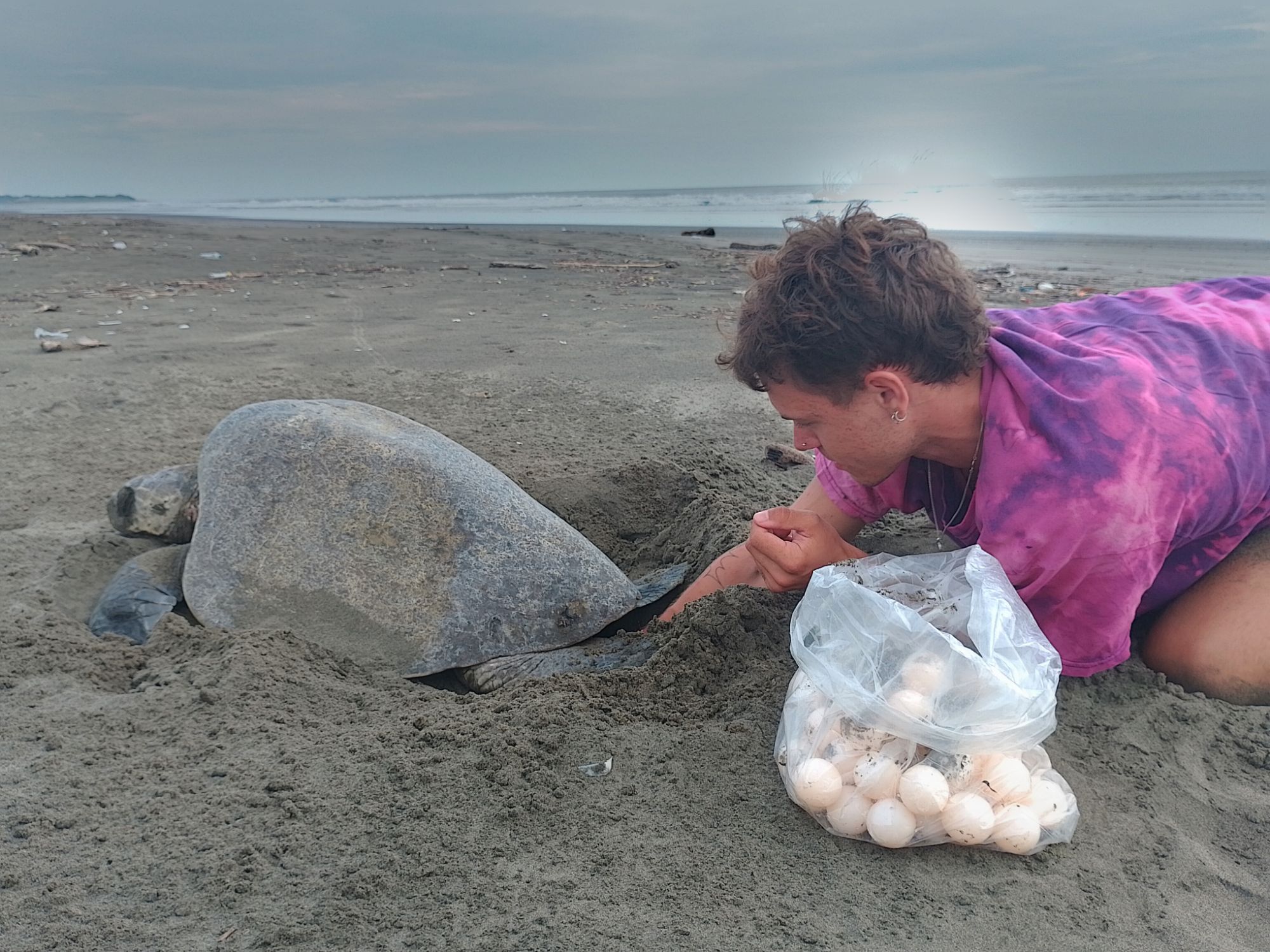
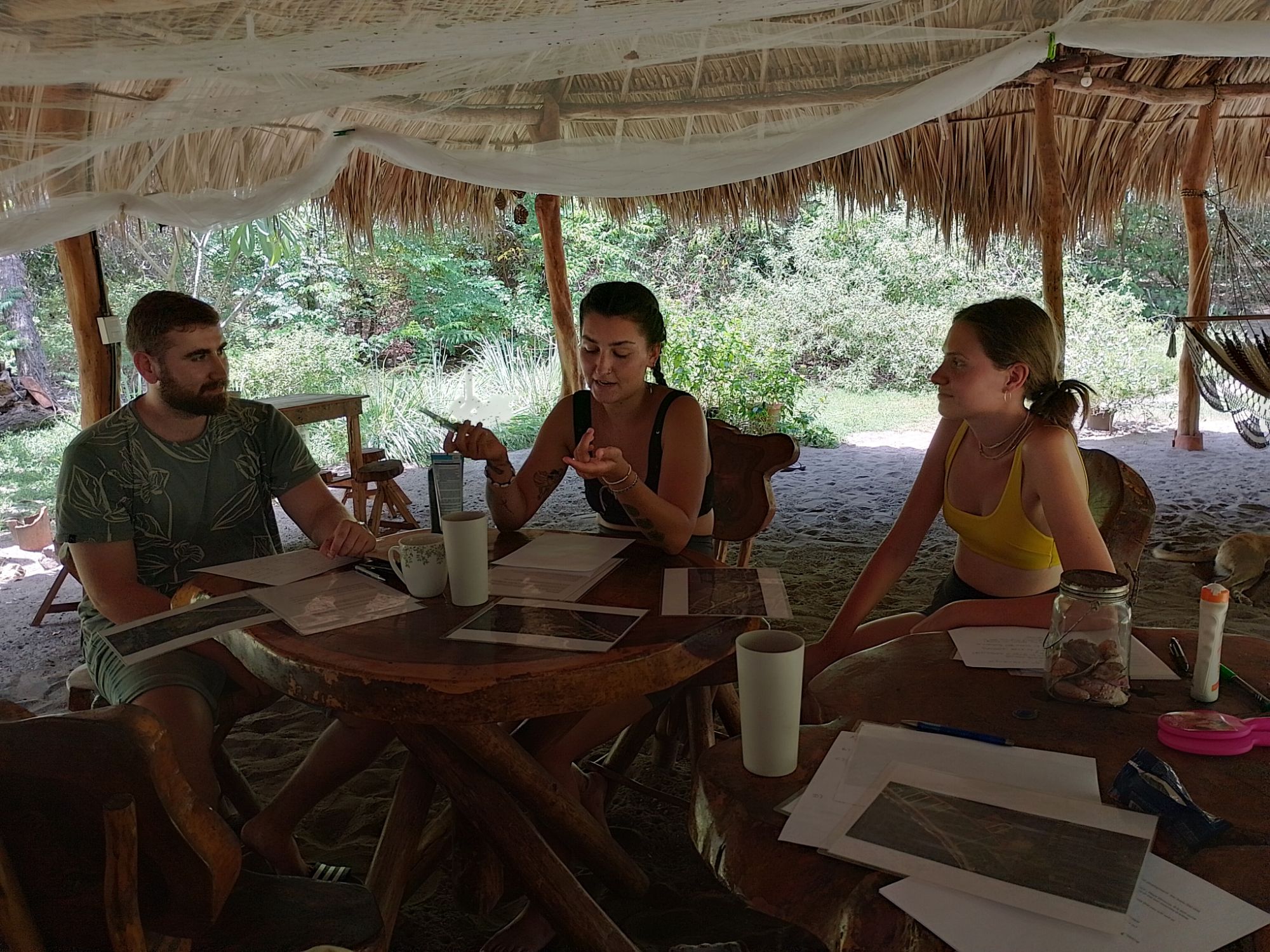
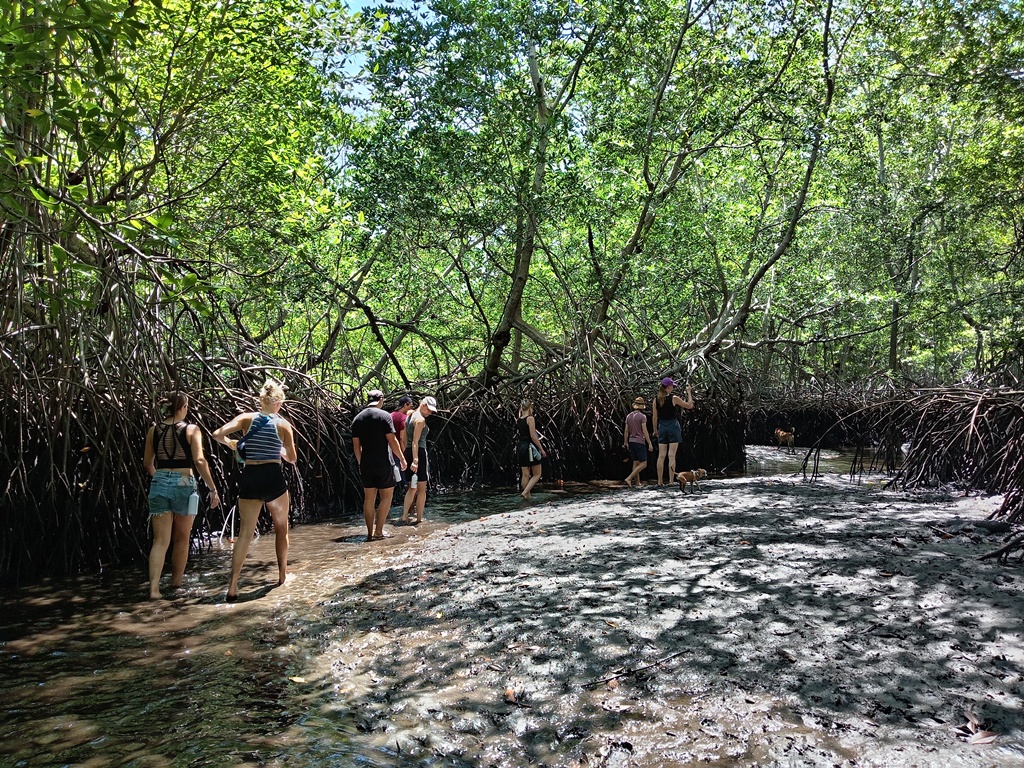

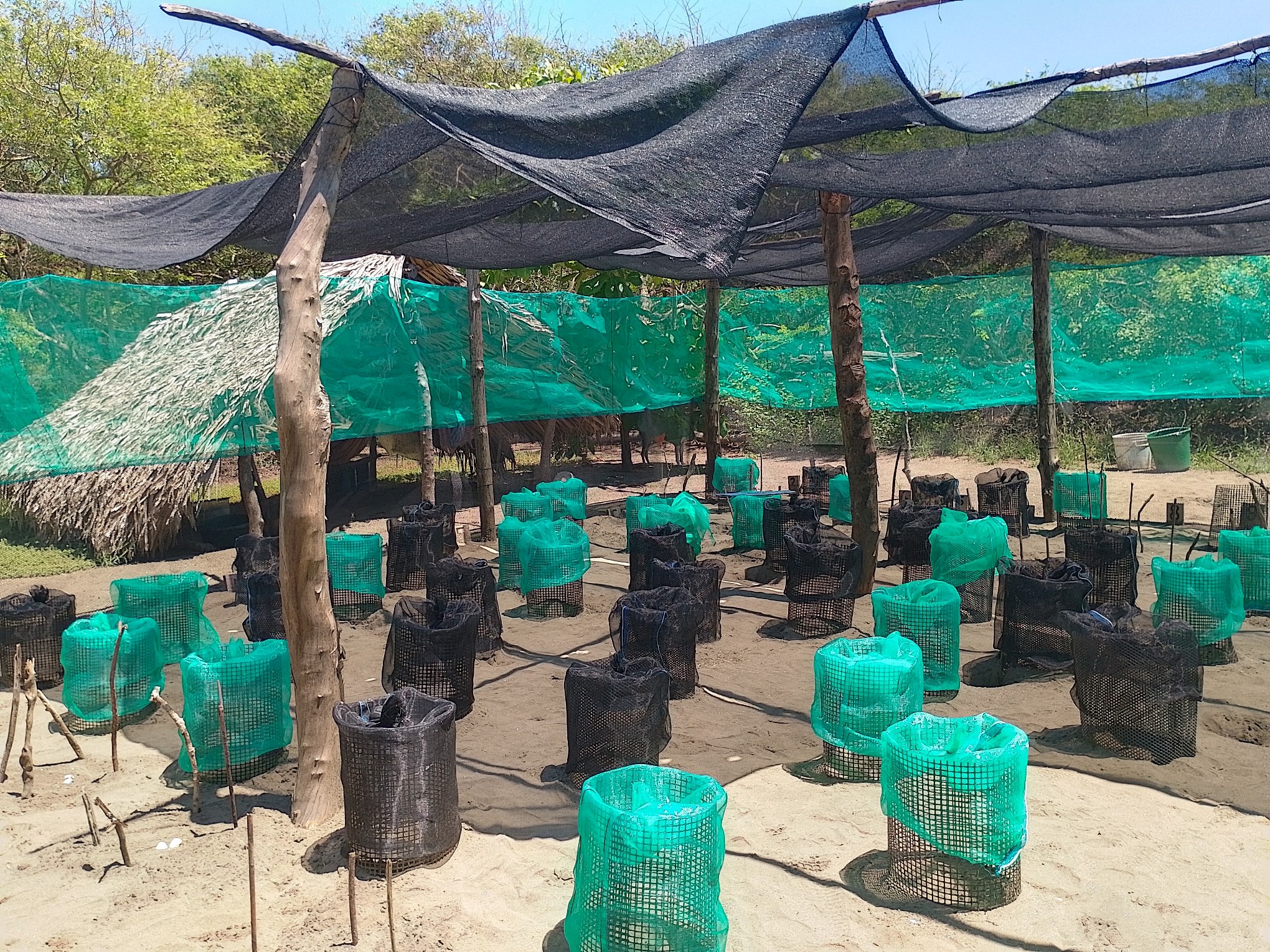
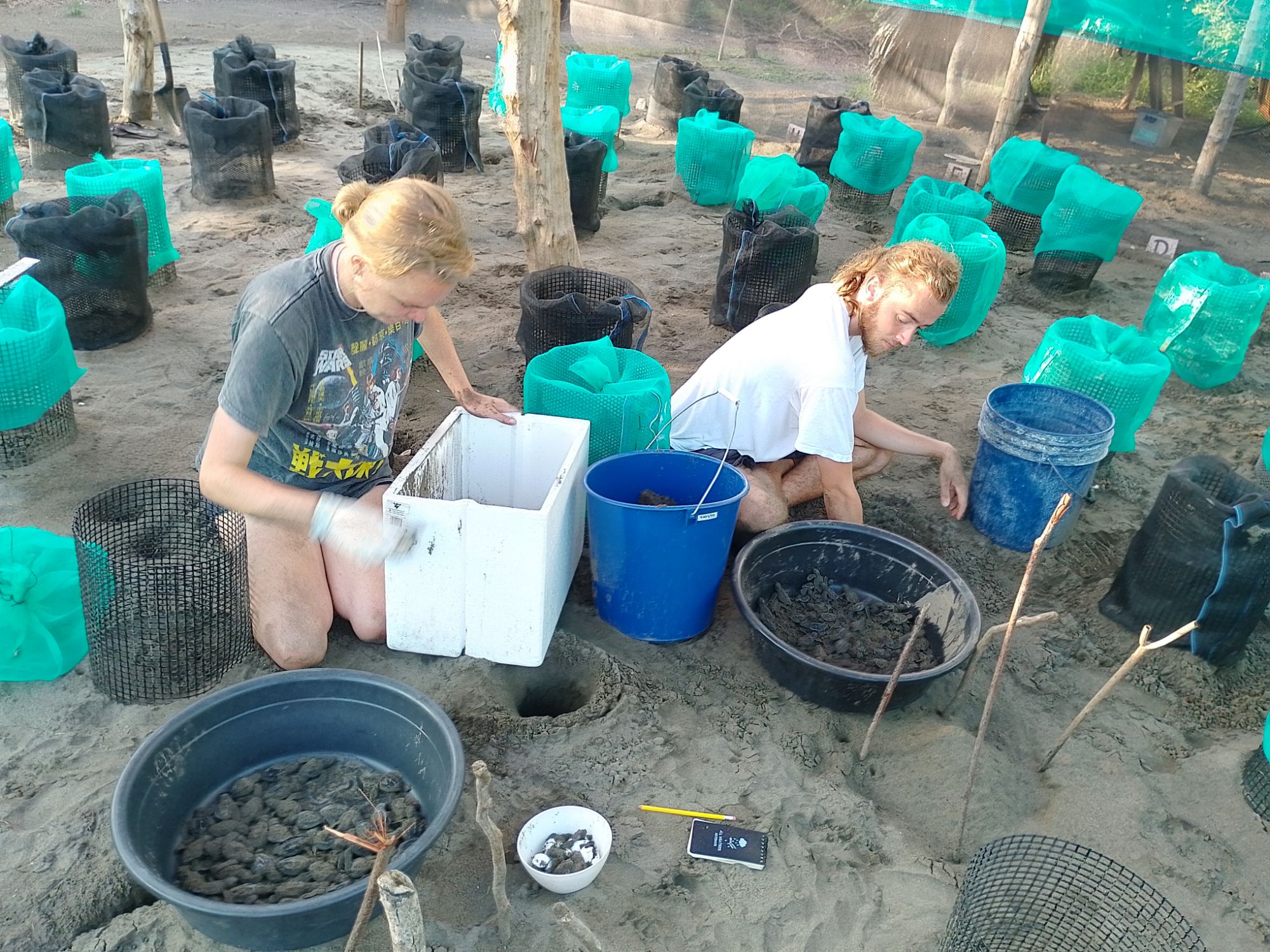
Yes, MEMANTA is one of the very few places in Nicaragua where volunteers:
- Take part in hands-on conservation
- Learn, gather professional experience and broaden their horizon
- Work closely with local stakeholders
- Feel needed and take over real responsibility
Don’t let yourself be fooled by shiny websites that were thousands of Dollars in the making, fun group pictures with volunteers jumping into the air with their hands up, emotional marketing phrases that put you as a hero and turtle saviour in the centre of attention, or destinations deemed safe just because they are more developed and more frequently visited.
Why MEMANTA chose to be in Nicaragua
When I decided to take on the journey called MEMANTA, I was in Costa Rica working as a project coordinator. So it would have been easy to just stay in the world-renowned sea turtle haven and fulfill my dreams there, right? Well, when my ex-partner told me about Nicaragua and its state of sea turtle conservation, I was intrigued.
So here are the top reasons why I chose Nicaragua over Costa Rica:
- Costa Rica is way too expensive. Land prices are unbelievable, especially for beachfront properties – it would have been impossible to build my very own sea turtle camp surrounded by nature.
- Sea turtles are already well cared for in Costa Rica and there are more than enough hatcheries. Nobody needs another one – because there is actually competition happening among volunteer projects. It is a business basically!
- Nicaragua is still affordable and has long stretches of beach with very ineffective protection for sea turtles, while poaching rates are up to 100%
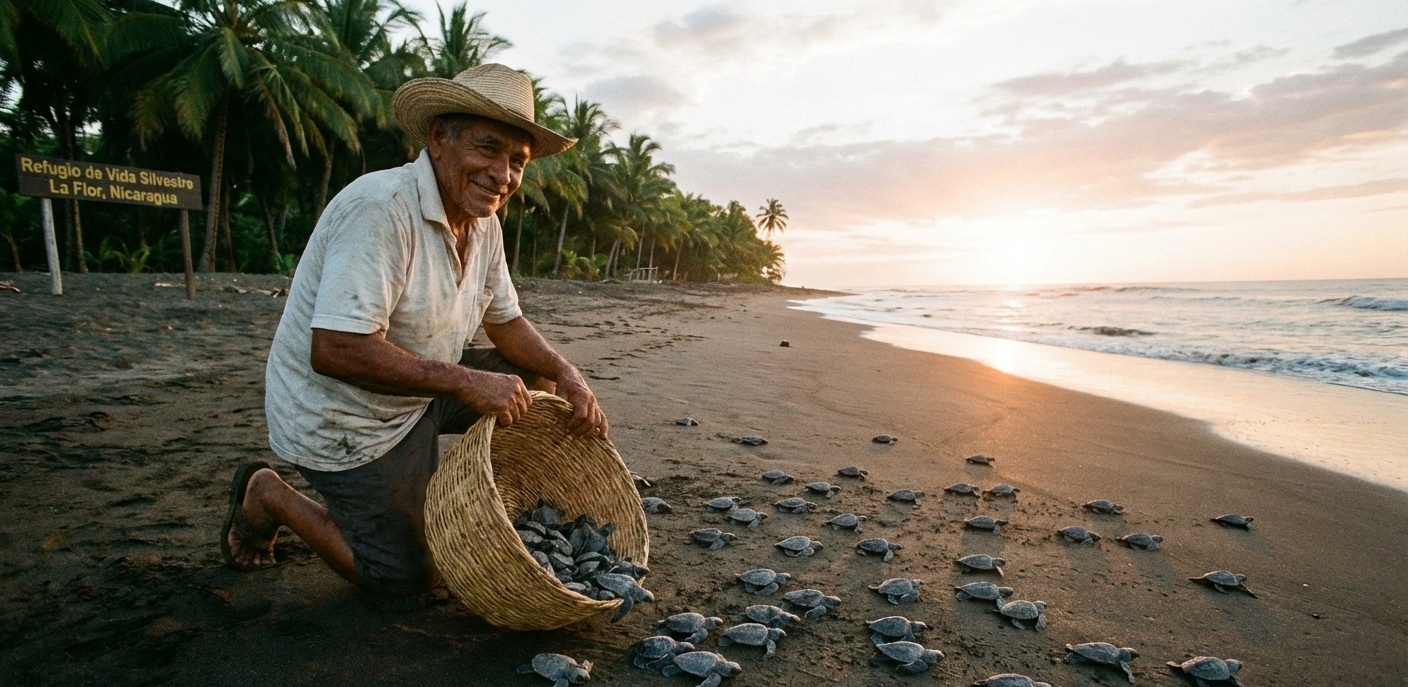
Why your next volunteering trip should be to Nicaragua
I always advocate for our volunteers to not only go experience the real Nicaraguan life in our village, but also to travel afterwards and get to know more of the country. Coming to Nicaragua is for many a life-altering intercultural experience which opens your eyes, widens your heart, and broadens your horizon.
A volunteering trip to Nicaragua is about understanding:
- how privileged we have become in the western world
- how unnecessarily sheltered and sensitive we have become
- how simple things can be
- what consumerism has done to our society
- how resilient humans can be, and how we wouldn’t need modern amenities if we weren’t so dependant on globalized capitalism
- how you can make small differences in the world
- how humans are meant to thrive in nature and not exclude themselves from the outside world
- how nature conservation can never happen without considering socio-economic issues
- but also how conservation work is supposed to be rewarding, fulfilling, fun and easy-going: We don’t need angry eco-warriors shouting at poachers, we need understanding people who achieve a win-win-situation for everyone
Nicaragua is the best destination for conscious travellers and adventurous minds. For people who are curious and not scared, who are open-minded and not too sensitive, who are realistic and no longer want to live in a bubble.


