When is the best time to come?
How do I get there?
How long should I stay?
Can I make my stay shorter / longer once I’ve arrived and paid?
What about the food?
What does a typical day look like?
I want / need to do a research project. Is that possible?
What do I need to bring?
Do you have WiFi?
Do I need to speak Spanish?
How many sea turtles will I see during my stay?
How am I going to survive without electricity and running water?
Why should I pay to help at the MEMANTA sea turtle hatchery?
I am young and have no money. How will I be able to pay the fees?
Why is it so expensive anyways?
When is the best time to come?
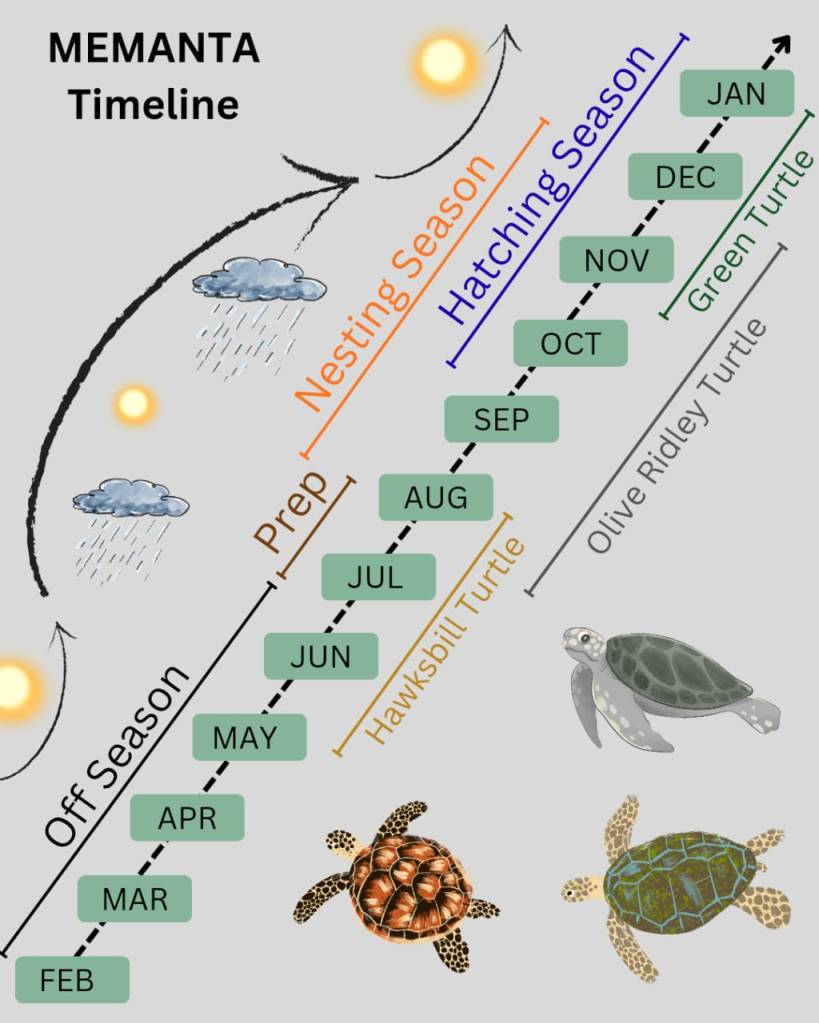
You should just come whenever you want! Nicaragua’s weather has its ups and downs, every season has its pros and cons, and sometimes it is quite unpredictable. Generally, you can expect heavy thunderstorms between June and August, more continuous rain during September and October and bone-dry conditions from December through April.
Remember: The rainy season is when we’re busiest with our sea turtle project! If you want to maximize your chances of seeing wildlife and have a kilometer-long beach aaaallllllll for yourself, forget about the mosquitoes and come between August and November!
How do I get there?
From Chinandega, you can take the local bus to Venecia at 1:30 pm from the station called “el mercadito”. You will arrive at MEMANTA at around 4:30 pm.
Alternatively, you can take the bus to nearby Mechapa at 5:00 am and we come pick you up at around 7:30 am.
Still not happy? Then you can book a ride with us. We have space for 4 people and charge 40 USD for the ride from Chinandega or 130 USD for the ride from Managua, any day you want.
How long should I stay?
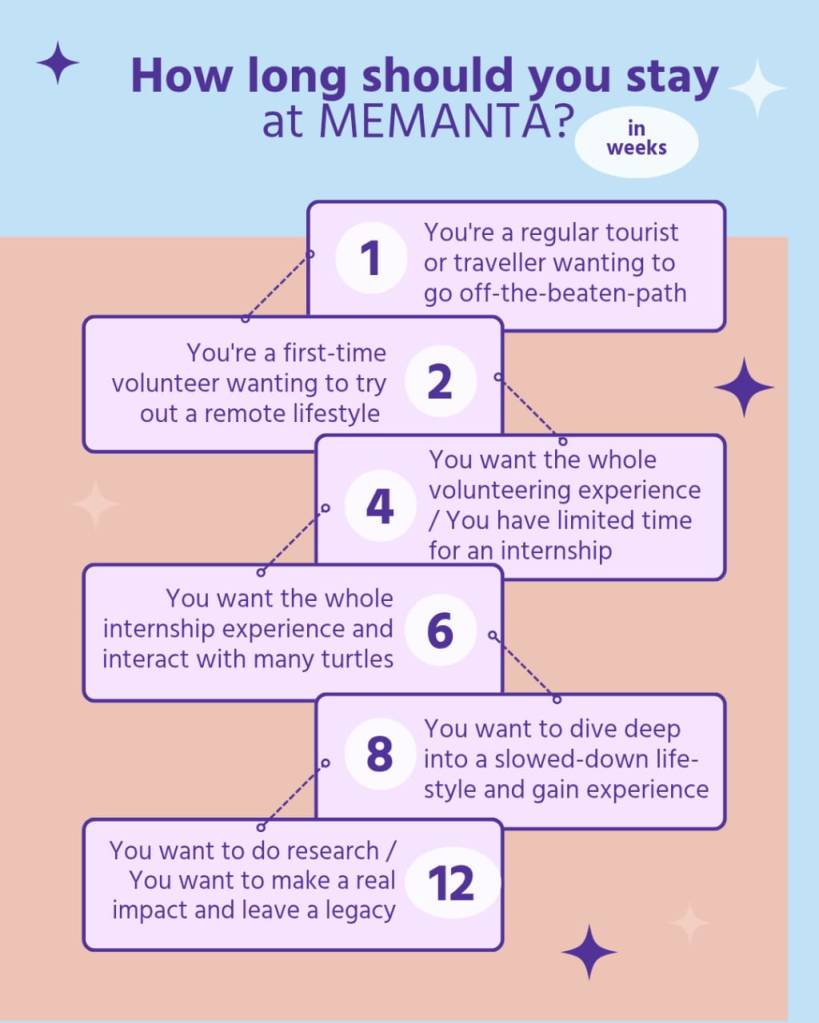
Interns have a required minimum stay of 4 weeks because we invest a lot of time in their practical and theoretical training, plus it also takes them some time to “get a feel” for the place.
Plus: If you want to become a sea turtle expert, a few weeks is just not enough! We highly encourage longer stays of 6 to 12 weeks.
Note: Your tourist visa will be valid for 90 days. After that, you can renew it for another 30 days in Managua (2-day-roundtrip). After 4 months altogether, you need to do a border-run to Costa Rica.
Can I make my stay shorter / longer once I’ve arrived and paid?
You can always decide to stay longer and we are happy to accommodate you if we have space.
If you need to leave earlier due to a (proven) emergency, we can refund your money for the nights you can’t stay.
What about the food?
We spend a certain weekly budget per person on groceries. That includes rice and beans (Nicaragua’s all-time favourite!), all sorts of vegetables, leafy greens, pasta, eggs, bread, milk, cereals, fruit, chicken, fish and everything else you need in order to prepare delicious meals.
If you’re vegan, vegetarian or have special dietary needs we DO of course consider this!
We ask our volunteers to cook their own breakfast & lunch. Of course we help you out and facilitate recipes in case you have no idea how and what to cook 🙂
Dinner will be provided by a local chef. On Sundays, we usually prepare something together or eat out.
Drinking water, juice, coffee and tea are available 24/7!
What does a typical day look like?
First of all, there will be no such thing as a typical day! However, there are a lot of recurring chores and work projects, such as:
During the 🐢 high season (Aug – Dec)
- Night-time Patrols to find nests (~ 3 hours)
- Night-time Guard shifts at the hatchery (~ 5 hours)
- Egg relocations
- Hatchling releases & Exhumations
- Data collection (esp. of nests and sand temperatures)
- Hatchery maintenance (esp. preparing nest spots with fresh sand)
- Training in Conservation techniques and Sustainable living
During the low season (Jul /Jan) and whenever 🐢 activity is low:
- Gardening and Forest management
- DIY-Projects, Painting and Upcycling
- Maintenance of the project infrastructure
- Smaller Woodworking and construction projects
- Beach Clean-ups and Environmental Restoration
- Community Involvement
- Ecotourism Promotion & Media Outreach
On top of that, there are several activities that are part of the program:
- Workshops and Presentations
- Basic Spanish lessons 1x per week
- Boat ride through the mangroves
- Horseback riding on the beach
- Nature walks
- Parties and visits to the village
- Tubing and Bodyboarding
- Team-Rallyes and Games
I want / need to do a research project. Is that possible?
Yes! We welcome many students that do their own research projects for academic purposes. Just keep two things in mind: (1) We expect everyone at MEMANTA to help with the turtle night shifts, so you might end up working on your project while others are having some fun time off. (2) We are working with the most basic resources here. If you need anything specific to gather your data, you need to bring it with you.
Here are some ideas for research projects:
- Analysis of nesting and hatching data from previous years
- Analysis of temperature data from previous years
- Basic physiological studies of sea turtle hatchlings
- Vegetation surveys or Biodiversity surveys
- Studies on beachfront development or ecotourism
- Studies on human ecology or sociodemographics including interviews with the local inhabitants (spanish skills needed!)
What should I bring?
- Waterproof headlamp with integrated red light
- Reusable water bottles
- Biodegradable soap, shampoo and laundry detergent
- Protection against mosquitoes (DEET spray, mosquito suit, long trousers, bug bite relief products…)
- Protection against the sun (sunglasses, hat, long-sleeved shirts, waterproof sunblocker LSF 50…)
- Protection against the rain (poncho / rain jacket / rain pants) – only from May through November!
- Ziplock bags or weatherproof cases for valuables
- Flip Flops, hiking / outdoor sandals, sneakers
- Beach and shower towels
- Comfortable, light summer clothing+ functional and protective outdoor clothing + sweater for chilly nights outside
- Personal items like books, games, craft supplies…
Please remember that travel health insurance is needed!
Do you have WiFi?
We wish to promote a WiFi-free lifestyle so that you can fully enjoy the natural surroundings and your personal free time.
That’s why we only offer WiFi in case you really need it, e.g. for academic purposes, research or bookings. The connection is slow and unrealiable, but it might just be enough to get stuff done 🙂
We strongly advise to buy a local SIM card for your unlocked phone and activate mobile Internet, if you want to stay connected!
Do I need to speak Spanish?
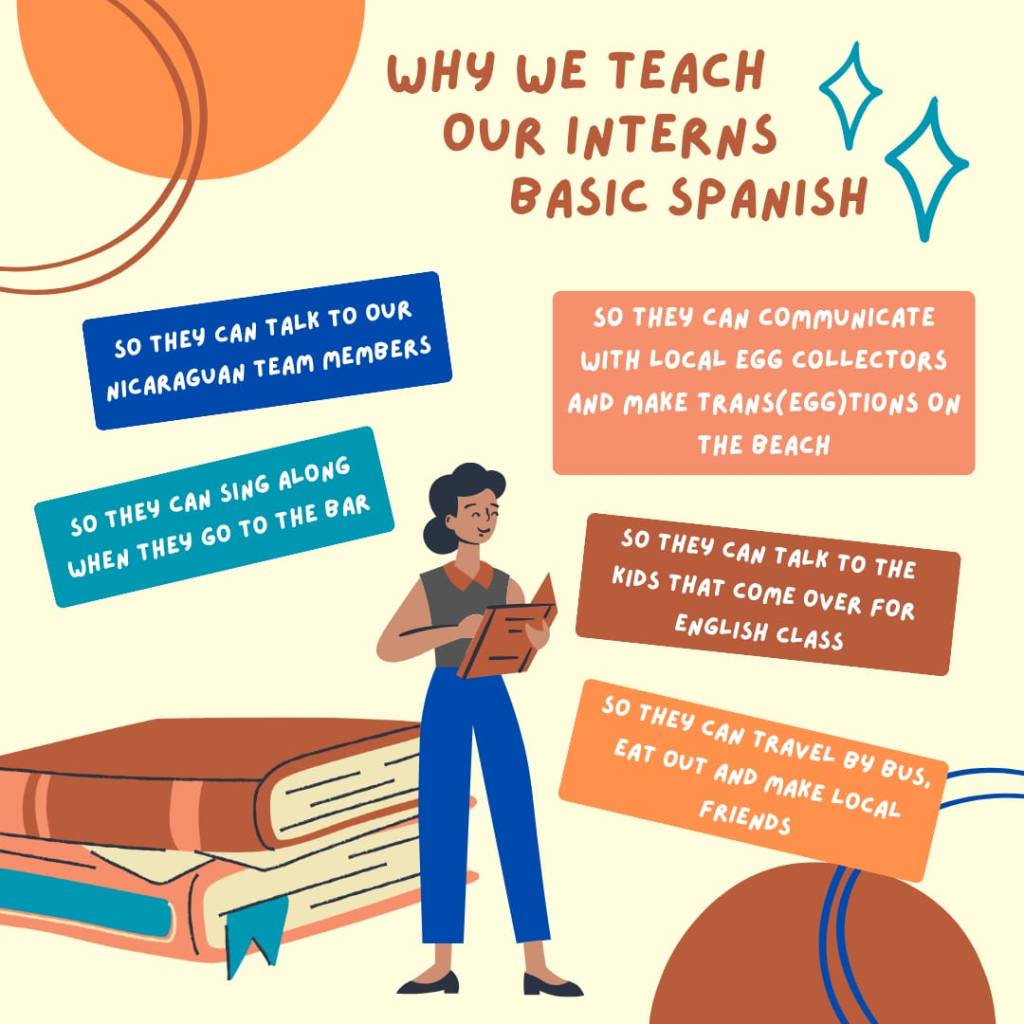
Fun fact: Many of our visitors don’t know a word of spanish! BUT we suggest that you have basic or conversational spanish skills or at least bring some learning material with you. You will definitely have some kind of interaction with the local community, so knowing spanish makes your stay easier and more fulfilling. Also, if you wish to travel to other remote places in Nicaragua, you will need to speak the language in order to get by.
How many sea turtles will I see during my stay?
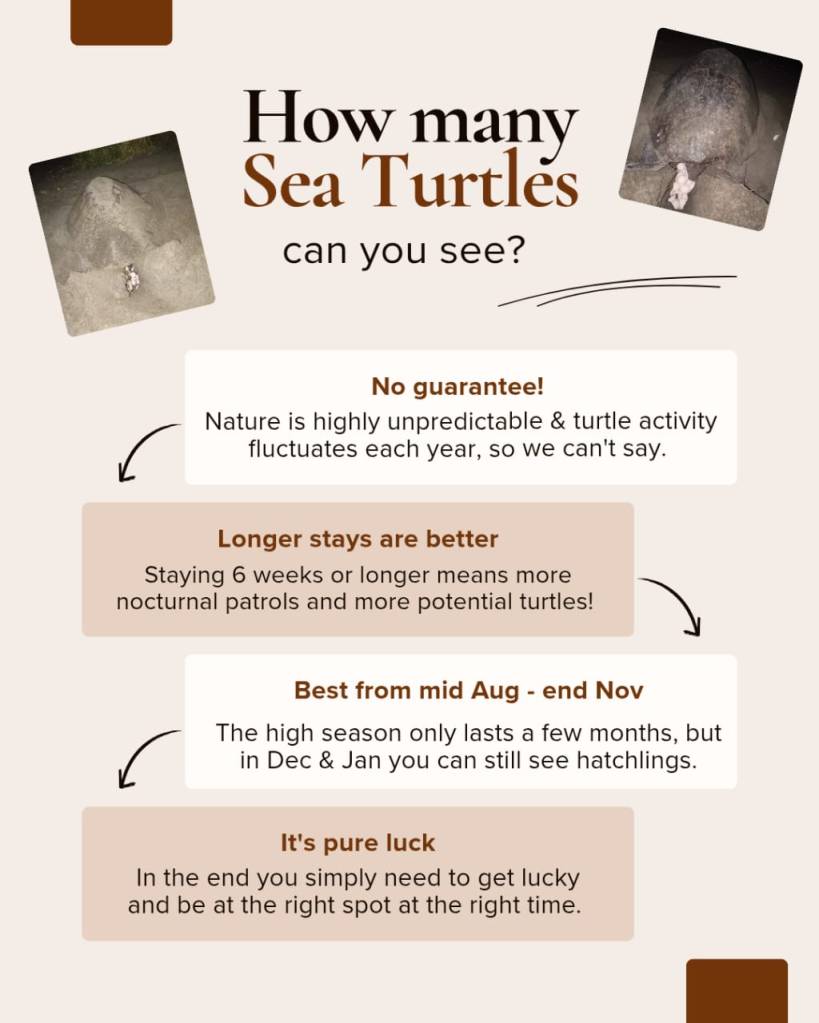
This depends on so many factors like natural conditions, the shifts you take, your duration of stay, the time of the year and LUCK. We cannot control how many wild turtles we encounter and each year, each month, each night is different.
In general, the highest nesting activity is from mid August until mid November and you will probably see at least a few mama turtles. Our hatching high season is from mid October until mid January and you might release hundreds of baby turtles throughout your stay!
How am I going to survive without electricity and running water?
First of all: Don’t panic. You will still have access to electricity and running water in our Rancho.
Second: Remember that mankind flourished without all of this for thousands of years, and that many people in Nicaragua lived like this up until recently (our village didn’t have electricity before 2016!).
You are of course invited to bring all sorts of outdoor / camping equipment with you to facilitate your stay at MEMANTA.
Why should I pay to help at the MEMANTA sea turtle hatchery?
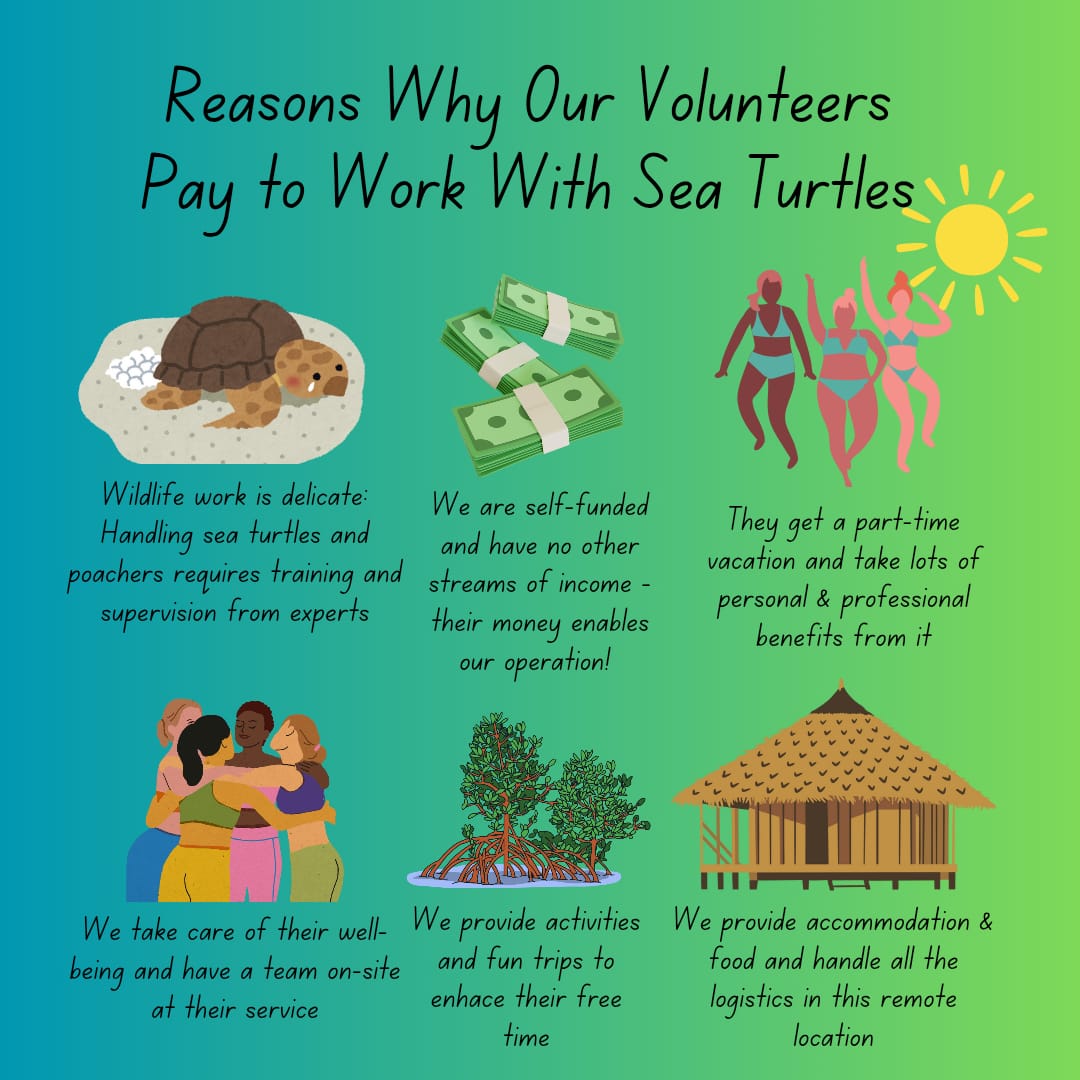
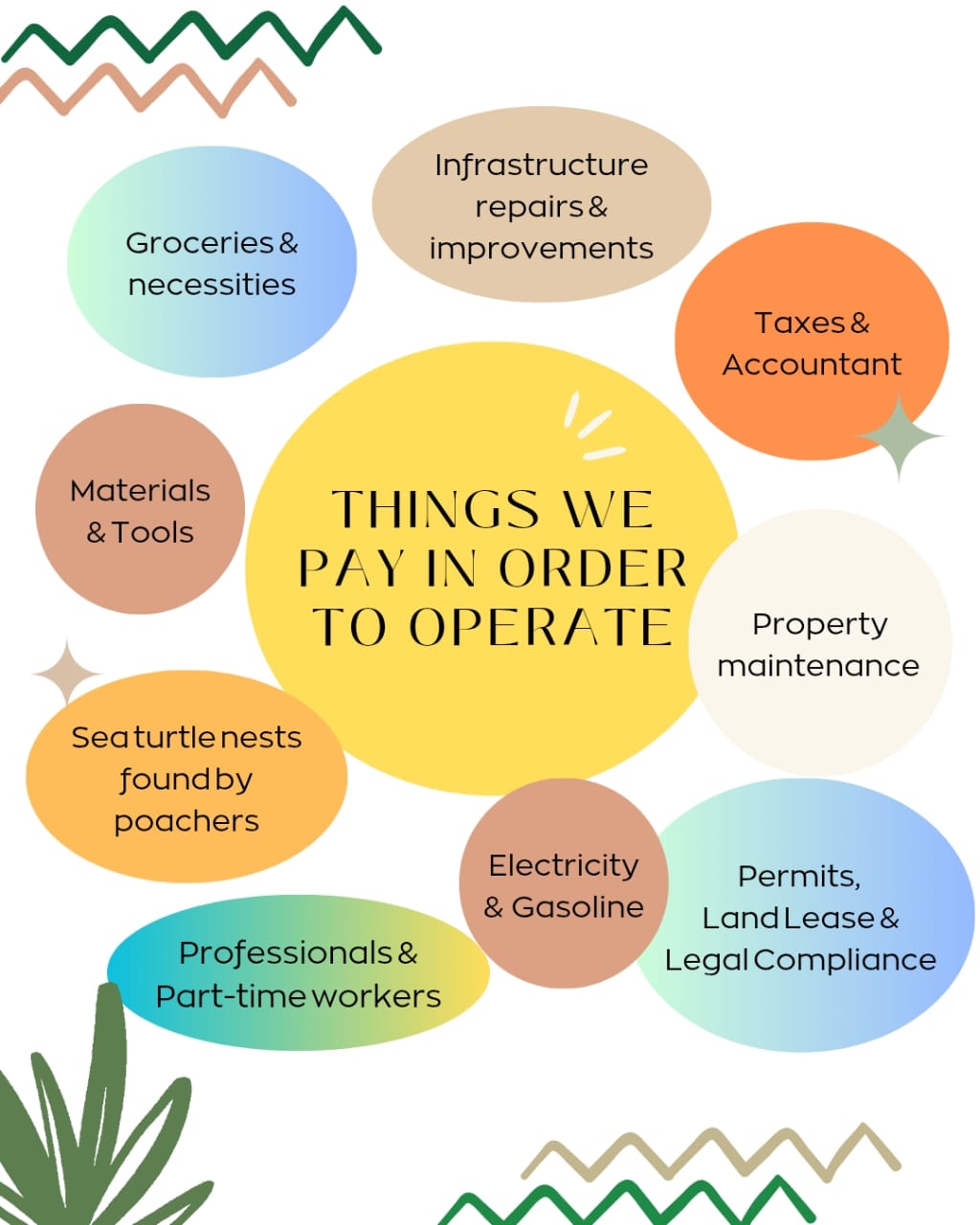
Most privately-run volunteer programs charge money in order to offer their services and run their conservation projects successfully. I mean, Hey – we have taxes, loan debts, maintenance costs, materials and staff to pay! We do not receive any financial support from outside, but instead wish to function from our own revenues.
Also, we don’t expect you to work a fulltime job here. You will have plenty of free time and many opportunities to do touristy things. If you apply as a Project Assistant, we expect you to do a little bit more, but you will still feel that your stay at MEMANTA is similar to a vacation.
I am young and have no money. How will I be able to pay the fees?
It’s always best to ask for financial support from family, friends and people from your surroundings. The other option is to look for a seasonal job a few months before. If you have a skill that you can monetarize online, you can also look for a freelance job.
Why is it so expensive anyways?
Well, it actually isn’t. Just think about what you would spend on a typical day as a backpacker in Nicaragua: That’s 10 USD for a dorm room, another 15 USD for meals and drinks and at least 10 USD for activities. Voilà, that’s about the same you pay at MEMANTA for accommodation, food and fun stuff. Also, don’t forget that your financial contribution enables us to buy sea turtle nests from local egg collectors and to keep our business running!
 MEMANTA