
Releasing baby turtles at sunset on a heavenly beach with coconut palms and white sans is really fun. But the work with sea turtles involves a little bit more than just doing the picturesque, instagramable stuff.
Are you thinking about becoming a sea turtle volunteer or conservation intern abroad? Then check out this list with 7 things to consider before you book your trip!
1. Money
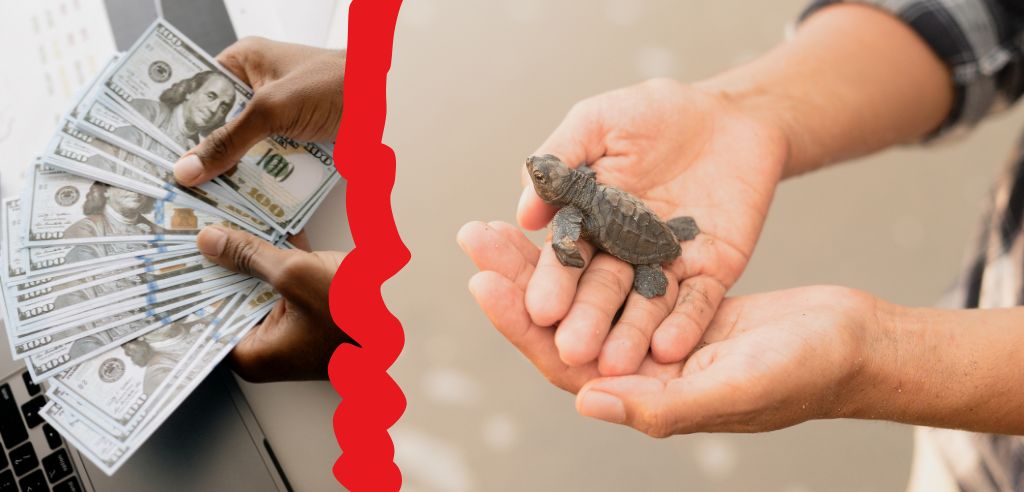
Be ready to invest some money when you want to volunteer with sea turtles!
The great majority of wildlife conservation projects have a pay-to-work model in place. Well, they call it “pay-to-work”, but it mostly is a “pay-to-live” model.
Because the providers – which are usually NGOs on a very tight budget – give volunteers a place to sleep and three meals a day plus drinks and water.
But that’s not all: Receiving volunteers requires staff to train, supervise and care for them, especially when the volunteers are no experts in their field but rather just learn new skills. And because wildlife projects are mostly off-the-grid, the providers also take care of their general well-being and leisure activities.
So you volunteer for free (that’s why it’s called volunteering and not working), but you pay for your housing, food, convenience and leisure.
There are some projects where you don’t pay anything, but in that case you have to take care of your living arrangements yourself – which in the end results in about the same costs.
And, just so you understand: The only paid positions with sea turtles are given to former volunteers or experienced people who fill a submanager or coordinator role and take on a lot of responsibility as well.
So… make sure you have some Euros or Dollars saved before you start your volunteering adventure abroad!
(and make sure to read #3 if you don’t want to spend more money than necessary)
2. Work conditions

There’s nothing luxurious about working with sea turtles.
You wear old clothes, are covered in sand and sweat, have itchy legs, blisters on your feet, a sunburnt chest, feel tired and worn out.
You walk for hours on soft sand in the dark and are not allowed to use any light or your phone. Sometimes you even get caught in heavy rain or need to run from a thunderstorm.
The work schedule is super flexible but you mostly do night shifts and patrol times are continuosly changing because of the tides and natural conditions, so you never know when you’ll have your next uninterrupted 8-hour-session of sleep.
At MEMANTA, night shifts take 3 to 5 hours and they can start anytime between 7 pm and 2 am. The last person goes to bed around 5 am when the sun is coming out. So our volunteers need to adapt to a very flexible sleep schedule!
Then, during the day, it gets super hot and you constantly try to avoid the scorching sun AND all the mosquitoes, sandflies, pooping geckos and spiders – which is not always possible. And don’t even think about a pool or air-condition:
Most sea turtles projects are off-the-grid with no modern amenities like WiFi and only very basic living standards.
3. Who you book with

Just google “volunteer abroad” and there’s an avalanche of options coming right at you, ready to bury you underneath happy pictures of young girls holding baby sea turtles and heavy participation fees above 1.000 USD.
Be aware: Volunteering is a BUSINESS. And so there are many people, companies and organizations involved in making money with it.
There are a couple of well-known volunteer organizations who offer placements in just about any country of the world. They are by far the biggest players – they have wonderful websites, a whole team taking care of publicity, and a large budget for advertising, so they always show up first in your search results.
But just have a look at the fees – those are way over the top! And what do they do? They basically place you in the desired project that they have some sort of cooperation with, and then the project handles it all and covers your accommodation, your food, your training, your activities… but is getting less than half of what you pay.
So my recommendation is: Don’t pay a volunteer organization to set you up with a certain sea turtle project, as they are only middle-men and charge double.
Instead, make a more refined google search. Look for “sea turtle project [country]” or “sea turtle volunteer [country]” and you will come across the websites of many projects like MEMANTA – you will clearly see the difference between a travel ageny-like volunteer organization and a conservation organization that offers volunteer programs.
Once you found the right website, you just need to get in touch with them and pay the real price – in our case it’s 500 USD for 2 weeks.
Alternatively, look at this wonderful world map https://www.seaturtledirectory.org/, choose a region, browse for projects and get directed to their websites!
4. Best practices
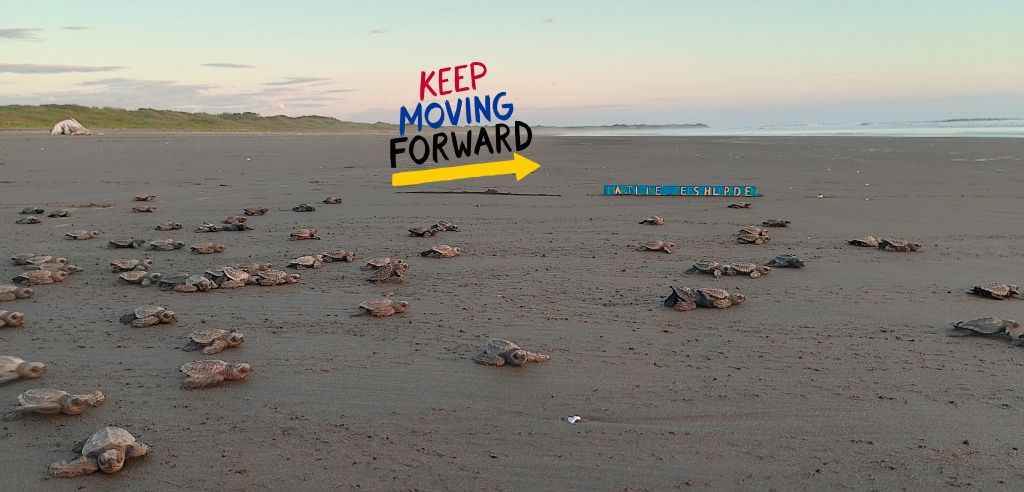
Do you want to volunteer with sea turtles because of the pictures, or because you want the best for our planet and the animals?
In the first case, you can volunteer at any sea turtle hatchery and self-proclaimed conservation program in the world.
But in the second case, you should do some due diligence before choosing a project to volunteer at. Yes – we all have these wonderful romantic sunset pictures of babyturtles walking down the beach on our websites, because we also need to advertise and attract people somehow, but scratch a bit beyond the surface and see if the project is just for show and the dollars, or if it is genuine and following best practices.
Don’t be one of so many people that get fooled by scammy, ill-managed sea turtle projects. So you either research online and identify those sea turtle best practices, or you use the following list to identify red flags.
Some big NO-GOs for sea turtle projects would be, for example:
- They release baby turtles ONLY in the presence of paying tourists and have them wait in buckets for hours and days
- They hold sea turtles in small containers with not enough water and space to swim freely and dive
- They continuously use white light and flash lights when working with sea turtles at night
- The hatchery looks dirty and desorganized, and the buildings and general surroundings of the project are in a bad shape
- Their hatching success over the past years has been considerably lower than at similar projects in the same region
- They are hesitant to share information regarding number of turtles, hatching success and work achievements
- They don’t do any basic research, don’t measure temperatures and don’t perform exhumations after hatching
5. Number of turtles

This is a tricky one to find out unless the project is 100% transparent and publishes the nest data on their website – like MEMANTA does.
Some projects only get like 50 nests in the whole season while others count over 2.000 in a few months! I have volunteered with both types of projects and I don’t want to say that the ones that receive few nests are not worthy – the work focus is just different.
The focus of the first kind of project will probably rather be awareness, education and general sustainability, while the sea turtle work plays a small but consistent part. So just be ready to share some magical turtle moments like burying eggs or releasing hatchlings with six or so other volunteers!
Whereas in the second kind of project you won’t do much else than sea turtles. For weeks and weeks, turtles will be at the centre of your universe and there will be a stronger focus on biological research as well.
So before you choose a turtle project to volunteer at, try to get hold of some numbers and decide for yourself what your priorities are.
Do you want to help where there are very few turtles left and also do other interesting tasks that contribute to a more sustainable future? Or are you 100% dedicated to sea turtles and want to get your hands on as many turtles as possible?
And just so you know: Noone can guarantee that you will actually see turtles during your stay – even more so if it’s a beach with low nesting activity or if you arrive in the low-season.
At MEMANTA, we have volunteers who see dozens of nesting turtles and thousands of hatchlings during their stay, while others are less lucky. In the end, it’s not about turtle sightseeing, but about helping – and everyone who has participated so far felt rewarded in some kind of way!
6. Number of people

Do you like solitude, quiet days and lonesome paradises? Or do you want to have the time of your life being surrounded by many inspiring people from all over the world, and be part of a big, diverse group?
In Costa Rica you will meet many fellow volunteers (most of them have just graduated school) and sea turtle projects are usually packed with 30+ volunteers.
In such an environment, you might just be one of many and depending on the actual work load, you might not always feel “needed”. But there’s so much going on, it’s a lot of fun, you make new friends, and it’s always bright and lively – so who cares?
Whereas at MEMANTA, chances are you’ll be the only soul out here.
Well, it’s not that daramatic, but even just seeing the same three faces every day for weeks might get tiring to some, and if you don’t like spending time with yourself and need variety in your everyday life, then small projects like MEMANTA might not be the right pick for you
Our team of volunteers and interns counts 6-8 people max., so your input really makes a difference! Also, where in the world do you still feel like you have a 13km long beach all to yourself…?
7. Season
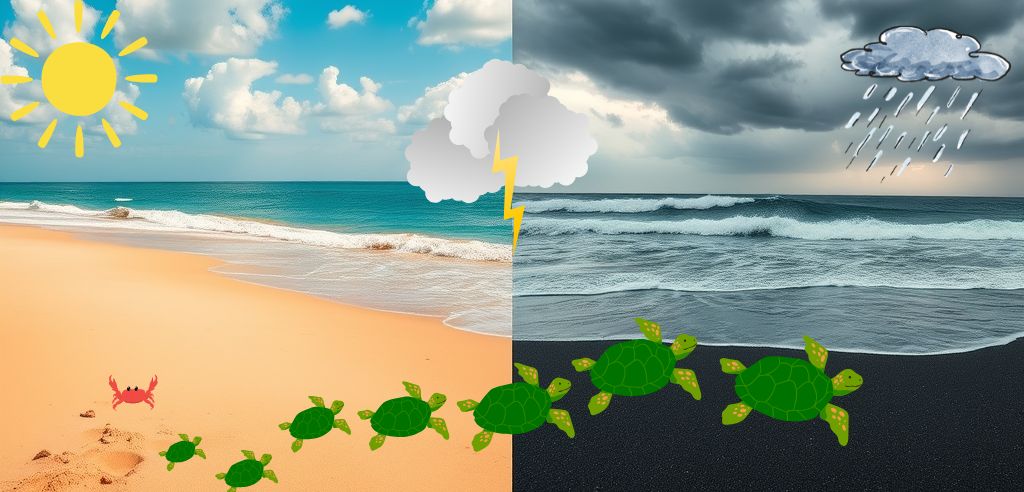
Last but not least you need to ask yourself: “Is it the right time for sea turtles?”
Usually, a sea turtle project will not accept volunteers in the off-season or at least state clearly that you will work with other elements of the ecosystem or the local community instead.
But then there is also a low-season at the start of the nesting season and at the end of the hatching season – and in between you have the shift from nesting season to hatching season. If your main goal is to see as many adult and baby turtles as possible, you need to come in the very high season.
At MEMANTA, that high season – where you get lots of big and small turtles – is in October and November. Nesting activity is high, while there are already plenty of nests hatching that were laid 50-60 days earlier. October and November are also the months with the highest workload and thus the highest need for volunteers!
In the end, every season has its very own charme and its own climatic characteristics as well. Also, you might not be as flexible as you wish when taking time off – so just come whenever you can!
But if you happen to be flexible with your schedule, you can always ask the project staff which months would be best to have you around.

Conclusion:
Things to keep in mind as an aspiring Sea Turtle Volunteer
- Be ready to pay for your stay!
- Expect basic living standards, flexible work schedules and long night shifts
- Avoid booking with over-prized volunteer organizations and contact projects directly
- Try to find out if the project is doing genuine work and follows best practices
- See if the actual turtle activity on the beach meets your expectations
- But be aware that you might not see as many turtles as you wished for – in the end it’s an endangered species and every year there are less!
- And be aware that bigger projects with many volunteers might be fun, but your impact tends to be smaller

 MEMANTA